Industrial LED Fixtures: High Ceilings and Hard Conditions
Industrial fixtures are made for high-ceilinged spaces in demanding conditions: factories, workshops, warehouses, hangars, covered car parks. The design priority here is not appearance but light output, heat management and durability. Our collection holds 2 products.
Ceiling Height Is the Deciding Factor
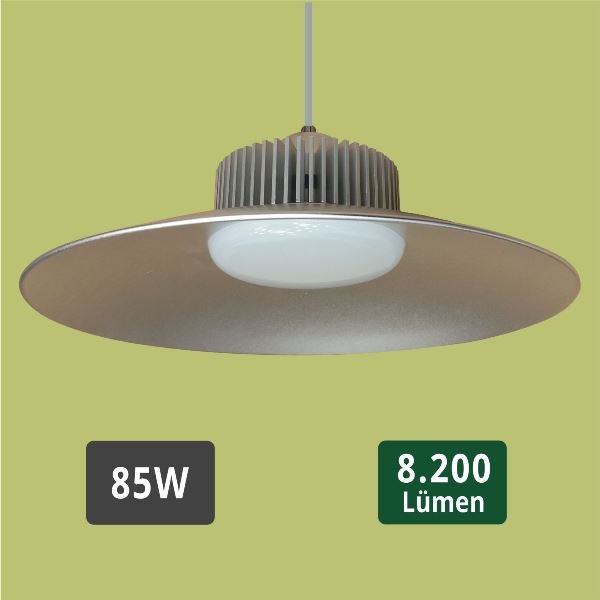
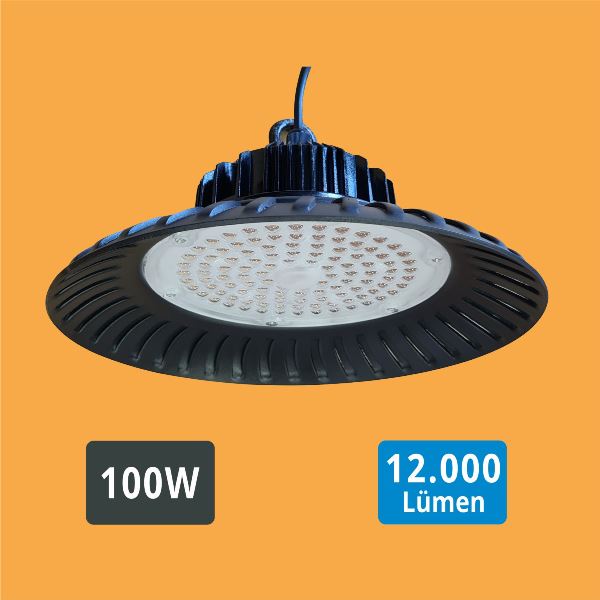
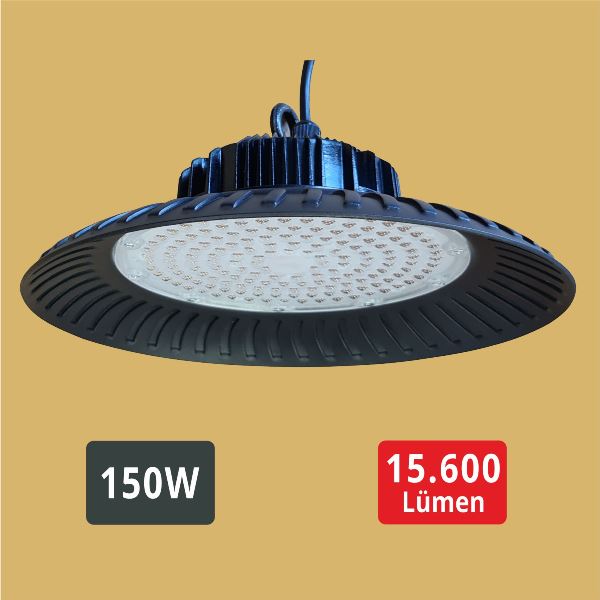
As the distance between the light source and the surface grows, the illuminance reaching that surface falls away quickly. A fixture that is enough at 3 metres gives far less light at floor level in an 8-metre warehouse. That is why on high ceilings both the power is raised and the beam angle narrowed, so that the light is carried downwards. The measured powers in our catalogue are in the 85 W, 120 W and 200 W classes.
Beam Angle and Aisle Width
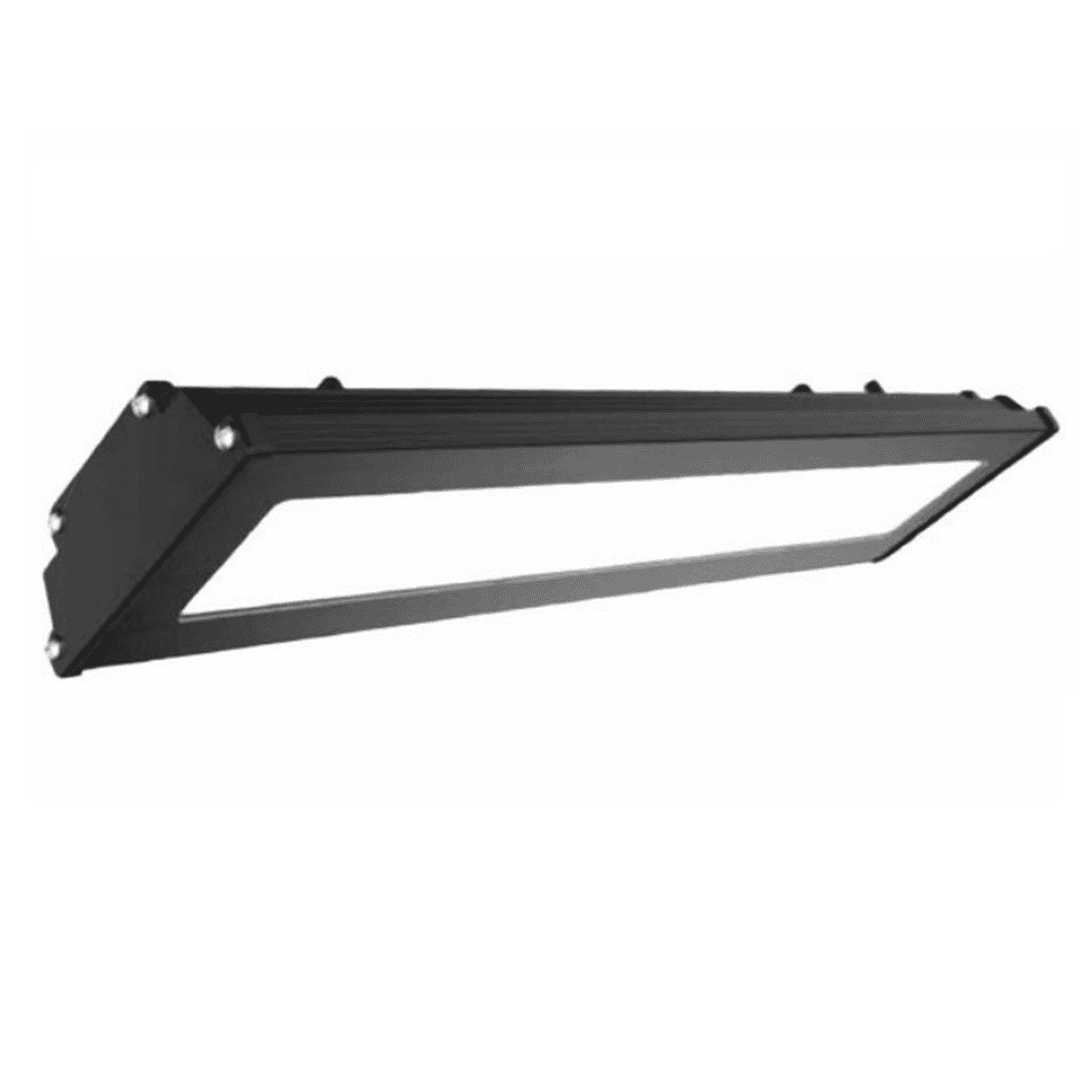
In a warehouse the aisles between racks are narrow and deep. A wide-angle fixture puts most of the light on the backs of the racks and the bottom of the aisle stays dark. For lighting between racks, narrow-angle or linear-distribution fixtures are preferred and the line of fixtures is laid out in the same direction as the aisle.
Protection Rating and Environment
A dusty environment calls for protection against the ingress of dust, a damp one for protection against the ingress of water. In production areas that are washed down, the fixture is expected to withstand pressurised water. On lines with high vibration, the mounting bracket must be secured against working loose.
Heat and Service Life
In high-power fixtures the body is a heat sink. Covering the fixture, setting it into a tight recess or squeezing it into an unventilated space traps the heat and leads to the light output falling away over time.
Budget
Of the 2 products in our catalogue, one has a published price: 36 EUR. On the other, the quote option appears on the page; with the area dimensions and the ceiling height you can get a project price through Live Support.
Maintenance and Access
Replacing a fixture mounted on a high ceiling can cost more than the fixture itself: the platform, the safety measures and the stopped production. That is why in industrial fixtures long life and low maintenance matter more than the initial purchase price. Placing the fixtures along the axis of the aisle rather than directly above the rack rows both puts the light in the right place and makes later access by platform possible. Models whose driver is separate and accessible make it unnecessary to bring the whole fixture down in the event of a fault.