Gökyüzü Panel
LED Lighting

LED Lighting

790 products

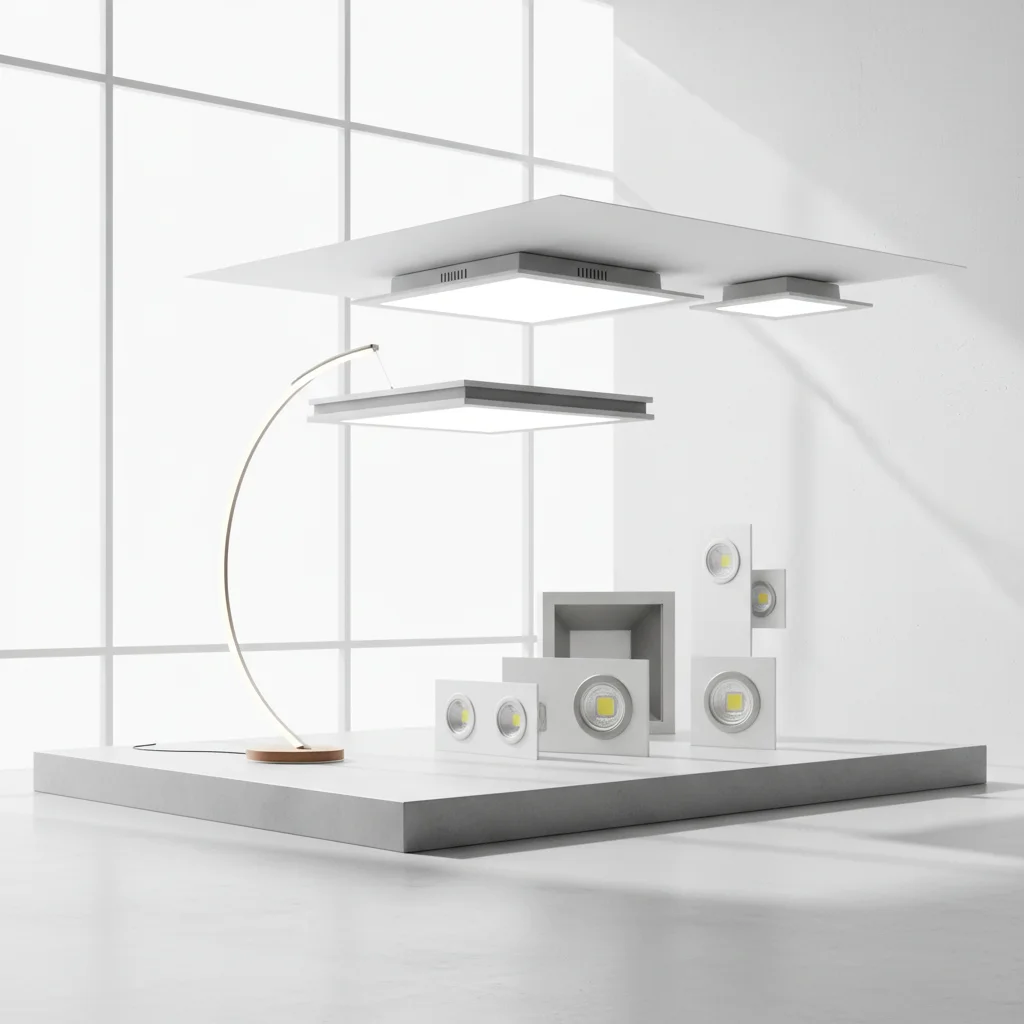
LED lighting delivers the same light as a conventional fixture for a fraction of the energy, and asks for no maintenance. This section holds every group you are likely to need indoors, from ceiling fixtures to LED strip, from recessed spots to linear luminaires. Two questions are enough to decide which group you want: where the light comes from (ceiling face, recessed, hidden cove) and how much it lights (watts and lumens). Every model lists its lumen figure and the room size it suits.

From Our Warehouse to Your Door

Every step from preparation to your door, handled with care for your peace of mind.

Quality Control Preparation Careful Packaging Safe Shipping
Quality Control & Preparation

LED Lighting: Which Product Is Used Where?

LED lighting is not a single product but a family of products that complete one another. The right result comes not from one fitting but from setting up the layers correctly: general light, task light and accent light. This page is prepared as a map showing which heading answers which need.

1. General Lighting — The Basic Light of the Room

This is the layer that lights the whole space evenly. It is chosen according to the ceiling type: Recessed LED Spots in grid ceilings and plasterboard, Surface-mounted LED Panels on concrete ceilings, and Linear LED Fixtures in long, linear spaces.

2. Task and Focus Light

This lights particular surfaces such as a worktop, a desk, a display case or a shelf. Decorative LED Spotlights are used for fixed points, while Track Spotlights and Magnetic Track Spotlights allow the arrangement to be changed later.

3. Accent and Atmosphere

This is the layer that gives the space depth: LED Strip and LED Profiles for concealed light coves, Wall Washers and Wall Lights for wall surfaces, and Neon LED for signage and lettering.

4. Outdoors

In the garden and on the façade the protection rating (IP) is decisive. Where a cable can be run, Garden Lighting and LED Floodlights are used; where it cannot, Solar Lighting.

5. Light Source and Infrastructure

Fittings with lampholders need LED Bulbs, low-voltage systems need LED Modules, Drivers and Transformers, and dimming and colour control need LED Remotes & Controllers. These three headings are left to last in most projects, and they are the ones that cause the most delay.

The Colour Temperature Decision

Staying with a single colour temperature in the same room is more decisive than how many fittings you use. Warm tones are preferred in living areas, neutral tones in workspaces and wet rooms, and white light in technical areas.

Where Should the Budget Go?

With a limited budget, the order that makes the most visible difference is this: first the right colour temperature, then the right positioning, and product quality last. An expensive fitting chosen in the wrong tone produces a worse room than an economical one chosen in the right tone. In the same way, putting two inexpensive fittings in the right place beats putting one expensive fitting in the wrong place. Cutting back on the infrastructure — transformer, driver, cable — is the most expensive saving of all: when these parts fail they affect not the fitting but the whole system.

Frequently Asked

Where should I start? Settle the general lighting first, then the task light, and add the accent layer last.

How many fittings are needed? Share your room dimensions and ceiling height through Live Support to get a recommendation.

Frequently Asked Questions

Should I choose warm white or cool white LED?

The selection should be made according to the desired ambiance of the area to be illuminated; warm white (2700K-3000K) is ideal for relaxing environments, while cool white (5000K-6500K) is ideal for work areas requiring focus.

What is the difference between Lumen and Watt?

Watt indicates the electrical energy consumed by an LED, while Lumen refers to the amount of light emitted by that LED, in other words, its brightness; for energy efficiency, a high lumen/watt ratio should be considered.

How long do LED bulbs last?

Quality LED bulbs can last an average of 25,000 to 50,000 hours or even longer, depending on usage conditions, offering a significantly longer lifespan compared to traditional bulbs.

What is smart LED lighting and how is it used?

Smart LED lighting refers to modern lighting systems that can be controlled via mobile applications or voice commands, offer adjustable color and brightness, and can be integrated into automation scenarios.

Related Guides