
In today's working world and urban building, basements, internal corridors and rooms set deep within a building far from any window have become unavoidable. Spending long hours in a windowless office or room does not only cause eye strain; it also disrupts the circadian rhythm, the body's own clock. In people deprived of daylight, difficulty concentrating, an imbalance of melatonin and the chronic fatigue that follows are frequently observed.
This is exactly where the philosophy of biophilic design comes in. Setting out to bring the innate human attachment to nature indoors, this approach aims not merely to light windowless areas but to turn them into liveable, restorative and productive ecosystems.
In this guide we look at five concrete ways to optimise your windowless offices and rooms with the principles of biophilic design, to remove the sense of darkness entirely, and to draw on modern technology while doing so.
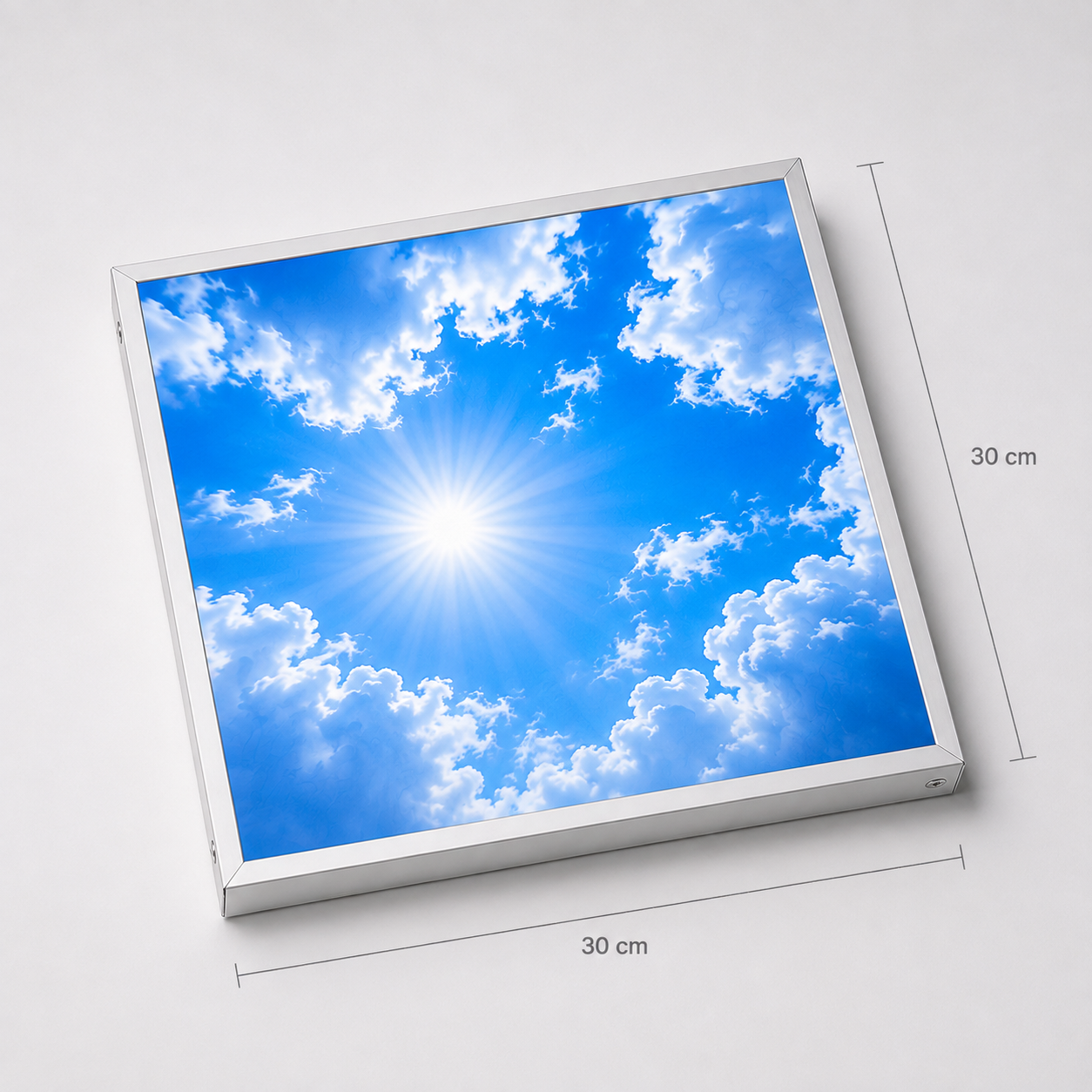
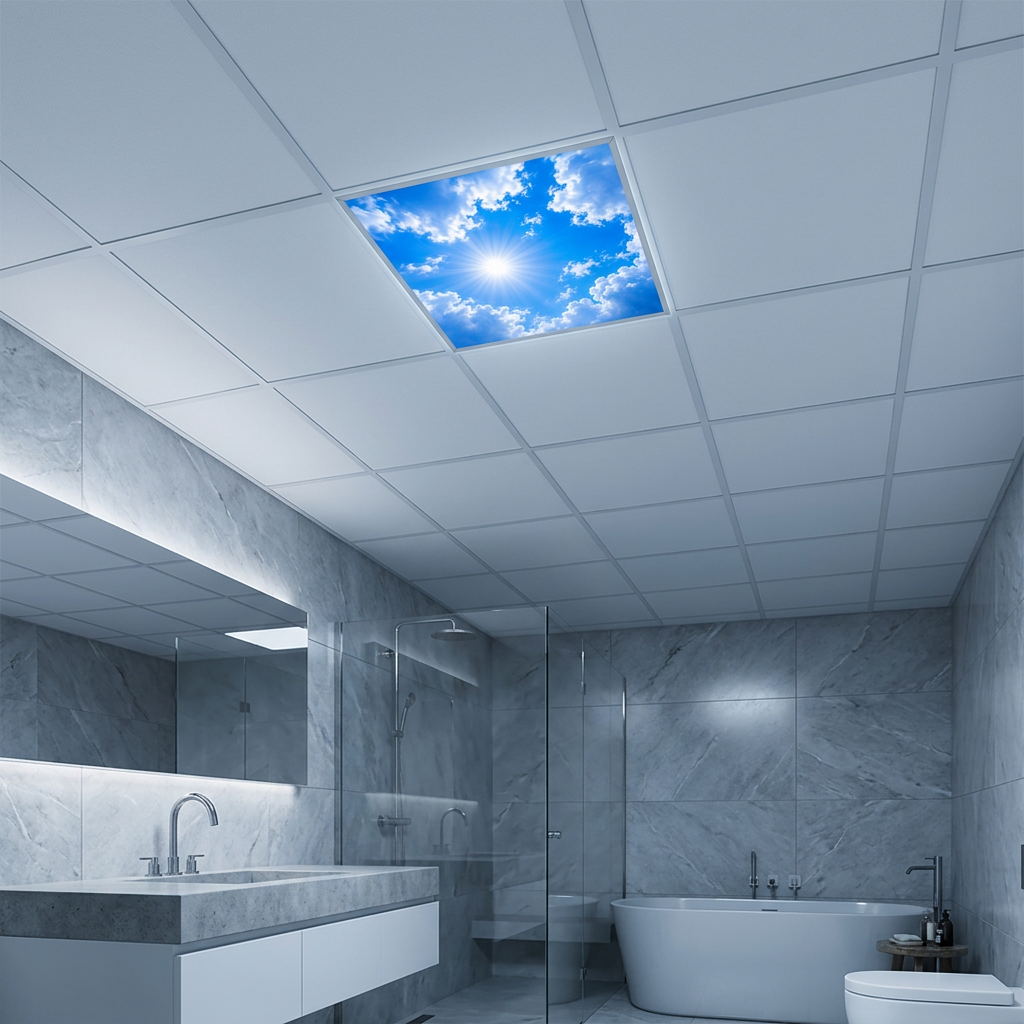
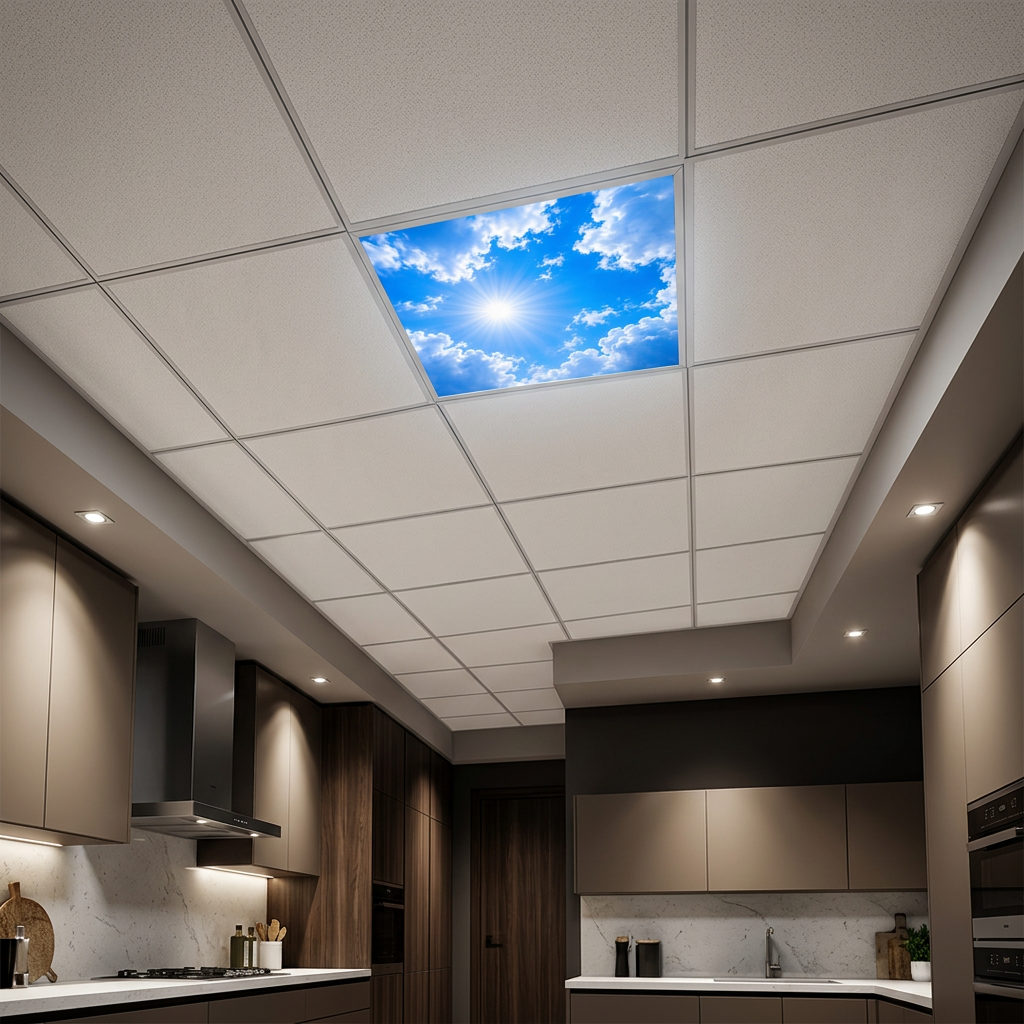
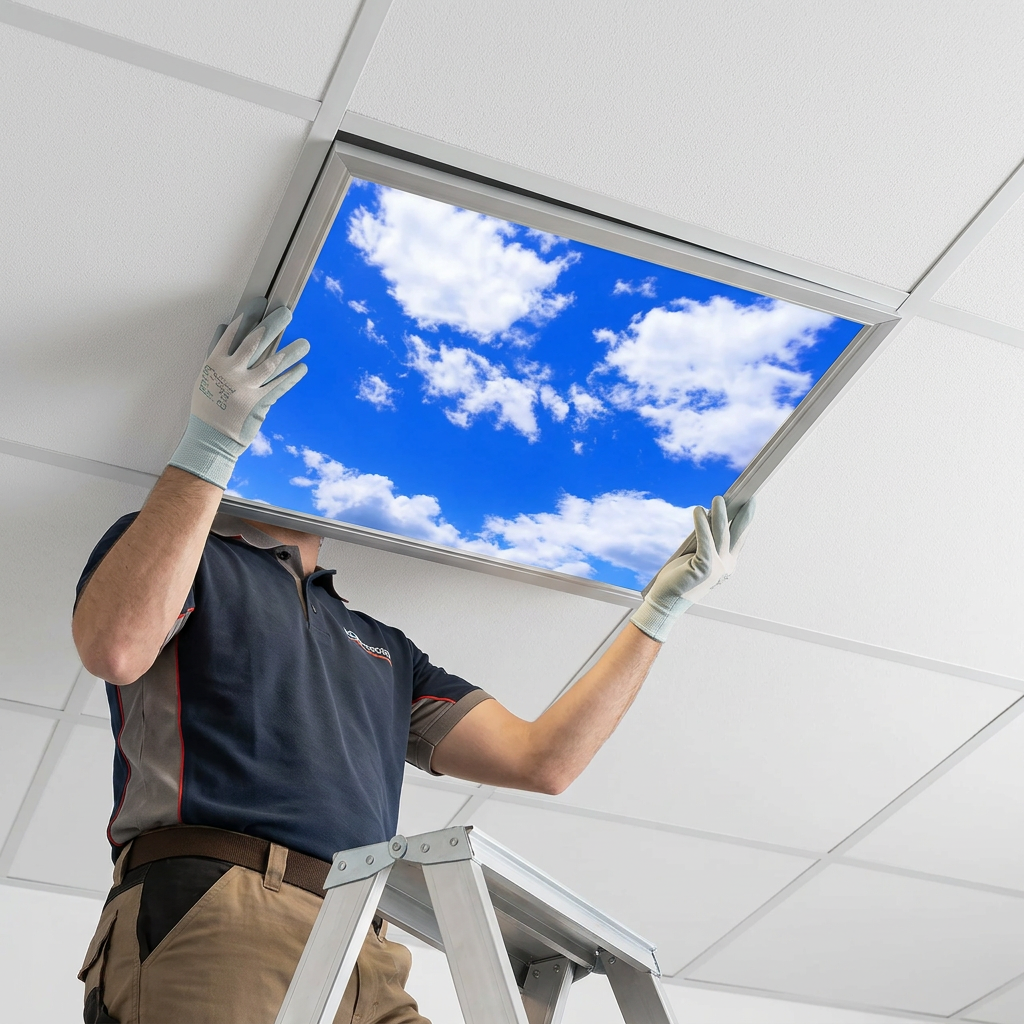
1. Create the Effect of a Window with LED Sky Panel Models
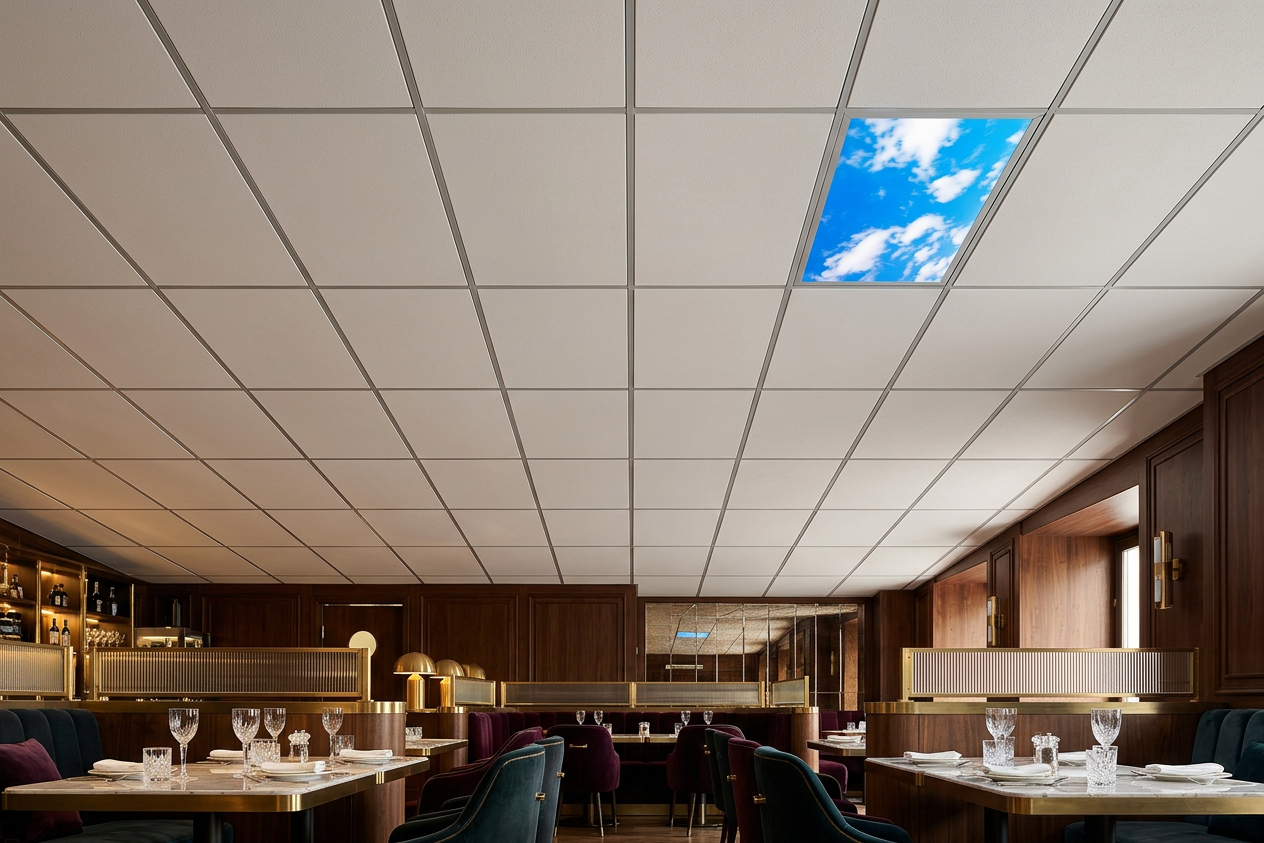
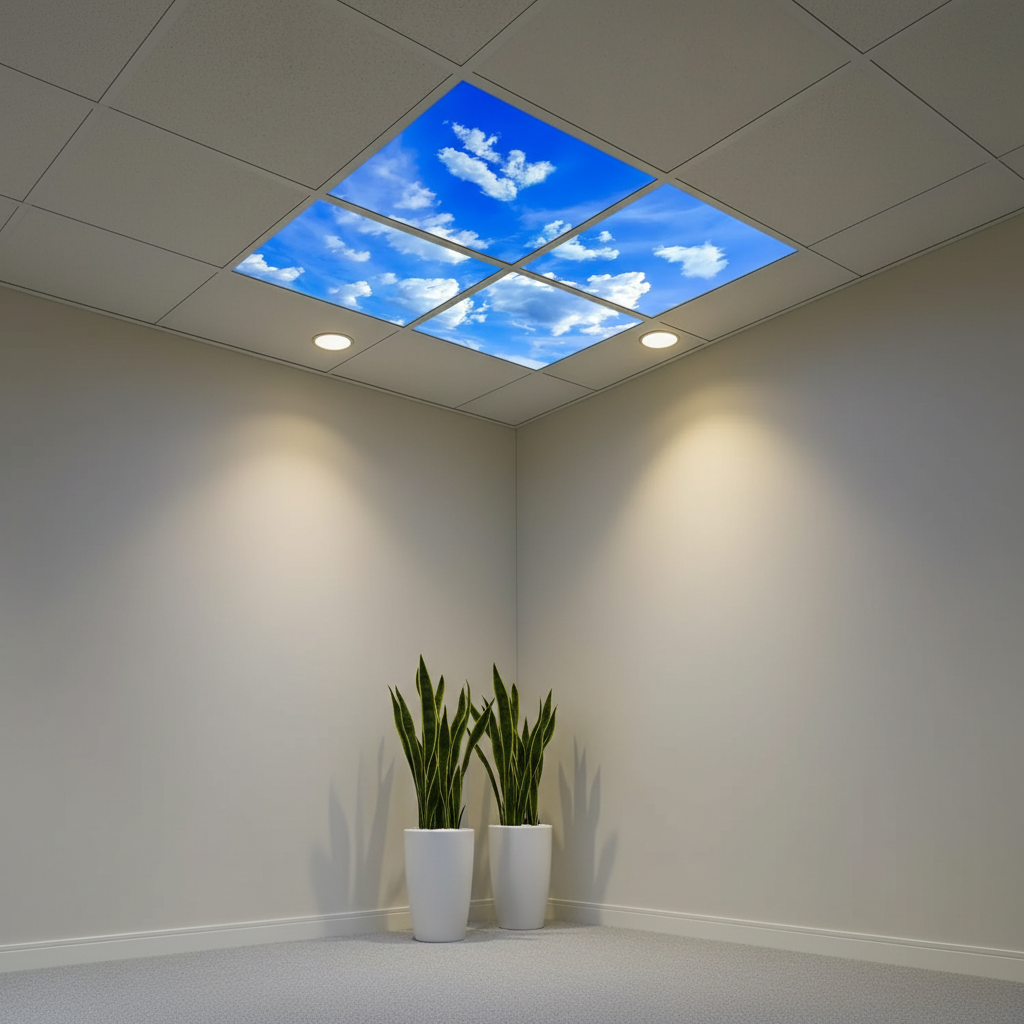
The greatest shortcoming of a windowless room is the absence of a visual opening onto the outside world. Our brain looks for visual clues about the weather and the passing of time outside. The most innovative and biophilic way to meet that need is to use LED sky panels integrated into the ceiling.
Why choose LED sky panel models?
- The illusion of depth: while conventional flat LED panels only give light, sky panels carrying high-resolution images of sky, clouds or tree branches create a virtual void in the ceiling and break the sense of a low, pressing ceiling.
- Psychological relief: research shows that blue sky and natural patterns lower cortisol, the stress hormone. These panels significantly reduce the anxiety of enclosed spaces.
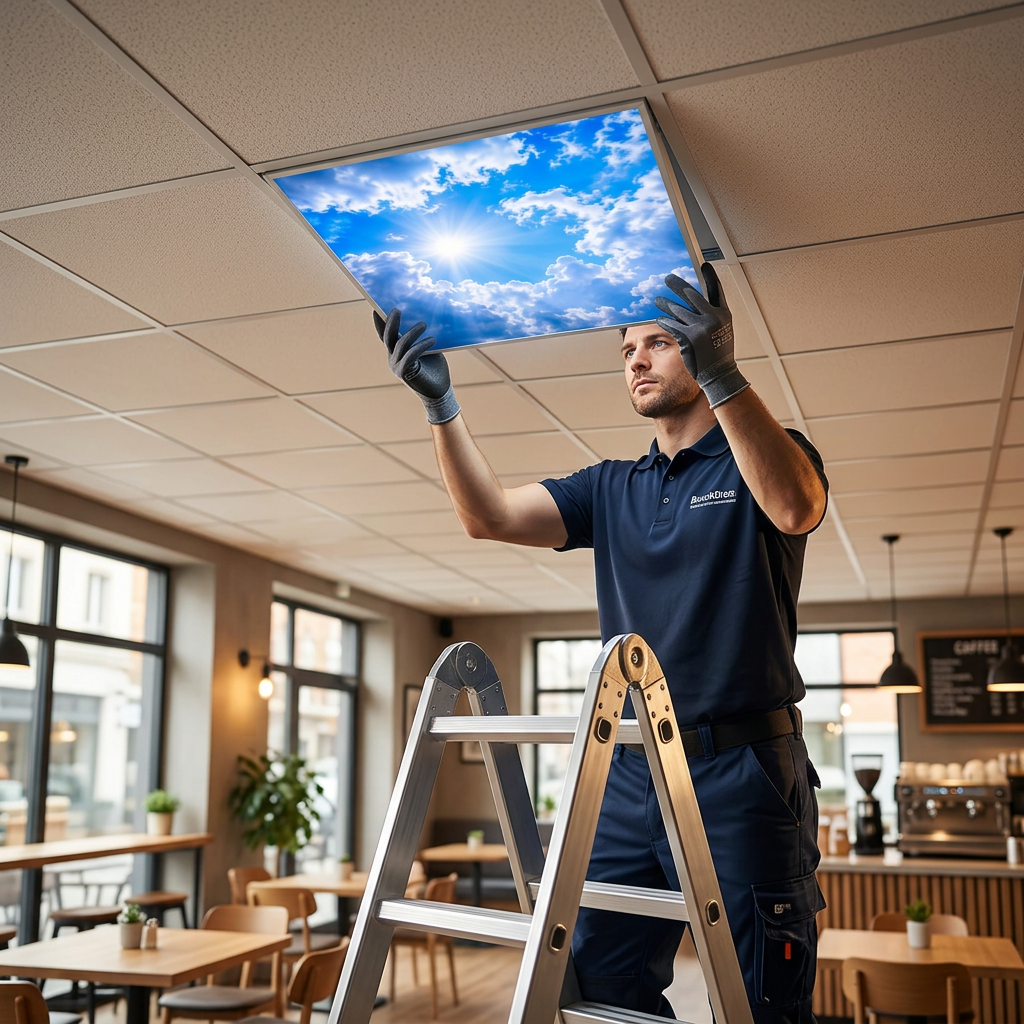
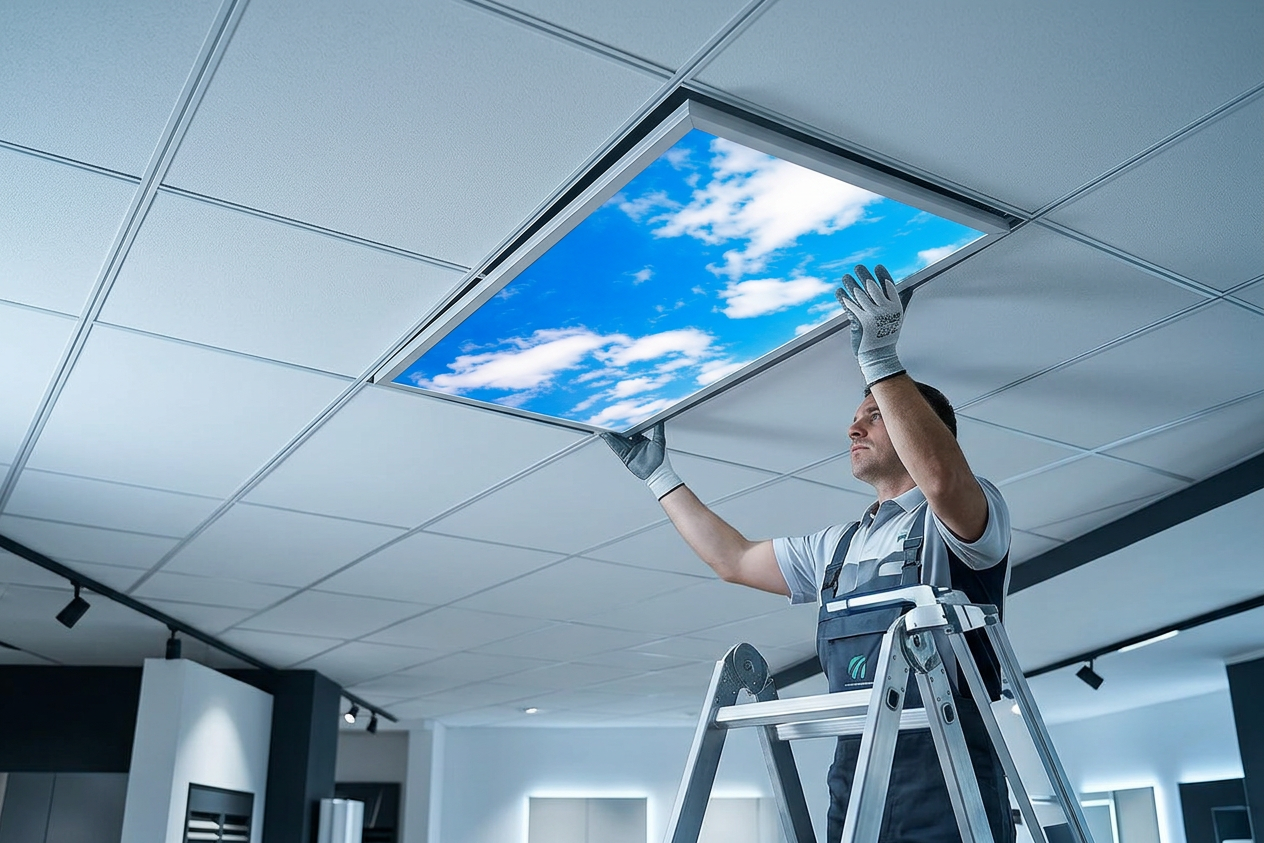
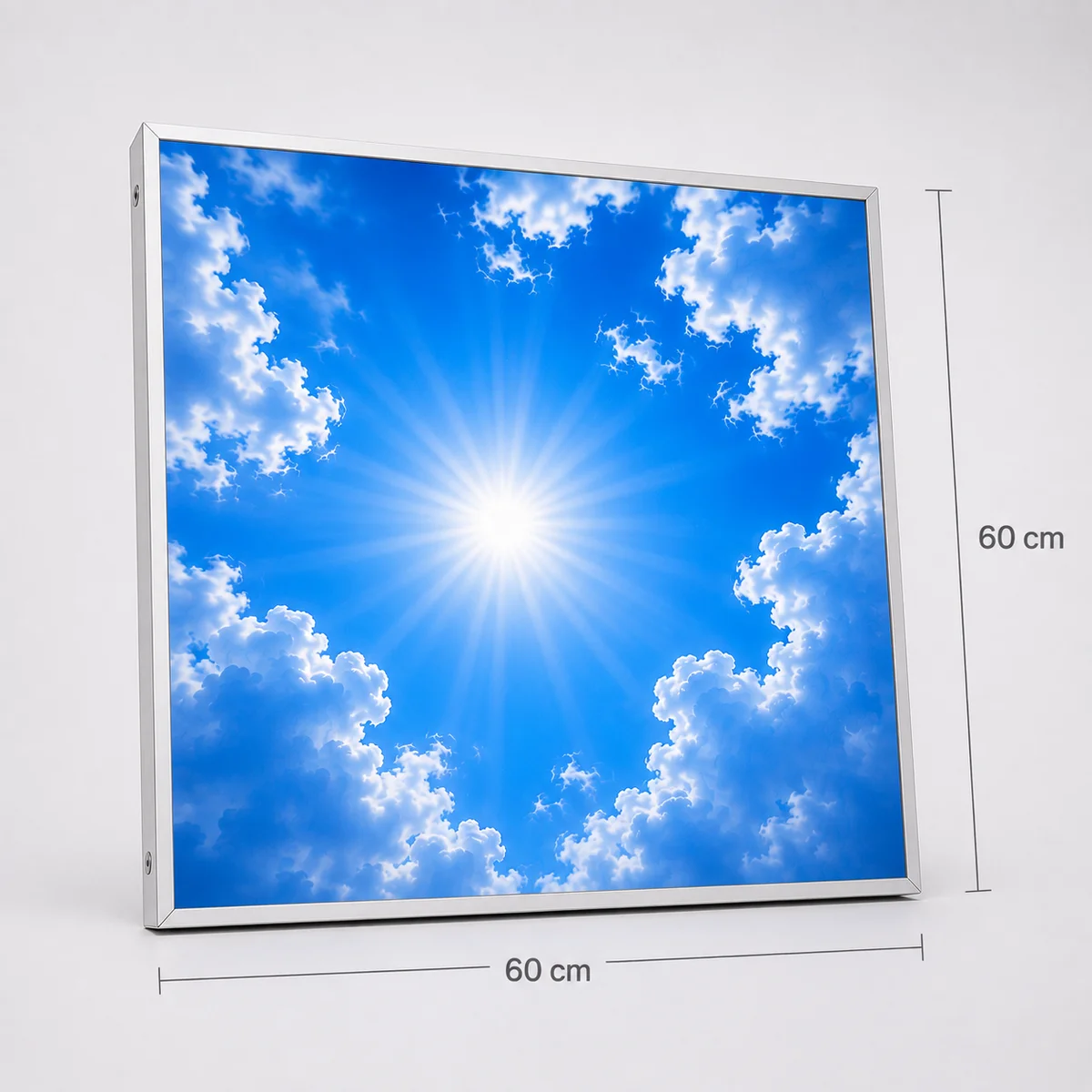
- Flexible integration: produced in 60x60, 60x120 or custom sizes, these panels integrate easily into suspended ceiling systems and give the feeling of a genuine skylight overhead.
Investing in modern LED sky panels to create architectural depth in windowless areas, and to let people re-establish a connection with the sky, is the most effective step in biophilic design.
2. Use Circadian Dynamic Lighting (Daylight Simulation)
The human body has been set for thousands of years by the movement of the sun. In the morning, bright light rich in blue raises alertness; towards evening, light that reddens and softens prepares the body for rest. Using a fixed, single-tone white light in a windowless room disrupts the circadian rhythm.
The answer: intelligent dynamic lighting (tunable white)
By installing circadian lighting systems in windowless areas you can simulate the actual time of day indoors. The colour temperature cycle of such systems through the day should look like this:
| Time of day | Recommended colour temperature | Light level (lux) | Purpose |
|---|---|---|---|
| Morning (08:00-10:00) | 4000K-4500K (natural white) | Medium to high (500 lux) | Starting the day alert, supporting cortisol release. |
| Midday (10:00-14:00) | 5500K-6500K (cool white) | High (750 lux) | Maximum focus, cognitive performance at its peak. |
| Afternoon (14:00-17:00) | 4000K (natural white) | Medium (400 lux) | Preventing the midday slump, a balanced working environment. |
| Evening (from 17:00) | 2700K-3000K (warm white) | Low (200 lux) | A transition that does not tire the eye, preparing for melatonin release. |
These dynamic transitions can be set automatically with building automation or smart LED drivers. Staff then read the time correctly in biological terms even in a windowless room.
3. Build Layered Lighting and Indirect Light Sources
The most common mistake in windowless areas is hanging a single powerful fixture in the middle of the ceiling and trying to light everything with the same evenness. That creates the feeling of a hospital or a laboratory and makes the space cold. In biophilic design natural light is not even; it filters through leaves and creates shadows and glints. To imitate that, lighting has to be layered.
Ways to build the lighting layers
- Ambient lighting: the base layer that provides general safety and visibility. Recessed fixtures that spread light evenly, or LED sky panels, can be used here.
- Task lighting: light aimed directly at the working surface. Adjustable desk lamps, light bars behind the monitor or directional spots prevent shadows on the desk.
- Accent lighting: light that brings forward architectural details, plants or artworks. Wall sconces and LED strips belong to this group.
- Indirect lighting (wall washing): the technique of bouncing light off a wall or ceiling rather than letting it reach the eye directly. Wall washing with concealed LED strips makes walls appear further away and a windowless room read as larger.
4. Focus on the Right CRI and UGR Values
The quality of lighting is measured not only by how bright it is, but by how faithfully it shows colours and how little it tires the eye. If you suffer headaches or watering eyes while working under artificial light, the problem is most likely a low CRI or a high glare value.
Why does the CRI (colour rendering index) matter?
CRI measures how faithfully a light source reproduces the true colours of objects compared with sunlight, on a scale of 0 to 100.
- In windowless rooms, LED fixtures with a CRI of at least 90 (Ra > 90) should be preferred.
- A high CRI makes furniture, wall colours and, above all, living plants look natural, which strengthens the biophilic effect.
Prevent glare with UGR (unified glare rating)
Glare occurs when the light source reaches the eye directly and causes temporary loss of vision or discomfort.
- Office standards require a UGR below 19 (UGR < 19).
- Fixtures with micro-prismatic diffusers and specially designed LED sky panels keep glare to a minimum and protect eye health.
5. Use Natural Materials, Mirrors and Active Biophilia (Living Plants)
Light cannot create a space on its own without interacting with the surfaces it meets. Once the right lighting is in place in a windowless room, supporting elements are needed to spread and reflect that light and to reinforce the sense of nature.
- Reflective surfaces and mirrors: placing large frameless mirrors directly opposite artificial light sources can double the perception of depth. Matt, light wall colours (ivory, sand beige, light grey) let the light spread freely through the room without being absorbed.
- Choosing biophilic plants: ordinary plants cannot survive in windowless offices. Species with a high tolerance for low light, such as snake plant, ZZ plant or peace lily, can live under artificial lighting with the right spectrum. You can even build vertical living walls using grow lights made for plants.
- Natural textures: using real wood, bamboo and stone details in the furniture maximises the sense of the outdoors when combined with artificial light.
Conclusion: Bring Windowless Spaces Together with Nature
Working in a windowless room or office does not mean being condemned to inefficiency or a gloomy mood. With a well-planned biophilic strategy it is possible to turn these areas into the most sought-after working corners.
With LED sky panels integrated into the ceiling that simulate the endlessness of the sky, dynamic colour temperature transitions aligned with the circadian rhythm, layered indirect lighting techniques and the power of living plants, you can invite nature in even without windows. Investing in the right lighting elements does not only illuminate a space; it optimises directly the quality of life and the productivity of the people within it.
Related products
- 60x60 LED Sky Panel — recessed, suitable for T24 suspended ceilings
- 60x120 LED Sky Panel — recessed, suitable for T24 suspended ceilings
- 30x30 LED Sky Panel — recessed, suitable for T24 suspended ceilings
Related guides: Reviving Dark Offices: How Sky Panels Affect Staff Motivation, Biophilic Design and 30x30 LED Sky Panels: Psychological and Physiological Benefits, How Biophilic Design Changes Interior Lighting: Mood and Productivity with LED Sky Panels. For your project you can review for product options see our LED sky panel collection.