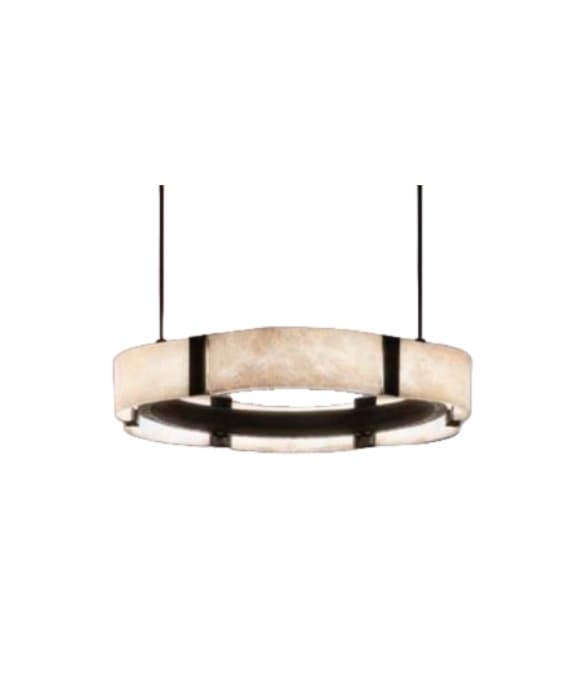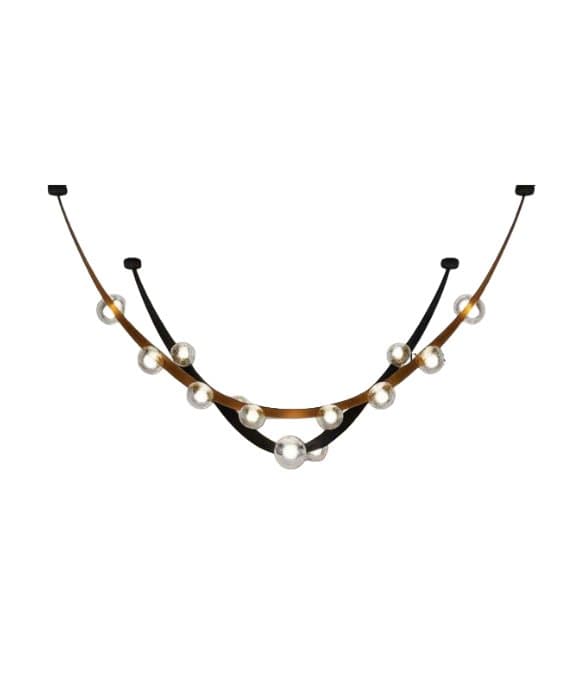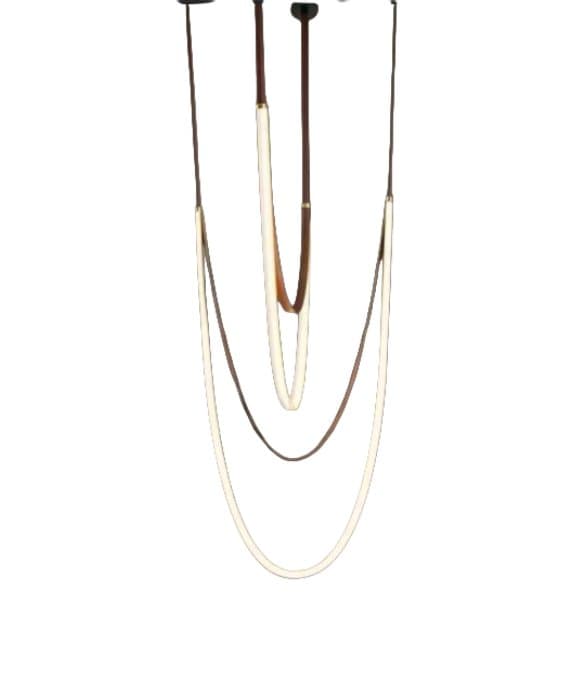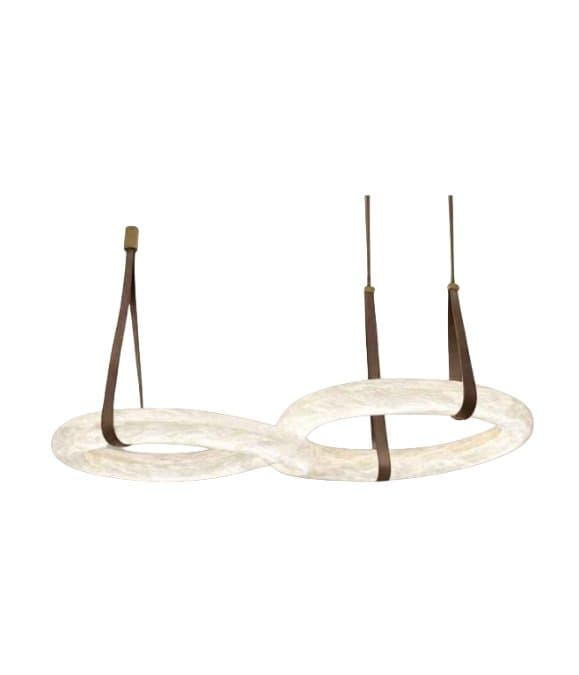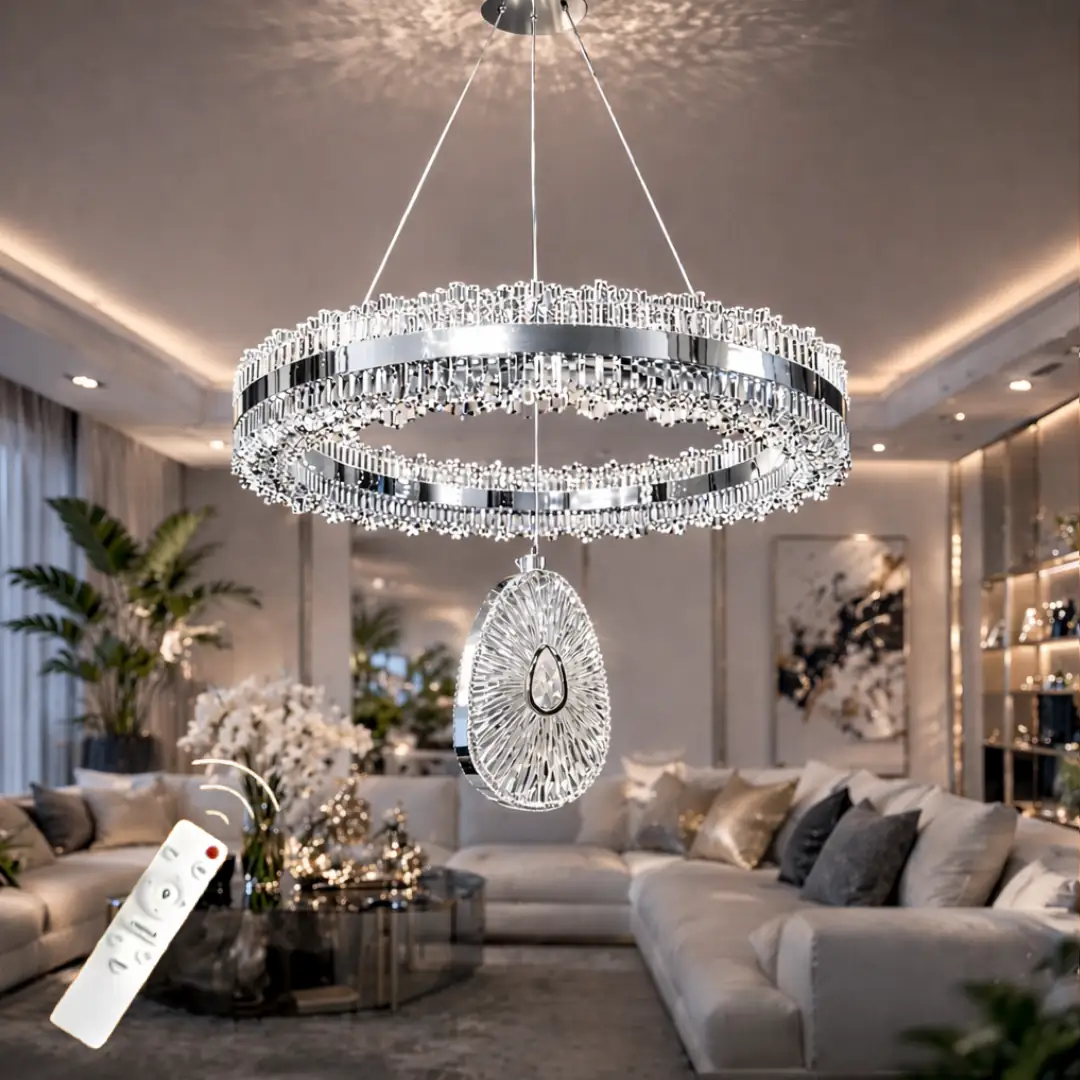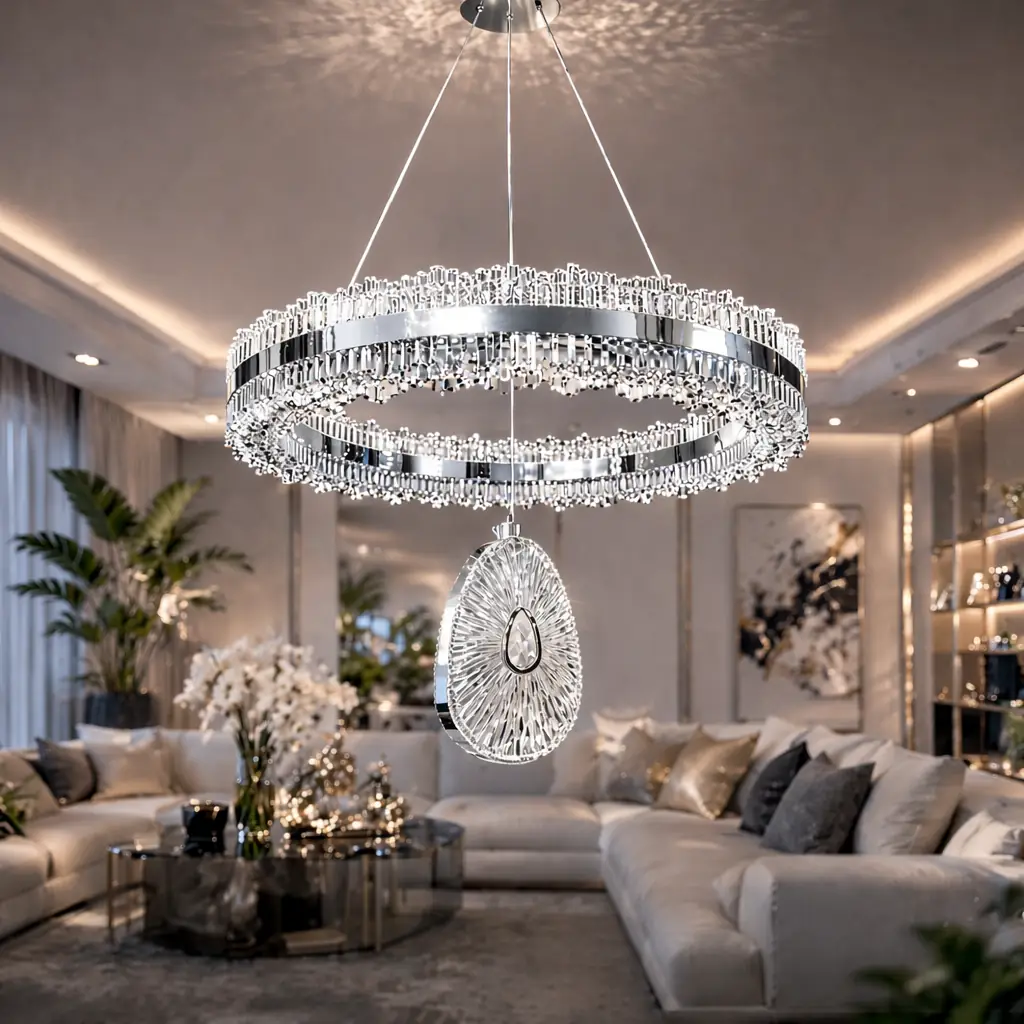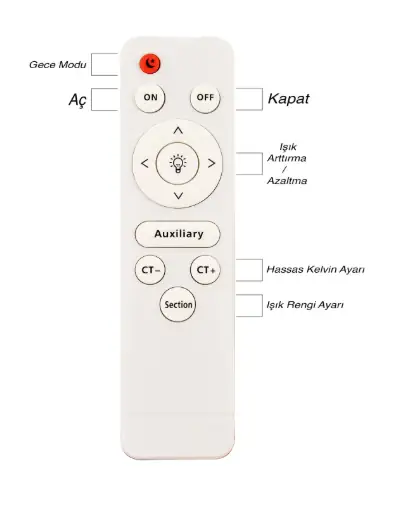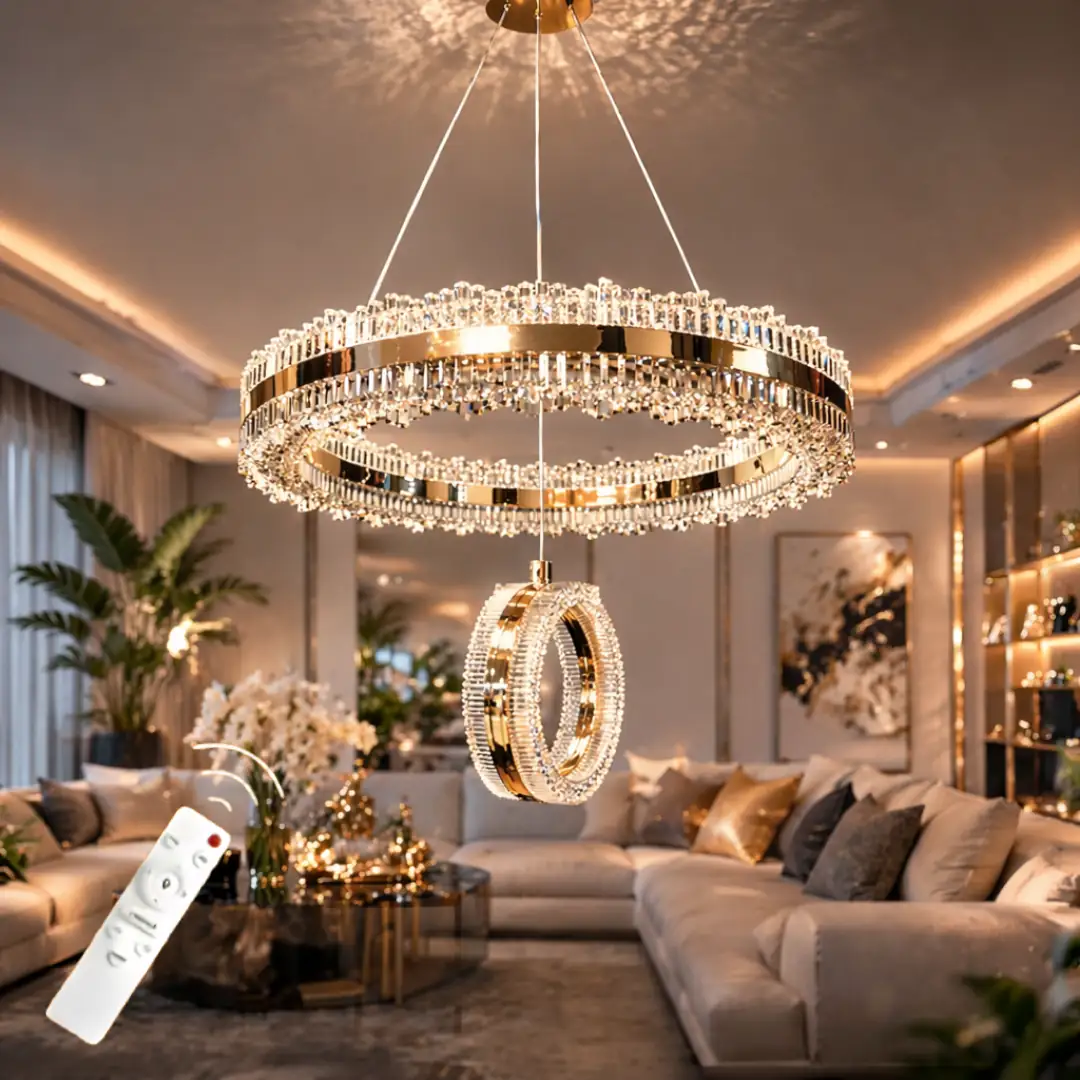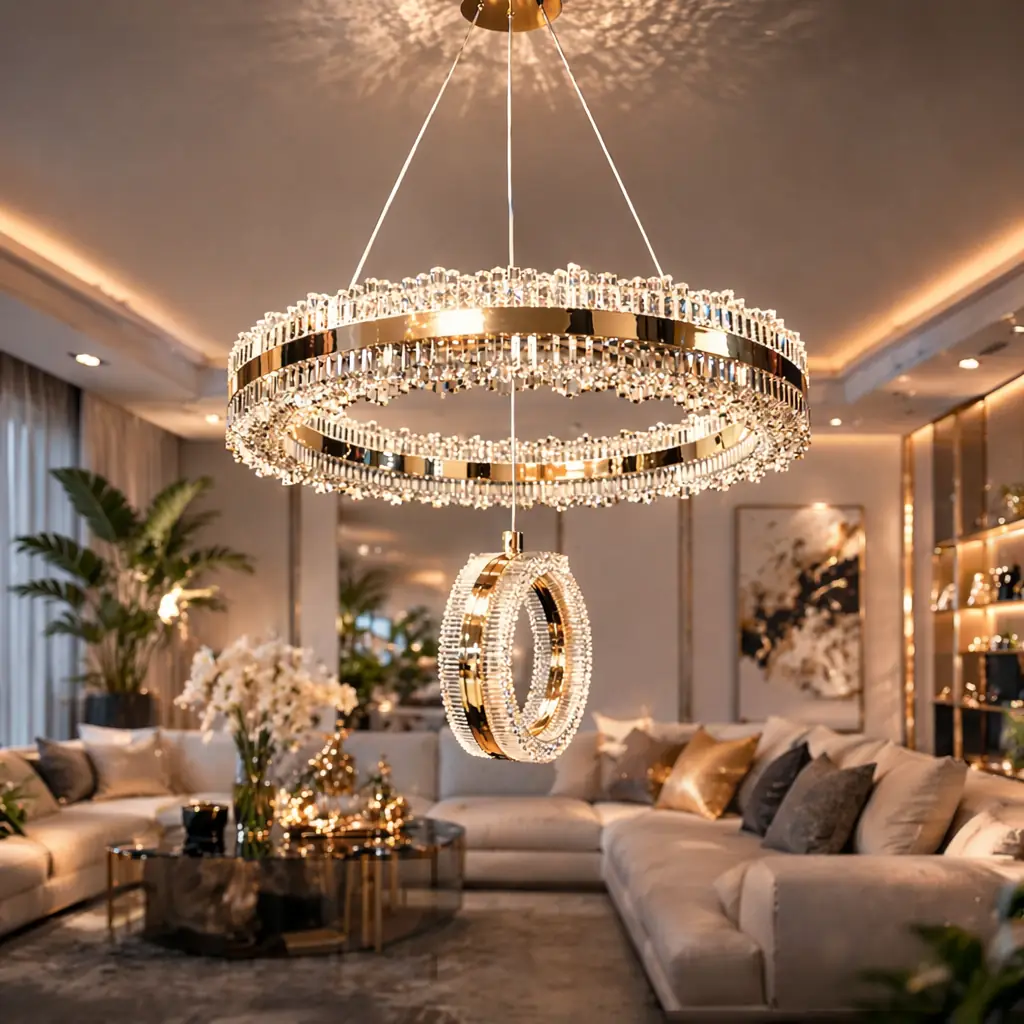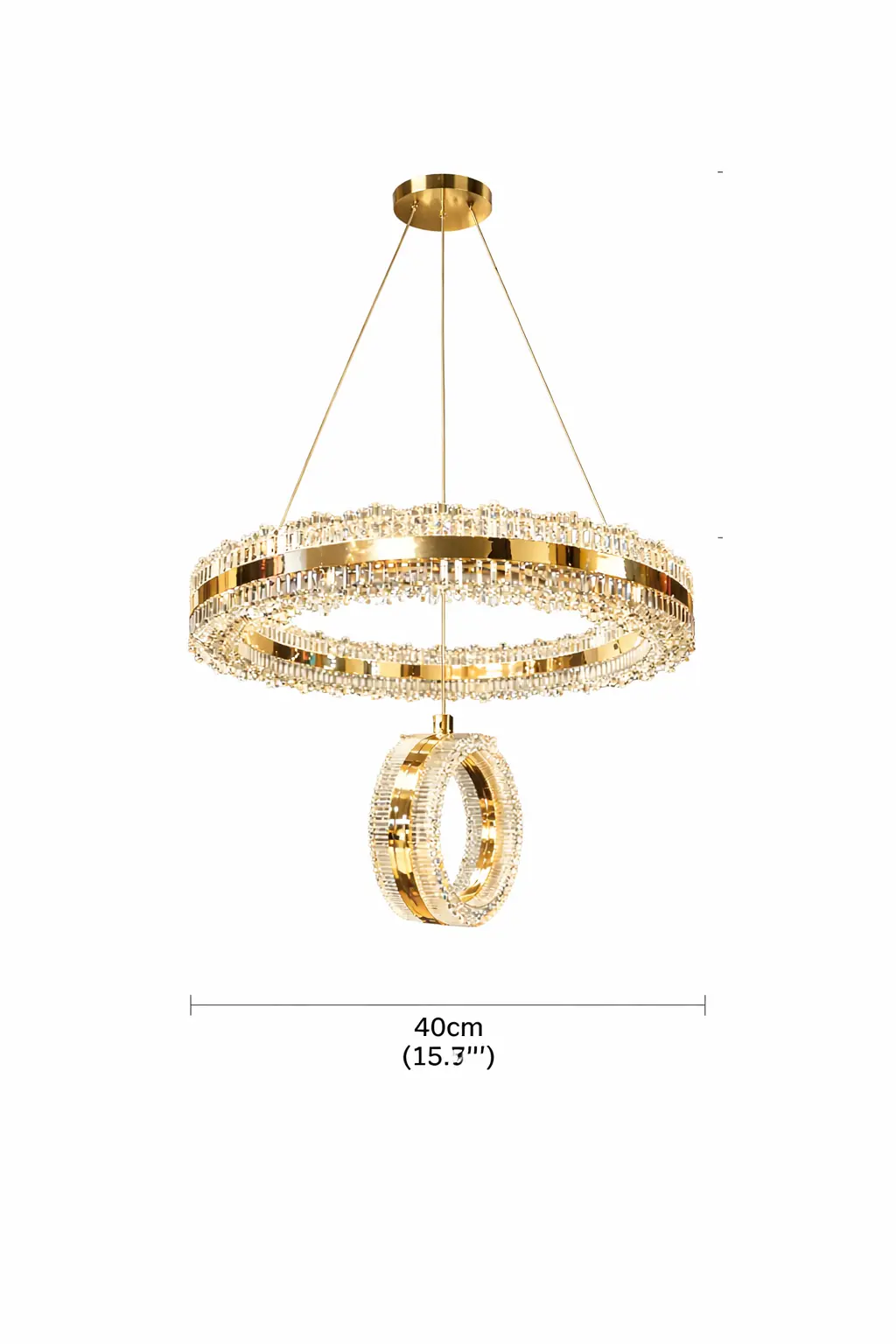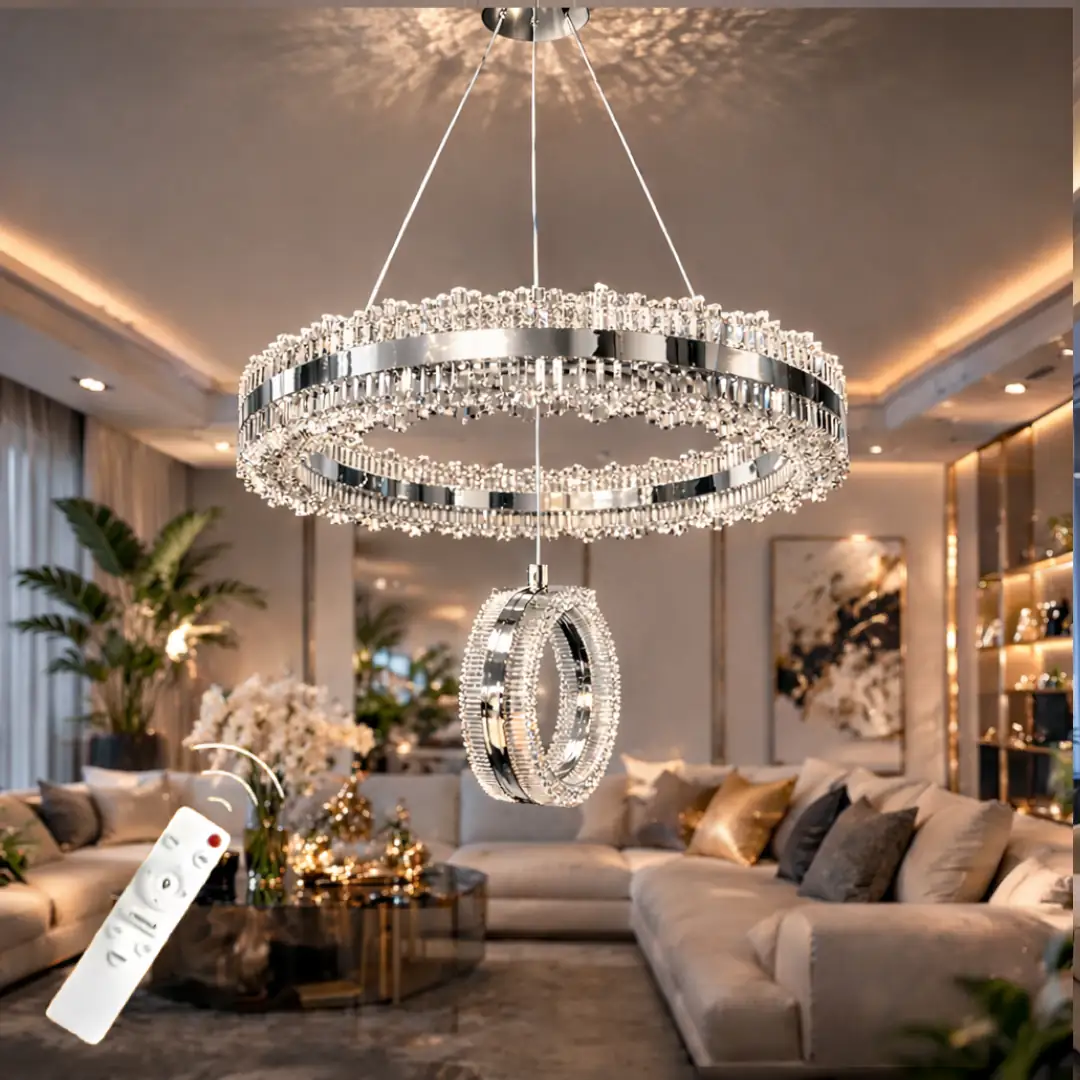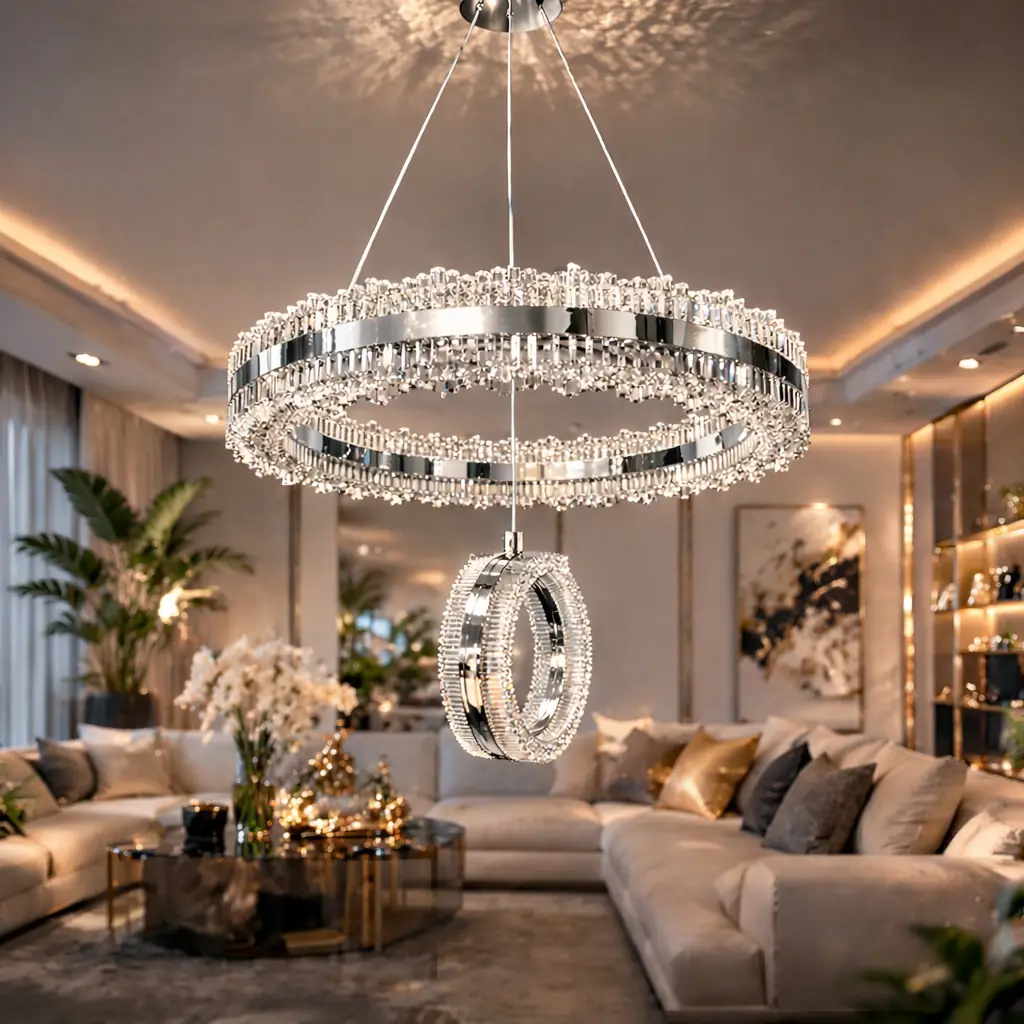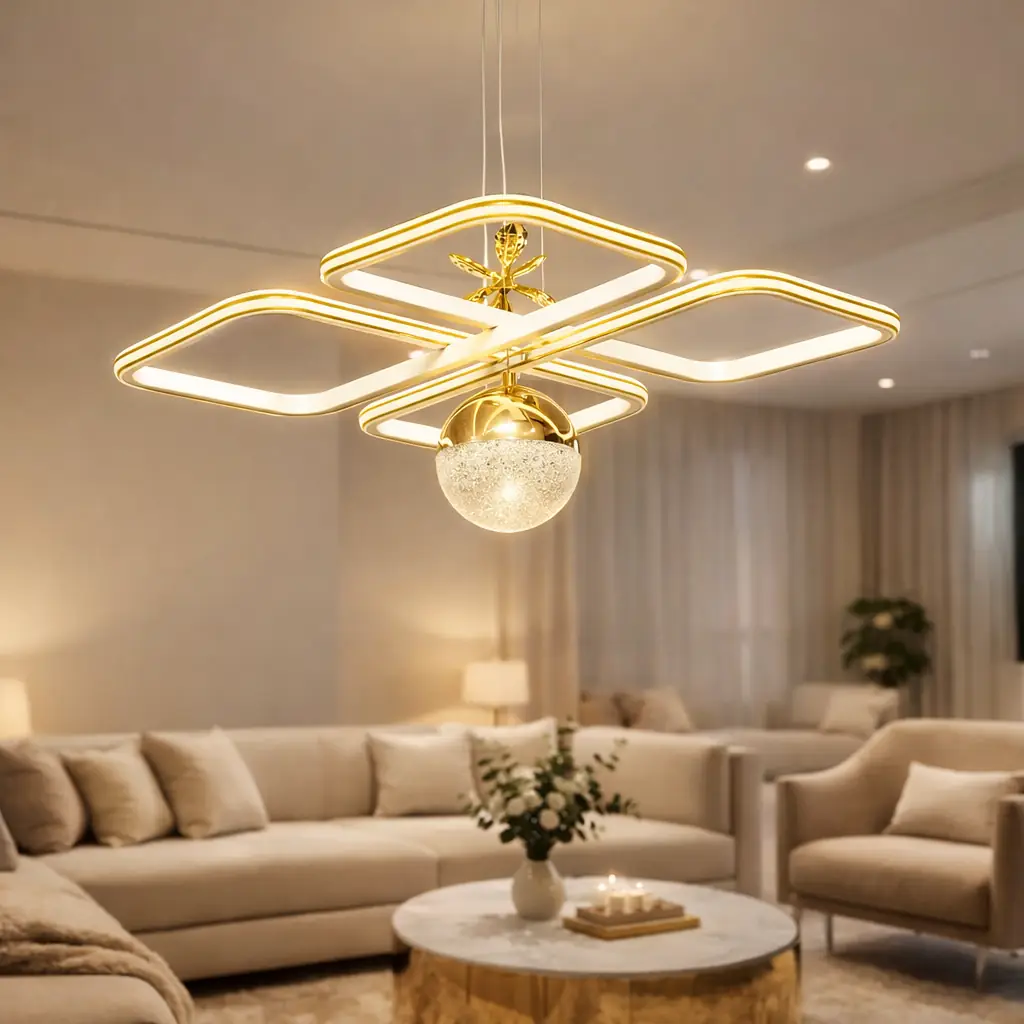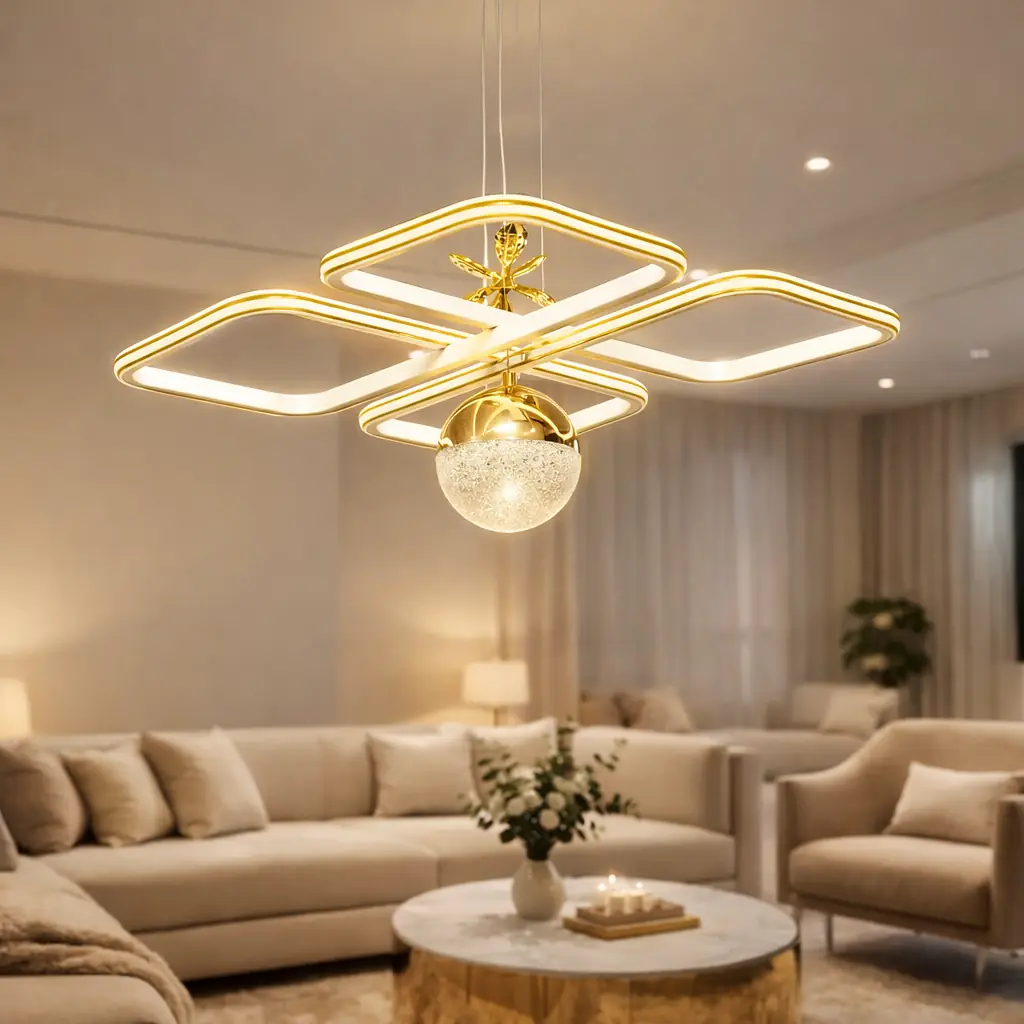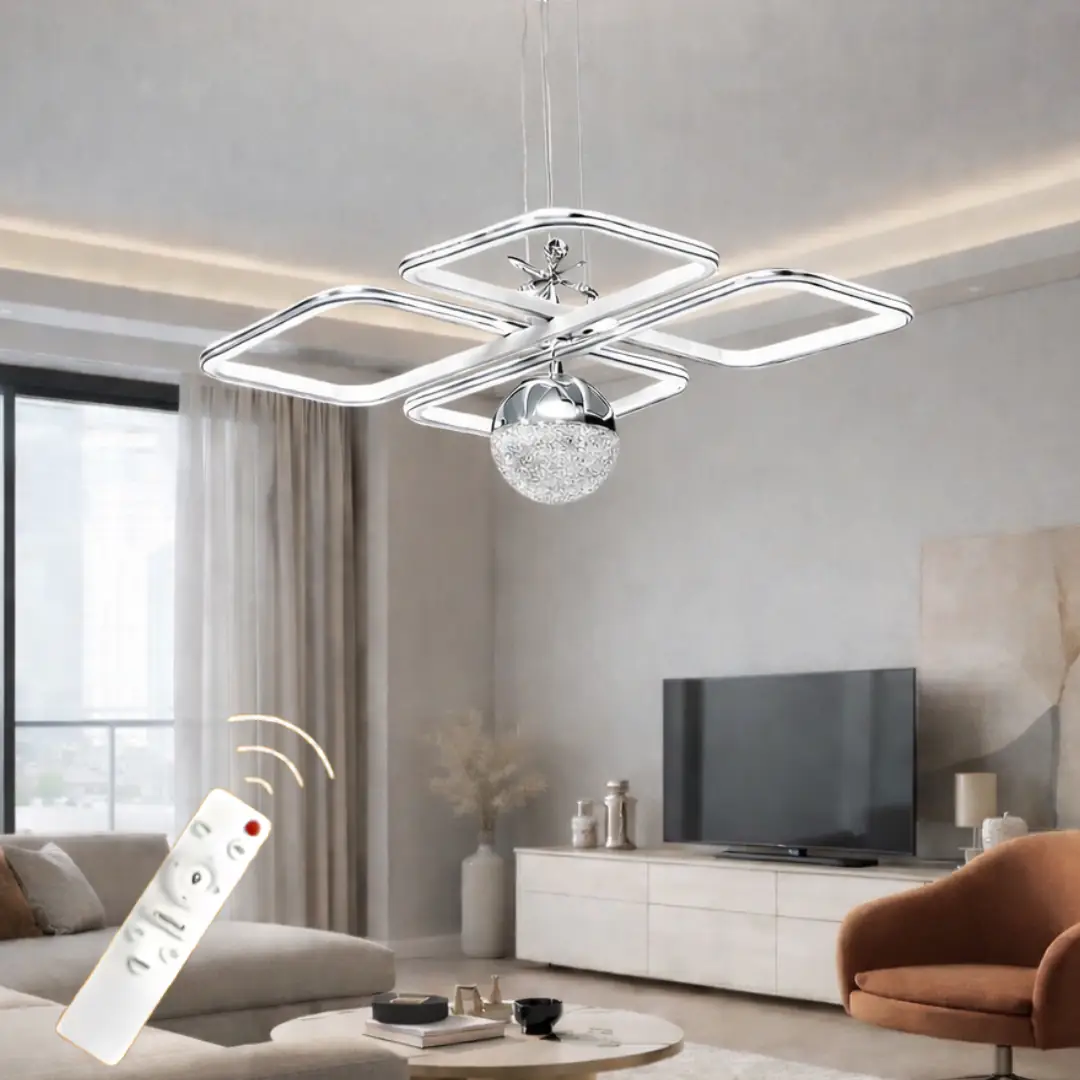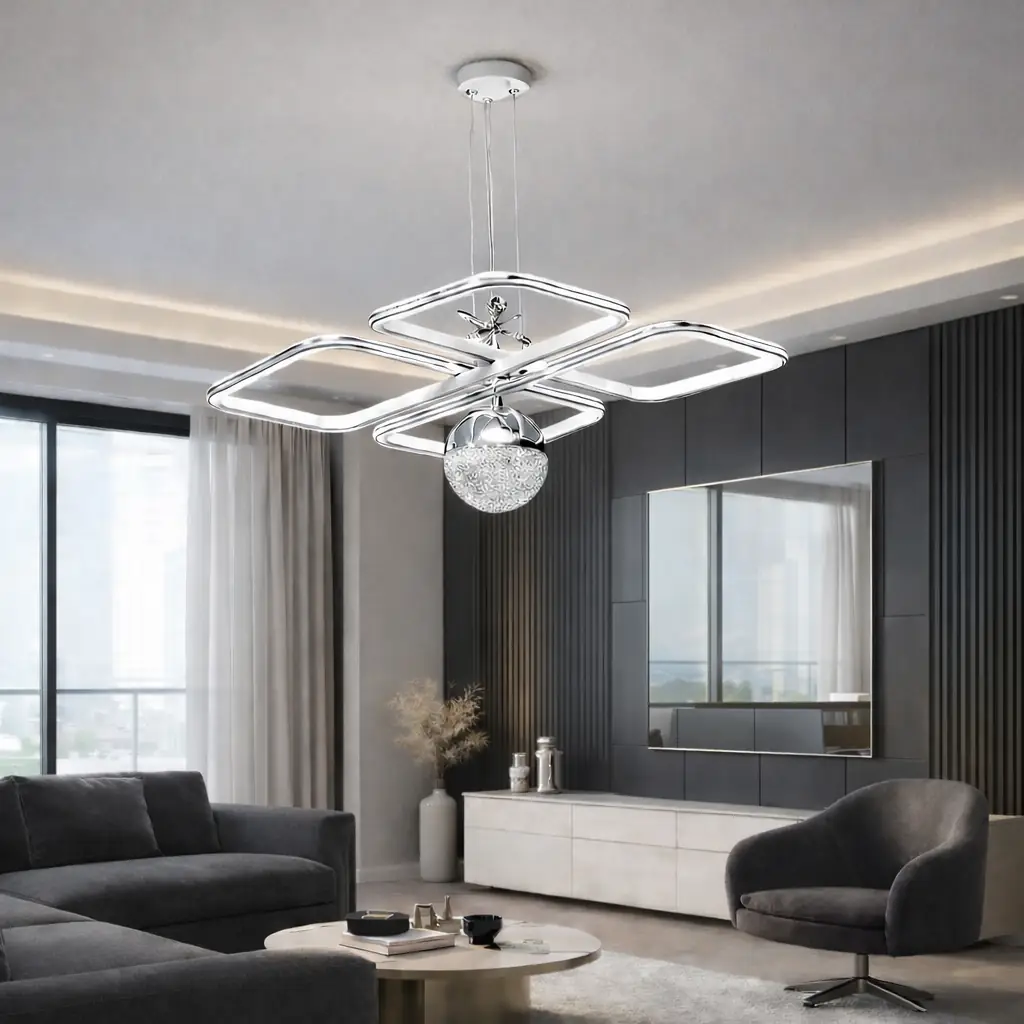
Gökyüzü Panel

Chandeliers

512 products

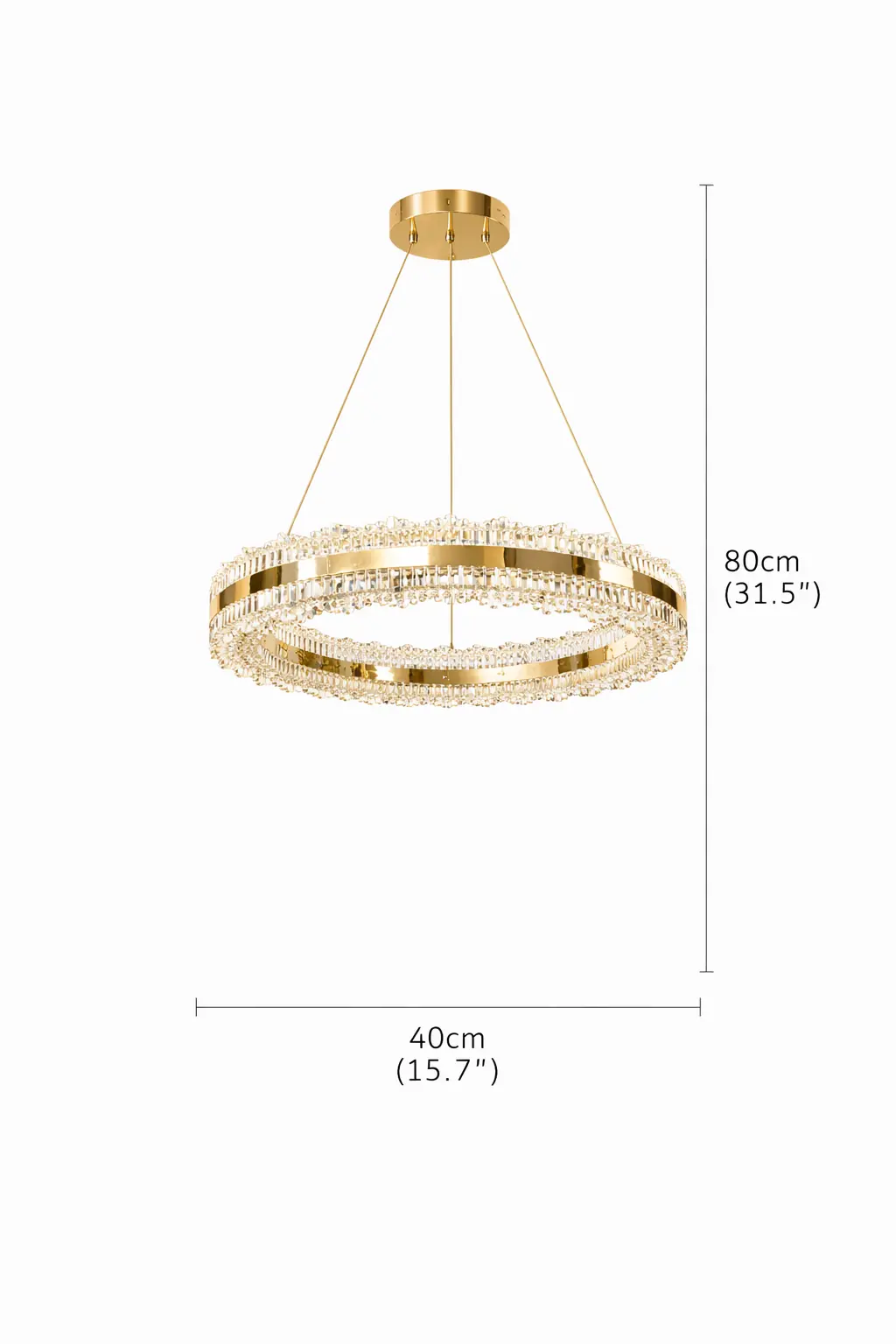
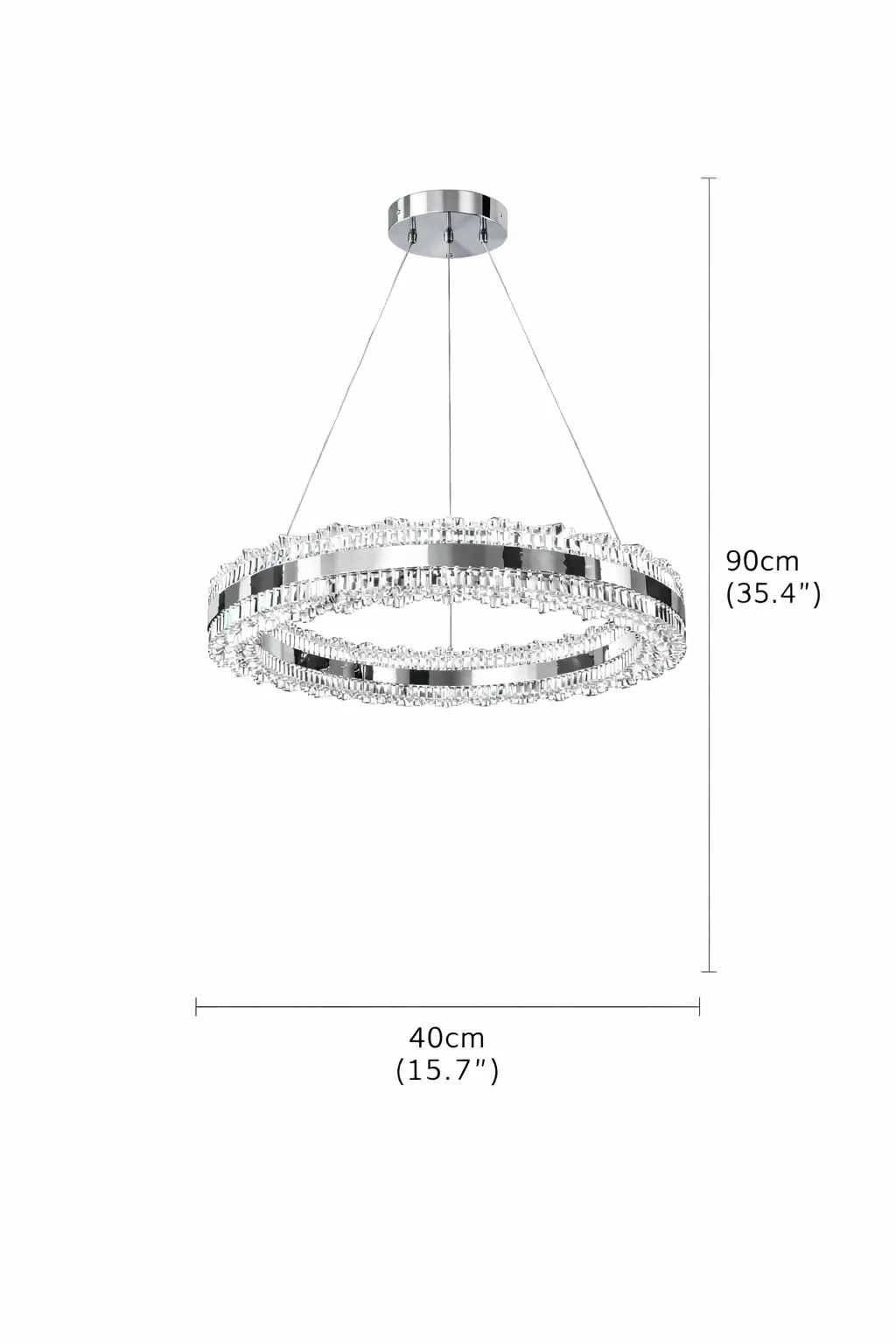
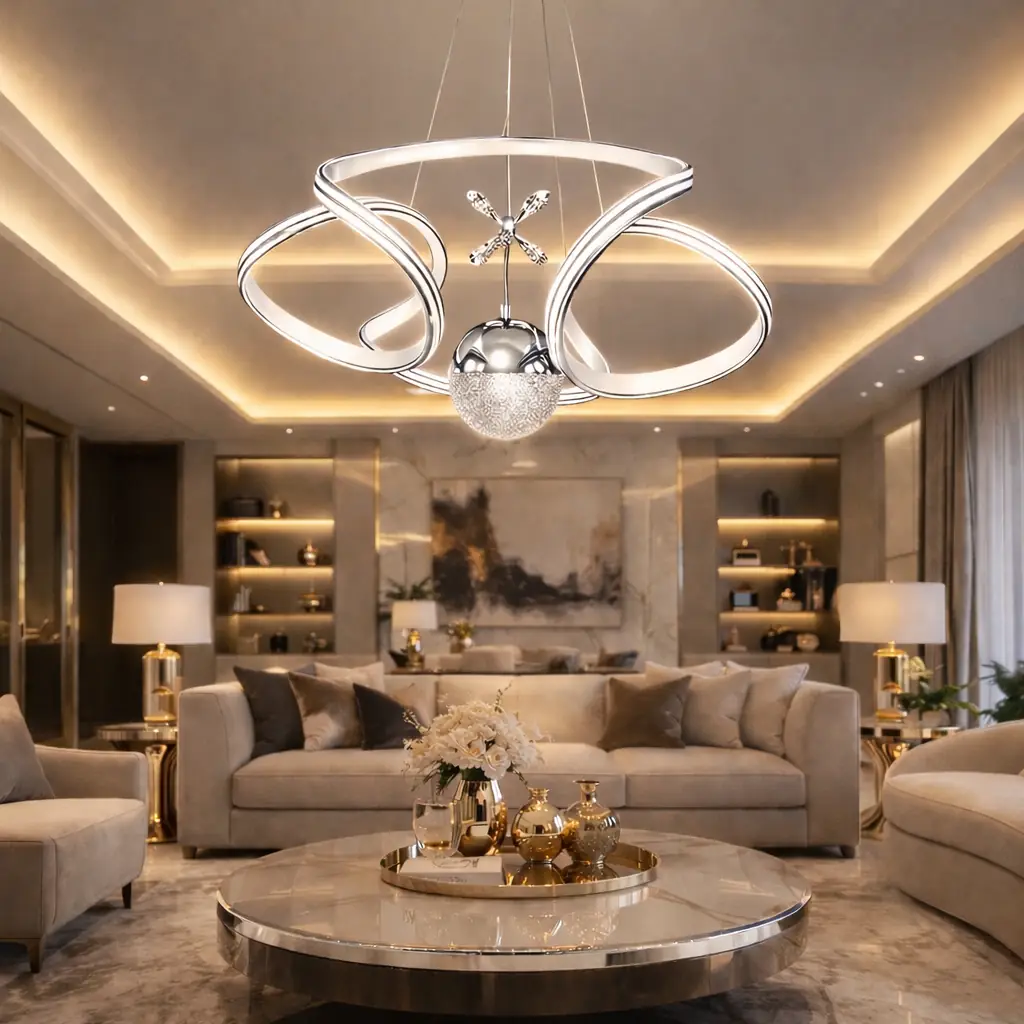
A chandelier carries a room's general lighting and at the same time defines its character. The right size makes a room look larger; the wrong one either sits flat against the ceiling or overwhelms the space. The first criterion is SIZE. Above a dining table, a fixture roughly one third the width of the table looks balanced, and its lower edge should sit about 70–80 cm above the tabletop. In a living room, the sum of the room's short and long sides in metres gives a practical upper limit in centimetres for the chandelier's diameter. In circulation areas the lower edge must stay above head height. The second criterion is the LIGHT SOURCE. In integrated-LED models the light source is built into the body: no bulb is fitted and the colour temperature is fixed. Models with lamp holders (E27, E14, G9) let you change the bulb later. In both cases a single chandelier should not be expected to carry the whole room; a layered scheme with wall lights, floor lamps and spots is far more comfortable. Material governs both look and upkeep: glass and crystal refract light and add sparkle but need regular cleaning; acrylic is light and easier to install on high ceilings; metal bodies are durable; wood and rattan add natural texture. For heavy models, check the ceiling's load capacity and hook type before installation — plasterboard ceilings require suitable anchors.
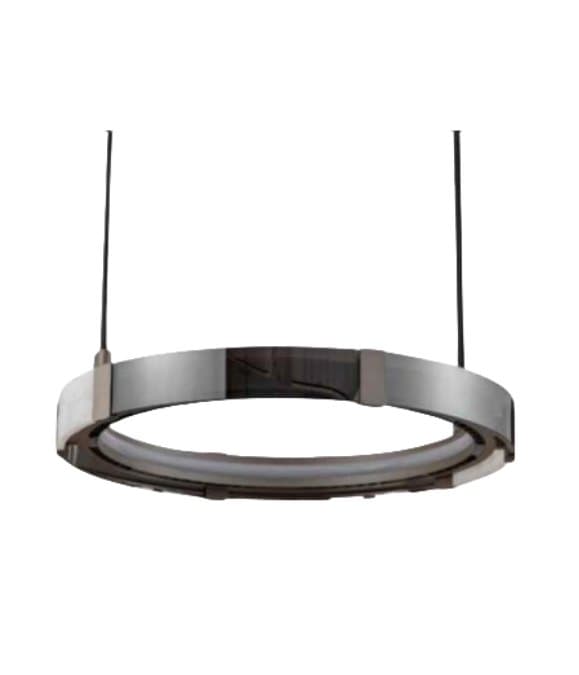
Colour· click to filter

Related Categories

How to Choose a Chandelier: Size, Height and Light

Three things decide a chandelier: the width of the room, the ceiling height and the colour of the light. Get the size wrong and even a good chandelier will either crowd the room or disappear in it. This guide is written to help you narrow our 489 chandelier models down to the one that suits your own space.

Getting the Size Right

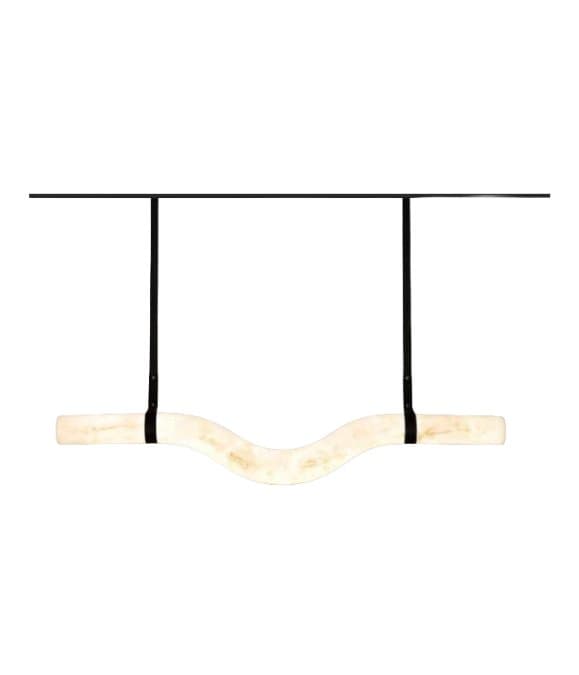
For linear and in-line chandeliers the size follows the length of the table or island; for round chandeliers you work from the shorter wall of the room. The most common width in our collection is 120 cm, with wider options at 150, 160 and 180 cm.

  • Over a dining table: the chandelier should be roughly two thirds the width of the table. Over a 180 cm table, a 120 cm linear chandelier sits in balance.
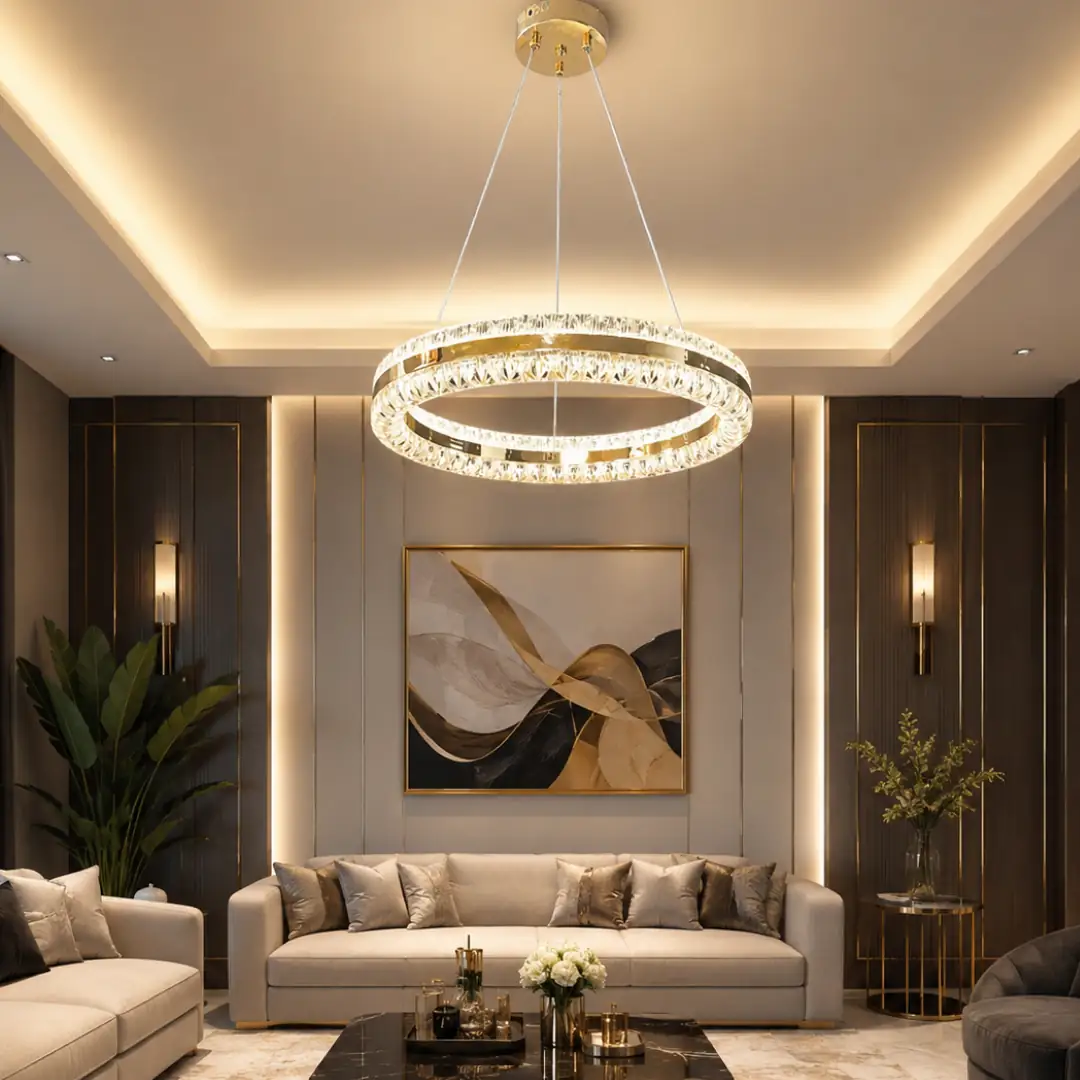
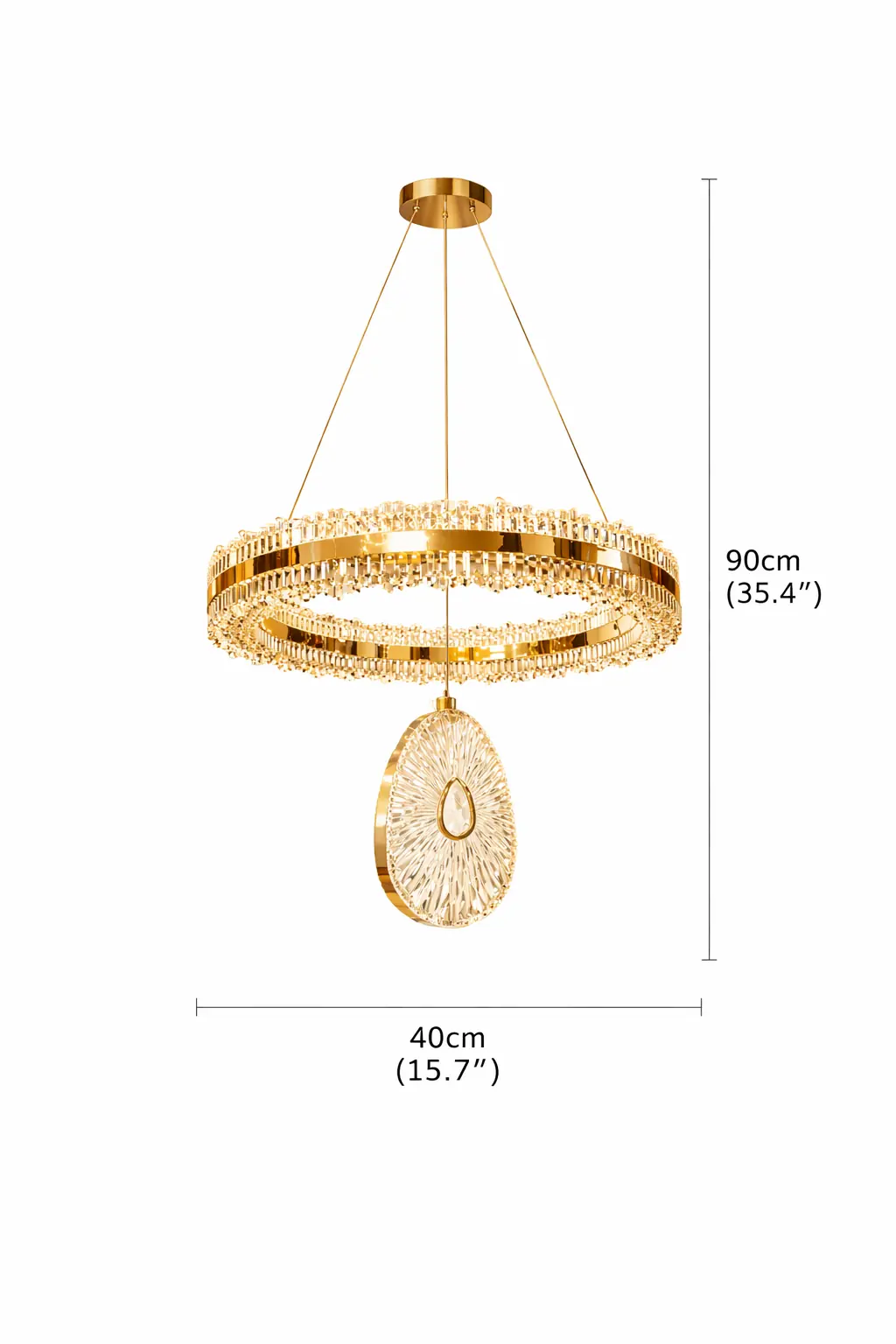
  • In a living room: add the room's length and width in metres; the resulting number in centimetres is a workable diameter. A 4 × 5 m room gives about 90 cm.
  • Over a kitchen island: the fitting should not exceed the length of the island, and it is hung so the lower edge stays about 75–85 cm above the worktop.

Ceiling Height and Drop

The drop is what makes a chandelier feel right or wrong. Over a dining table the lower edge sits about 75–85 cm above the tabletop — high enough not to block the line of sight across the table, low enough to hold the light on it. In a room with a 3 m ceiling and no table below, keep the lower edge at least 210 cm above the floor.

Colour of the Light

Light colour is measured in Kelvin (K) and it changes how a room reads. Our decorative chandeliers use mainly 3000K warm white; this tone sits well with wood, brass and textile surfaces and is not tiring in the evening. Where a more neutral look is wanted, 4000K works; 6500K belongs only in work and technical areas.

Body Colour and Material

  • Black and anthracite: create contrast in modern and industrial schemes and sharpen the line against a light ceiling.
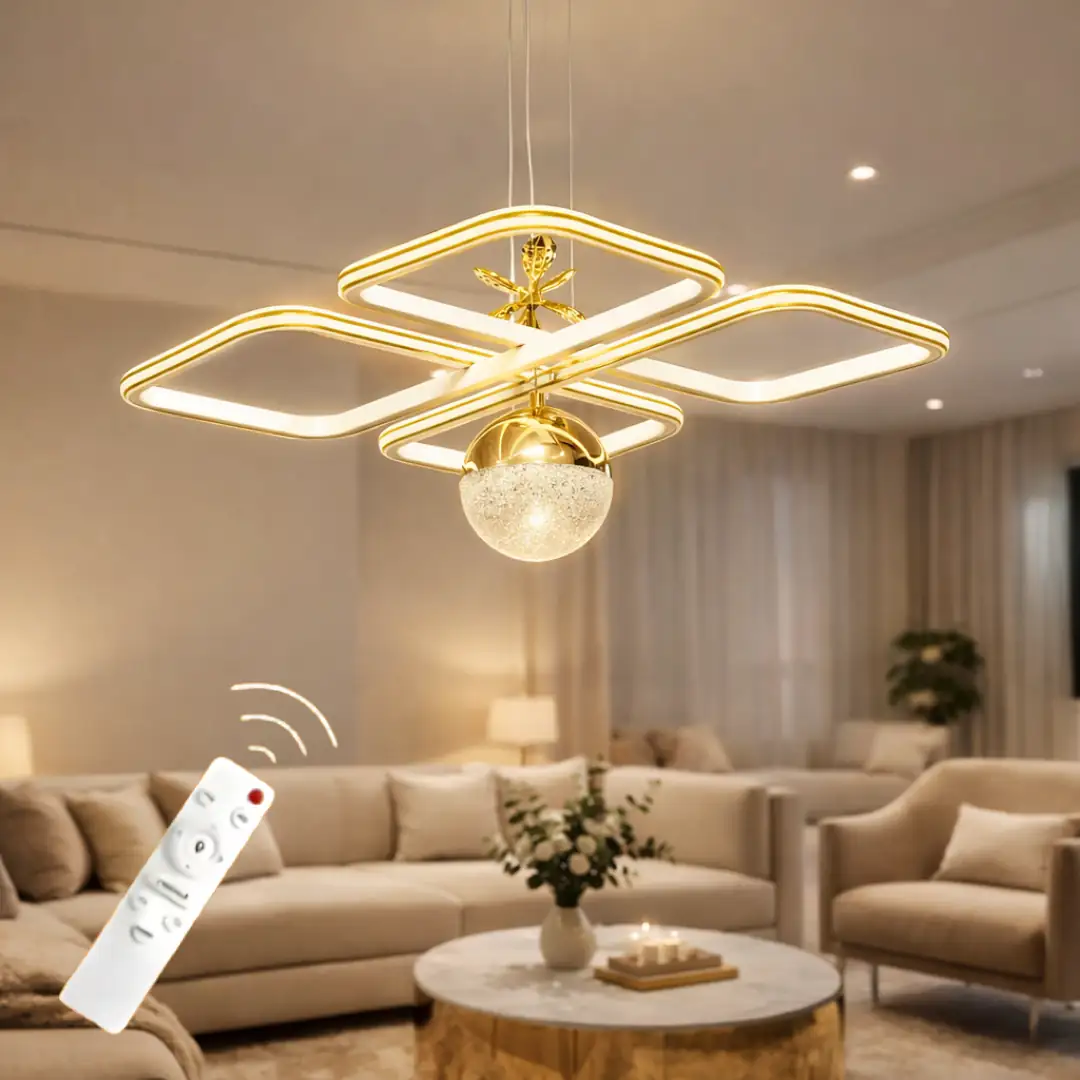
  • Gold and brass: add warmth in classical and art deco interiors.

  • White: merges with the ceiling and visually pushes the fitting back in small rooms.
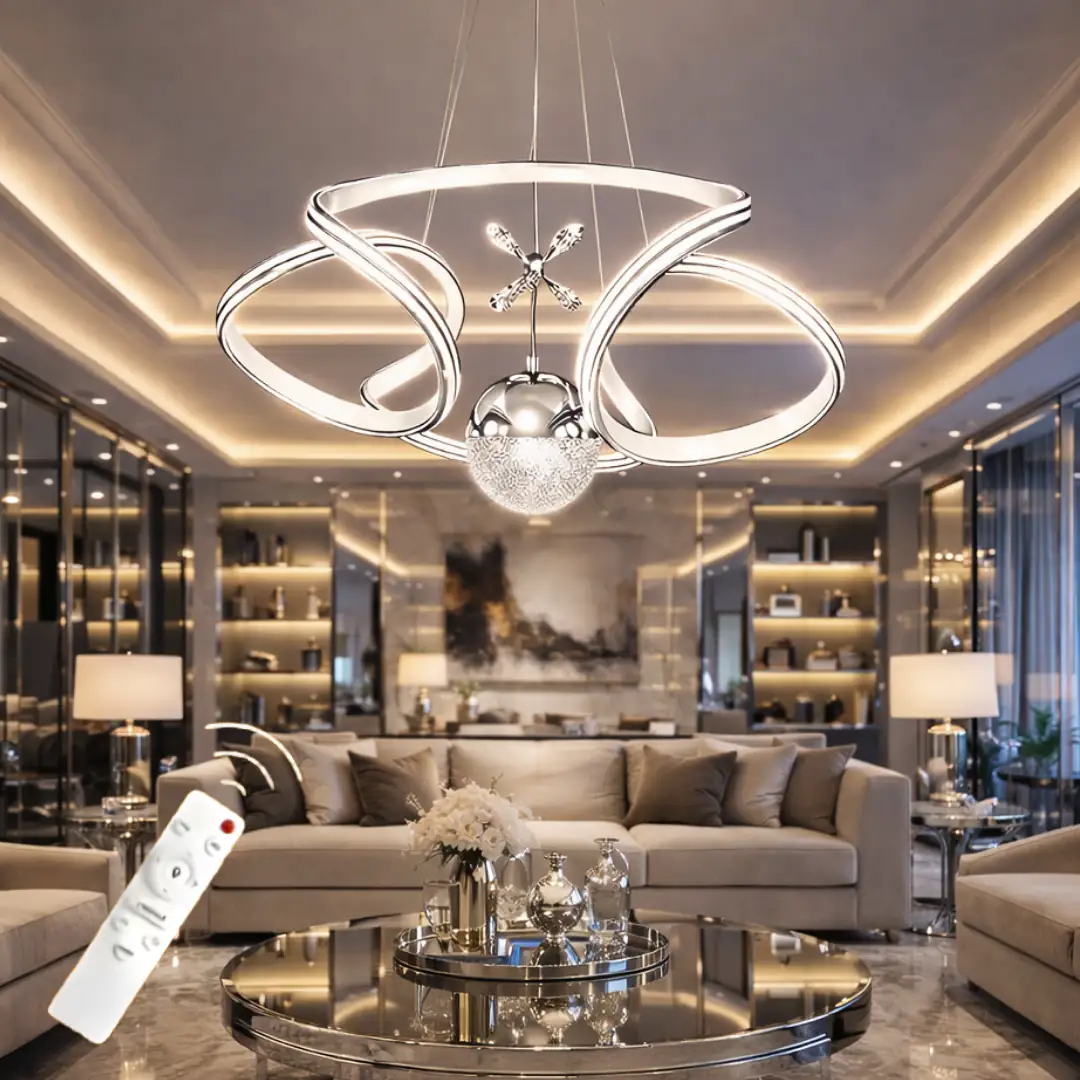
Budget

The 111 chandelier models with a published price run from 17 EUR to 1,305 EUR, with a median of around 158 EUR. Models made to order and priced by size show "Request a quote" instead of a figure — for these you can share the dimensions and quantity through Live Support and receive a price.
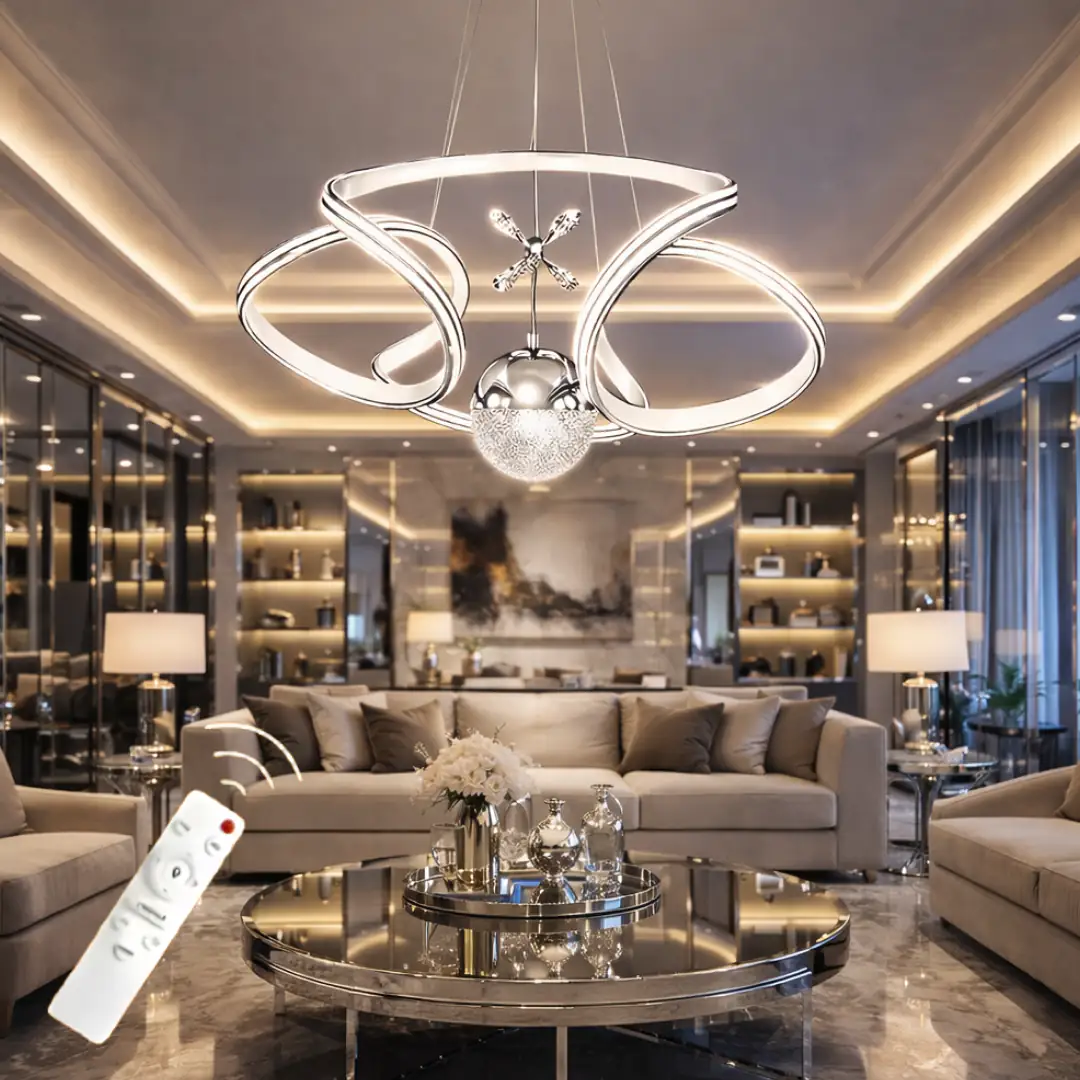
Installation and Use

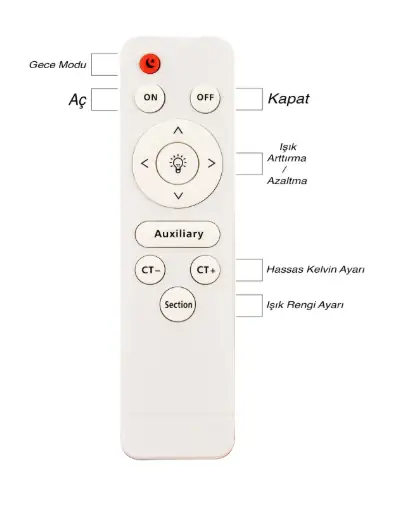
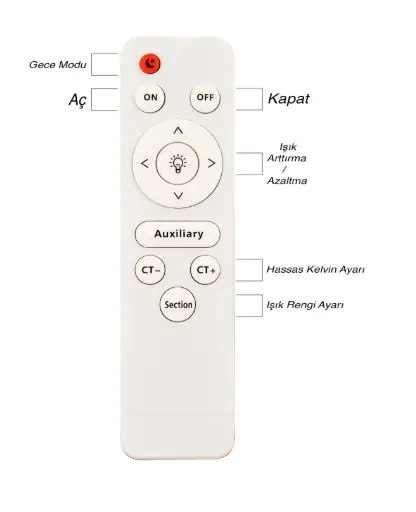
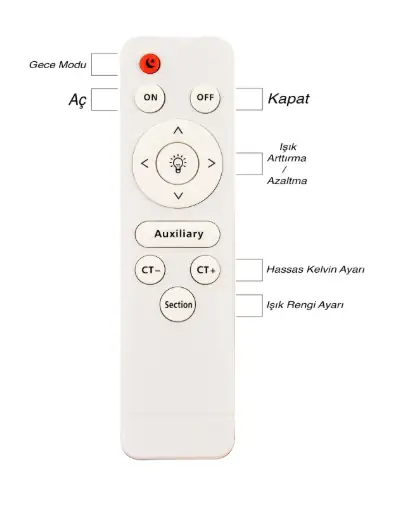
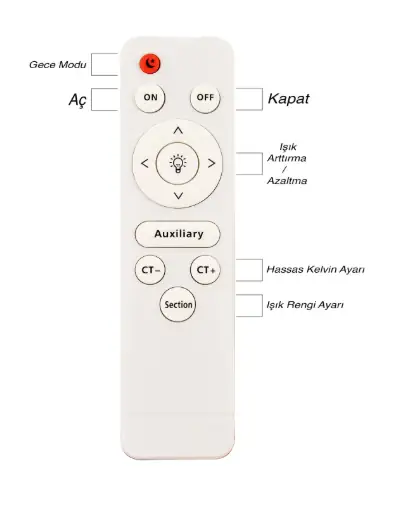
Chandeliers are fixed to a ceiling hook or a mounting plate; with heavier models on a plasterboard ceiling, choose a point that falls on a carrier profile line. If you want to dim the fitting, confirm before ordering that its driver is suitable.

Frequently Asked Questions

Can a chandelier and wall sconces be used together?

Yes. In a living room the chandelier gives the general light while wall sconces add a soft fill along the wall; together they produce a more layered result.

What is the difference between a pendant and a classic chandelier?

Pendant models drop from a single point and give focused light over a table or island; you will find the LED pendant light collection under its own heading.

Is the bulb included?

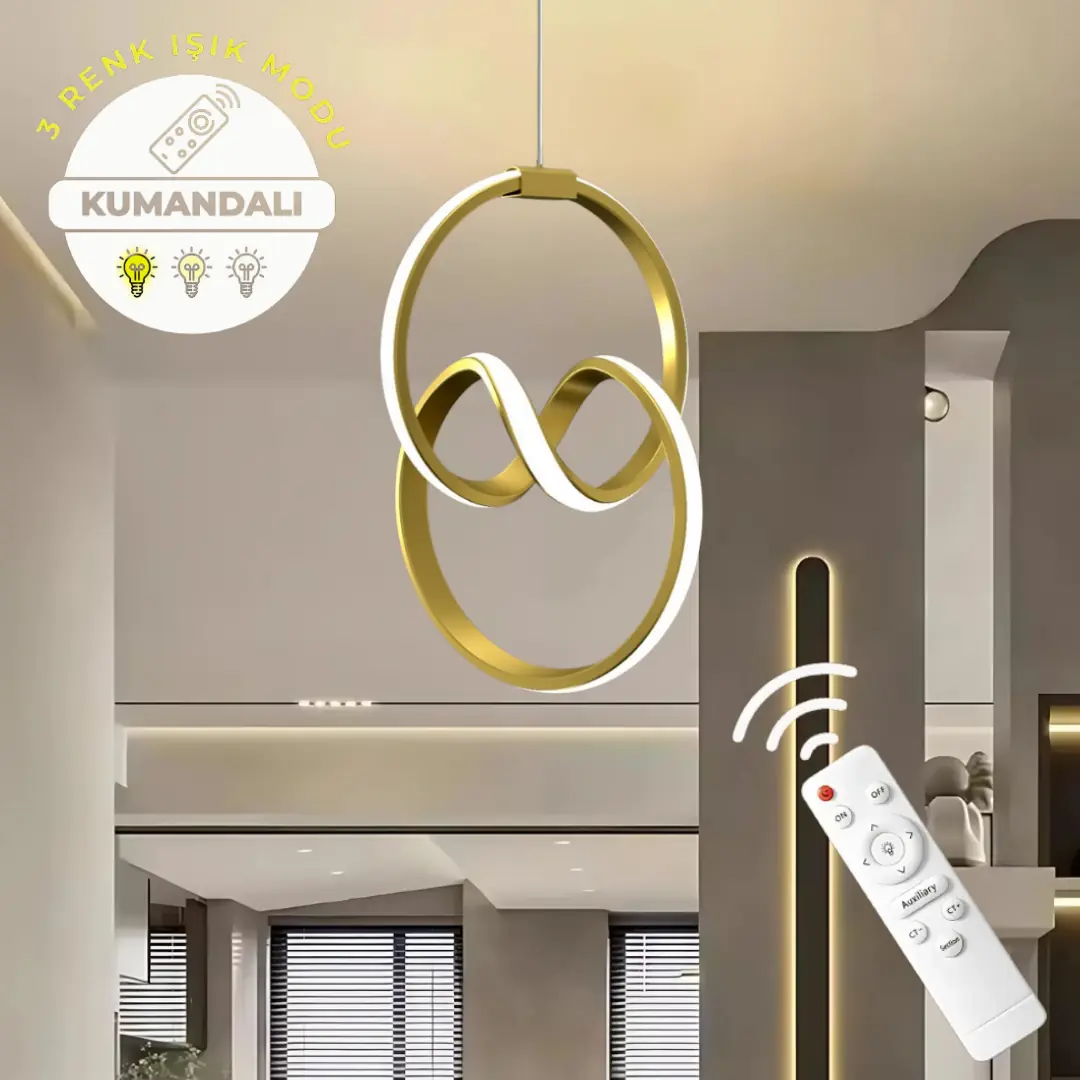
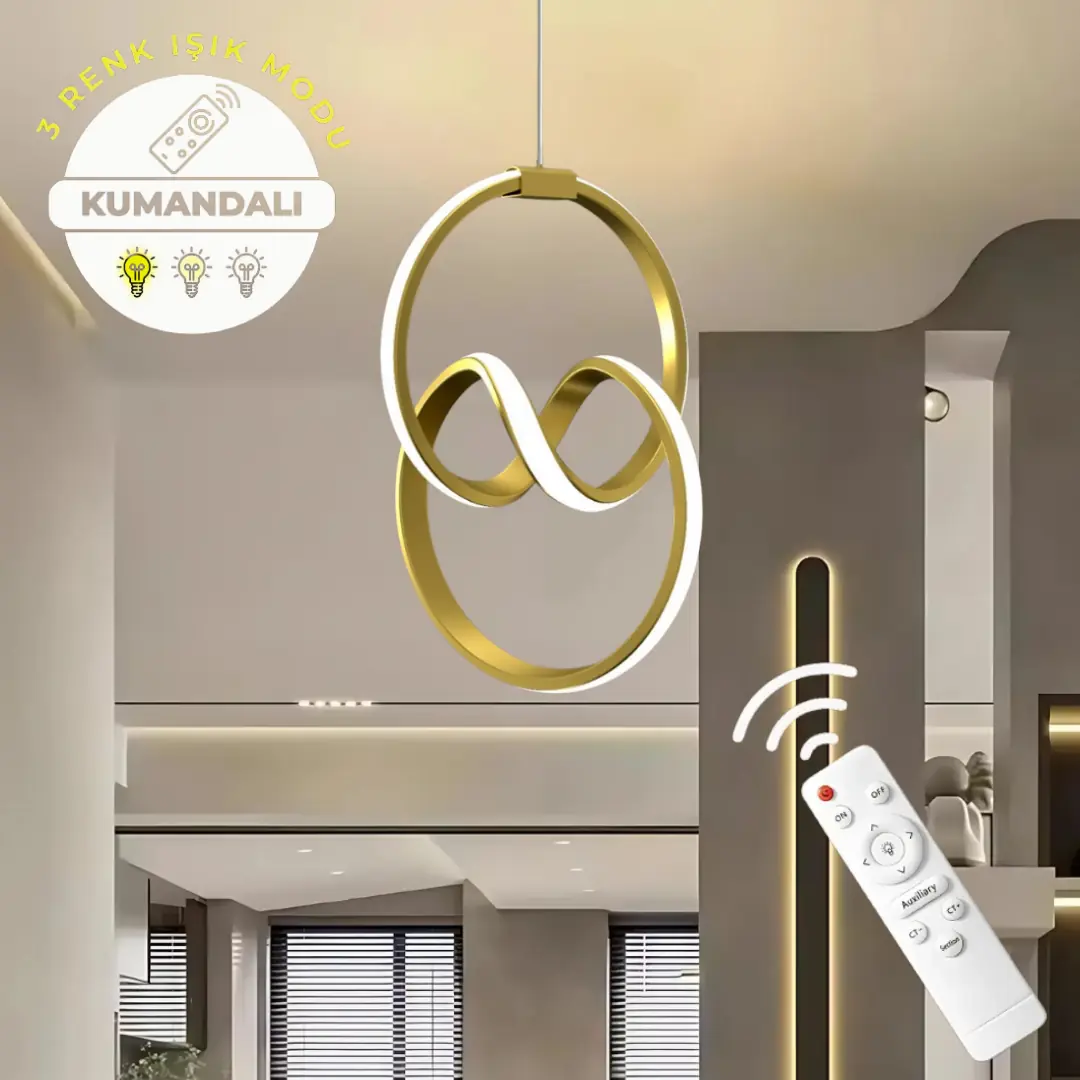
In integrated LED models the light source is built into the body and no separate bulb is needed. For models with lamp holders you can choose a suitable bulb from LED bulbs.


Related Guides