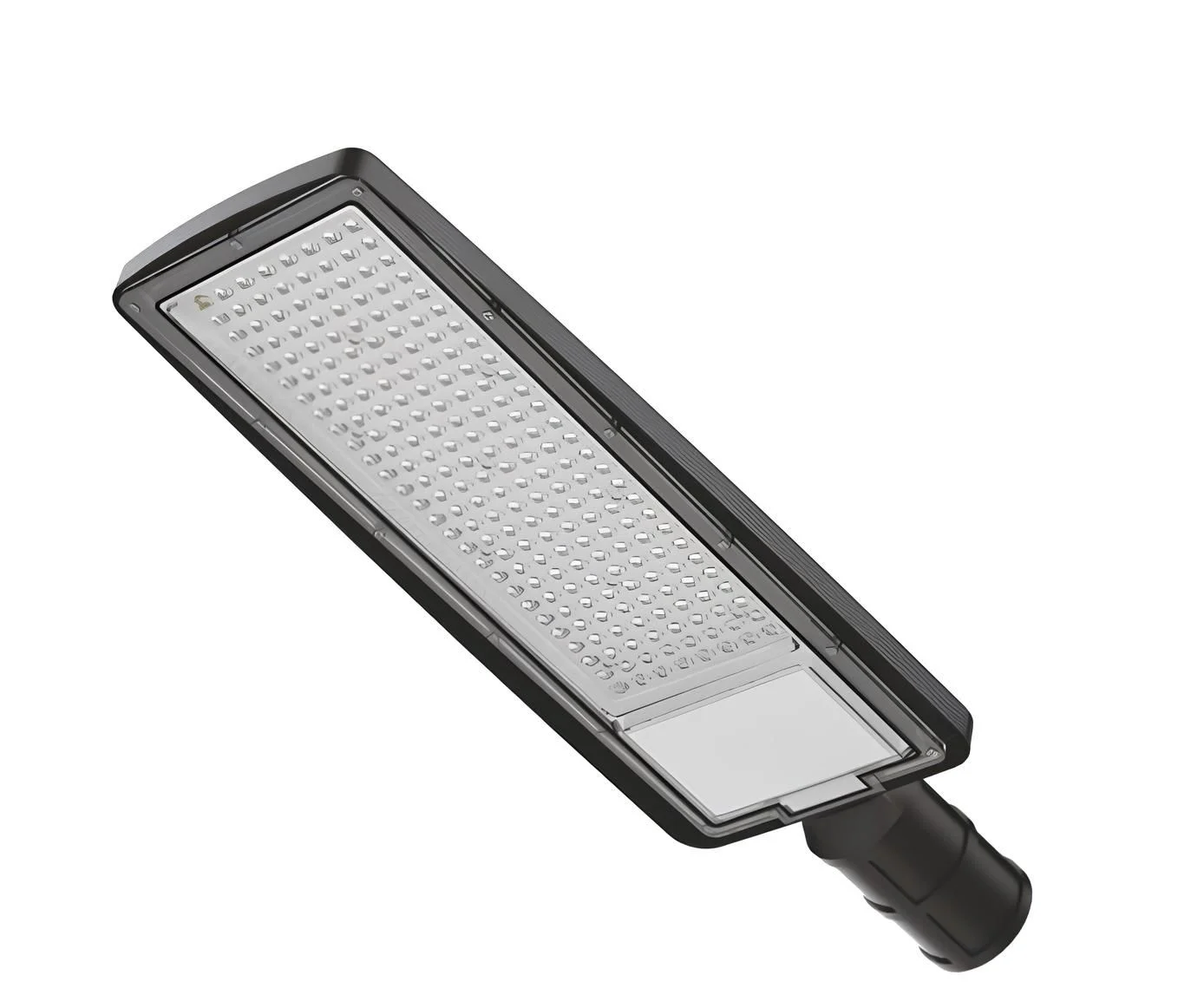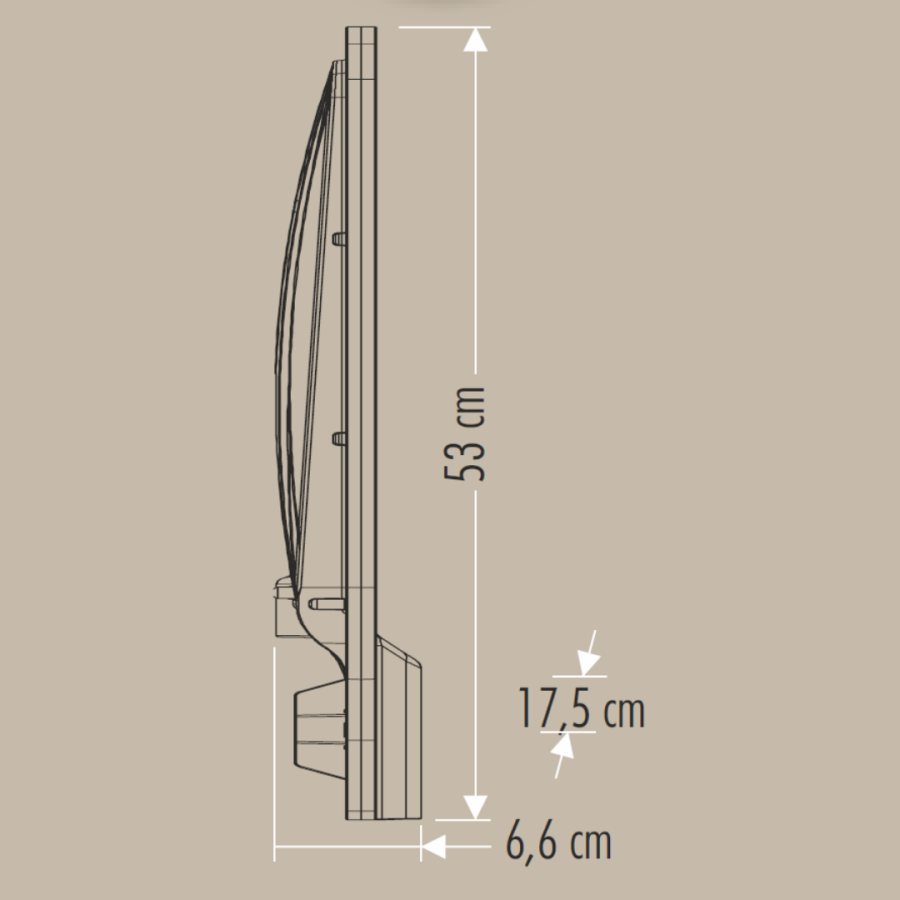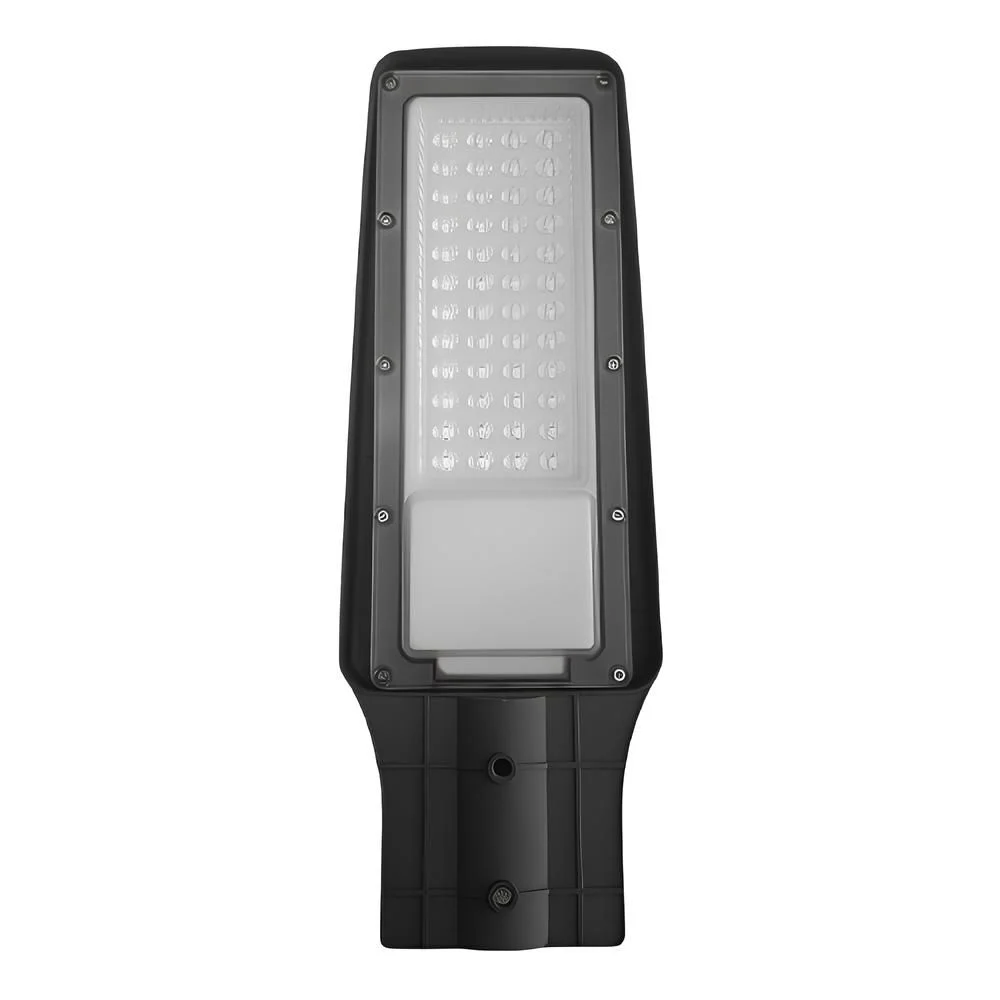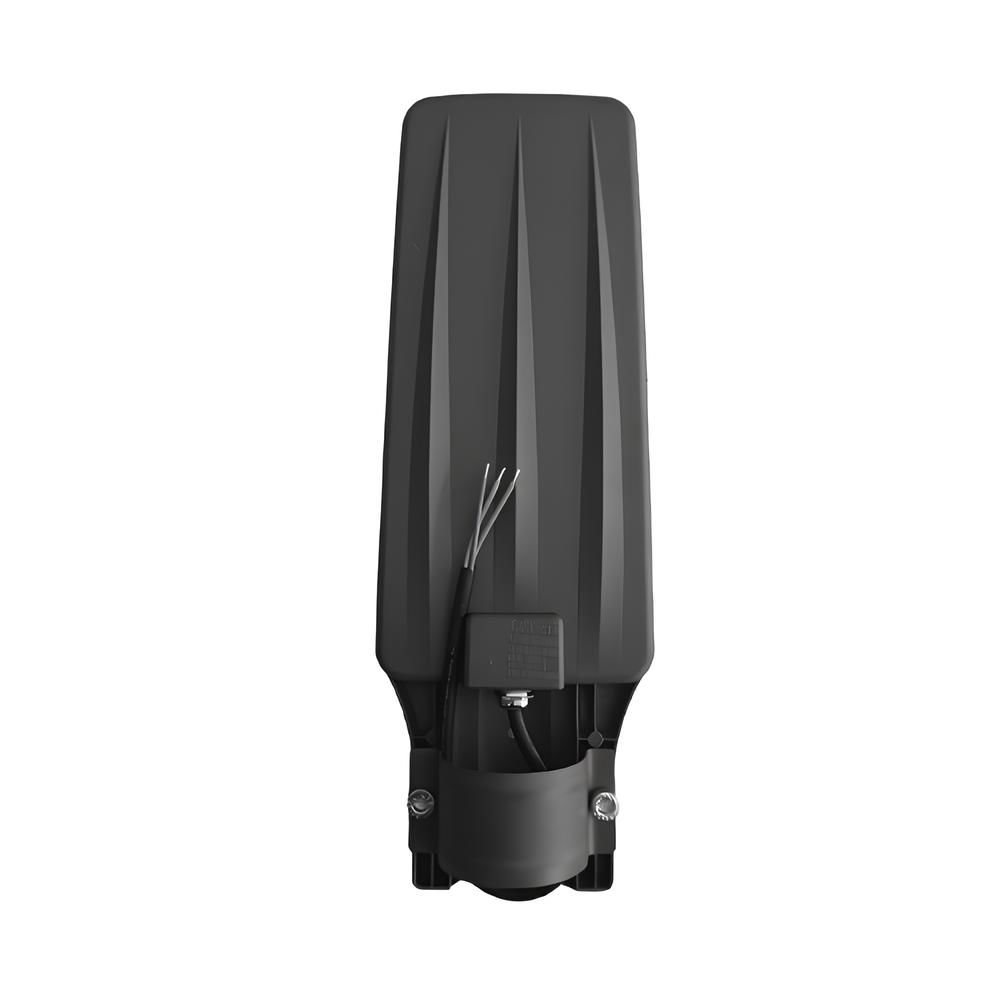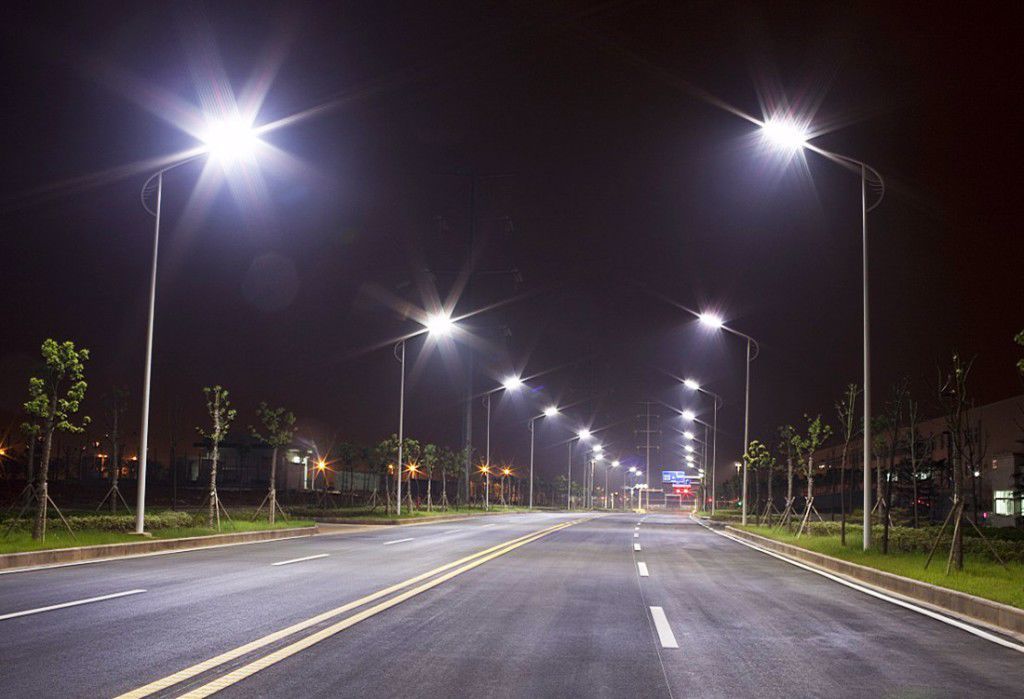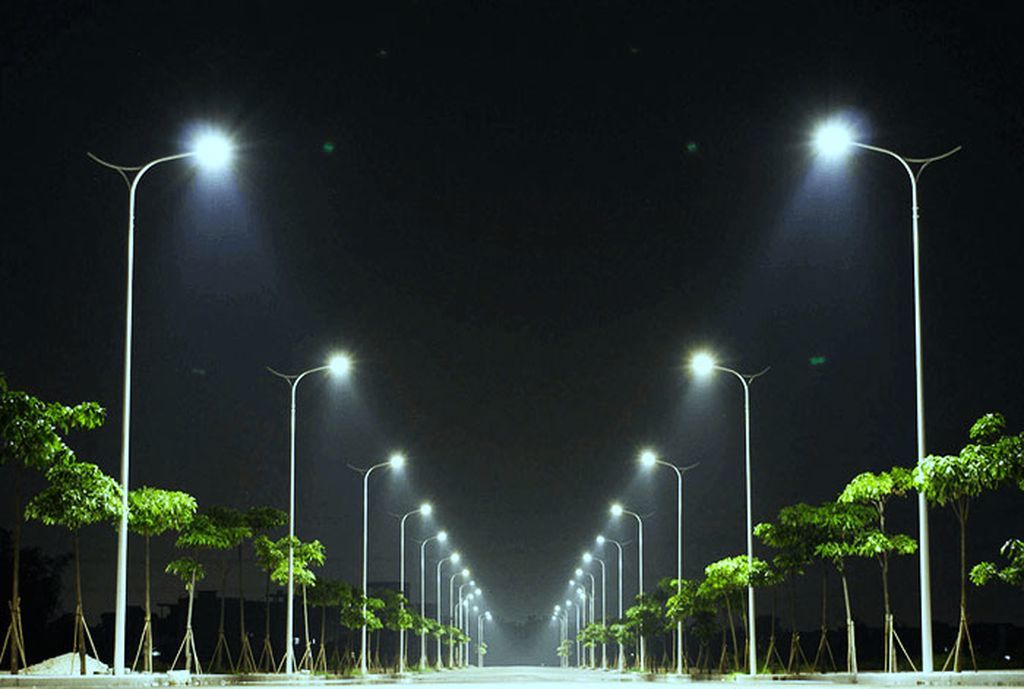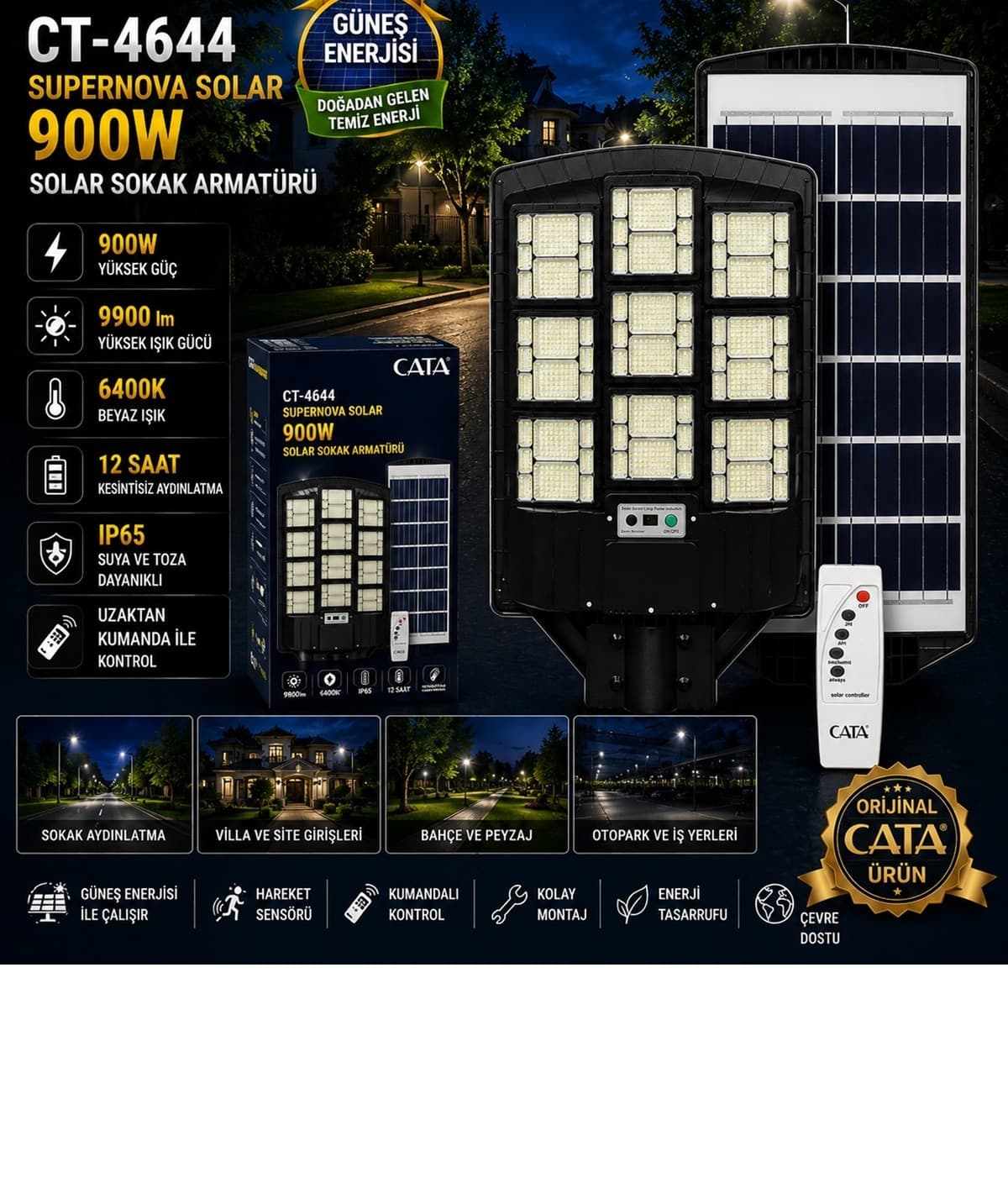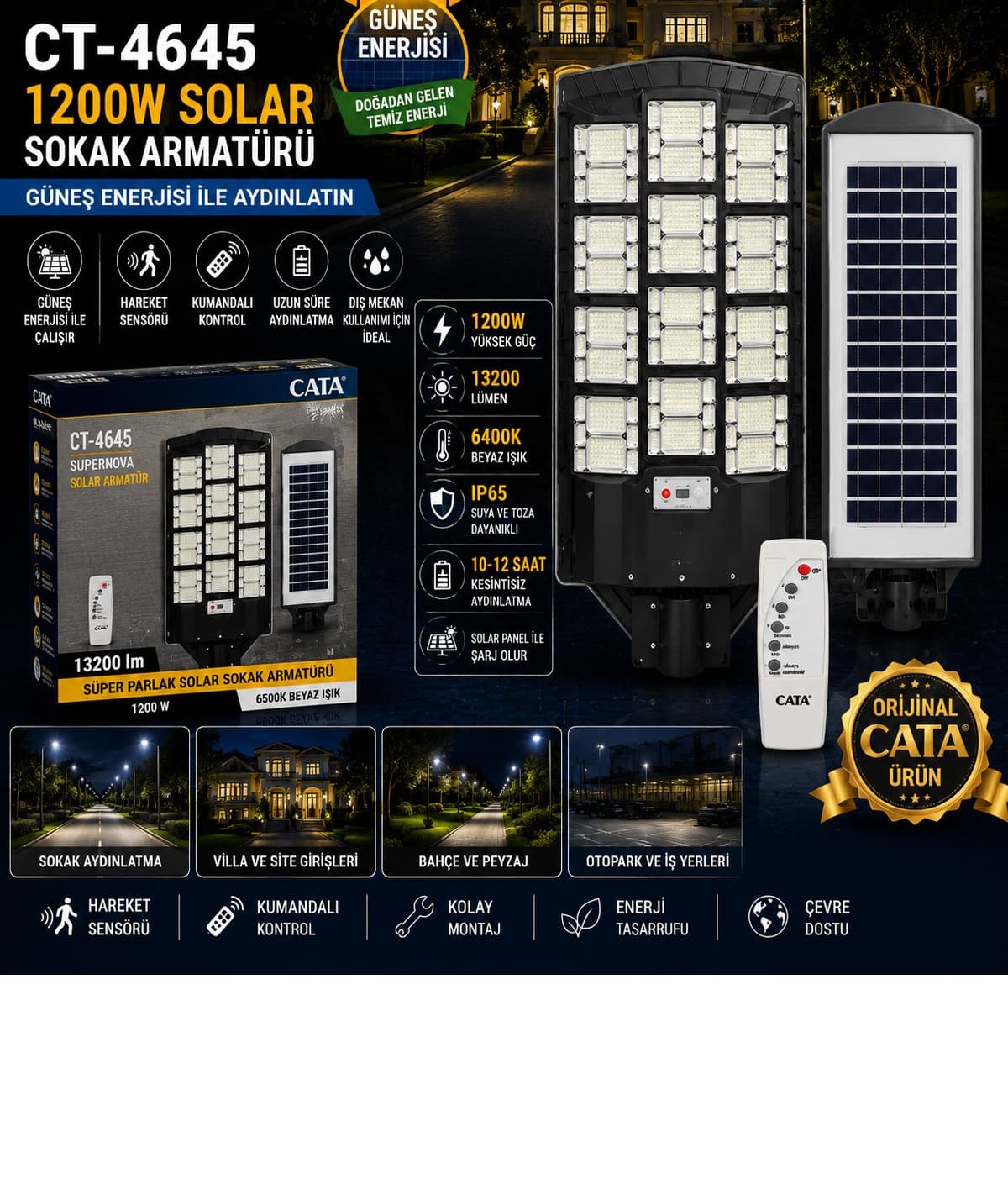

Street lighting is one of the few applications where the result depends not on a single luminaire but on the pattern the luminaires form together. An excellent luminaire on its own produces poor road lighting when it is set at the wrong height and the wrong spacing. This guide works through the criteria for choosing a street or road luminaire in order: how the light is distributed, the relation between pole height and spacing, protection classes outdoors, light escaping into the surroundings, colour temperature, and the maintenance burden that will run for the life of the luminaire.
The criterion is uniformity, not average illuminance
For a road to count as well lit, the average illuminance is not enough on its own. What decides it is the difference between the brightest and the darkest point. When the areas under the poles are very bright and the stretches between them are dark, the average comes out high but the result is poor for drivers and pedestrians alike.
The reason lies in how the eye adapts. Moving from a bright zone to a dark one, the eye has to adapt again, and during that transition the dark zone is perceived as darker than it is. A road of alternating bright and dark bands is visibly more tiring than a uniform road with the same average illuminance.
So the question to ask when assessing street lighting is this: how bright is the darkest point between two poles? The decision follows that point, not the brightness at the foot of the pole.
- The measure of quality is the darkest point, not the average value.
- Bands of light and dark force the eye to keep adapting.
- Brightness under the pole is not proof of good lighting.
- Assess it on foot and at driving speed separately.
Light distribution and asymmetric optics
Street luminaires do not spread light equally in every direction — nor should they. A luminaire with symmetrical distribution, fitted to a pole at the roadside, sends a large share of its light off the road, into a field or a neighbouring garden. That light is both wasted and a source of complaints.
Asymmetric optics push the light towards one side of the luminaire and direct it onto the road surface, and they are the real reason the distance between poles can be increased. In such luminaires the mounting orientation is not a technical detail but the function itself: an asymmetric luminaire fitted the wrong way round sends the light off the road, and nobody registers that as a fault.
How narrow the distribution should be follows the width of the road and the position of the pole. Lighting a wide road from a single row of poles calls for a wider distribution, while a double-sided or staggered pole arrangement favours narrower ones. The distribution stated in the product description is the first piece of data telling you where the luminaire belongs.
- Asymmetric optics push the light onto the road and reduce wasted light.
- If the mounting orientation is wrong, the asymmetry works in reverse and goes unnoticed.
- Distribution width follows road width and pole arrangement.
- Symmetrical distribution suits squares and open areas.
The relation between pole height and spacing
The distance between poles cannot be set independently of pole height. A common starting assumption is to keep the spacing at roughly three to four times the pole height. That is not a calculation but a sense of direction: the real figure comes from a lighting calculation based on the optics of the luminaire, the width of the road and the uniformity being aimed at.
A taller pole covers a wider area and allows the result to be achieved with fewer poles; in return it calls for a more powerful luminaire and makes access for maintenance harder. A lower pole gives softer lighting at pedestrian scale, but more poles are needed to light the same road and the infrastructure cost rises.
The length of the bracket and the tilt of the luminaire also change the result. The bracket carries the luminaire towards the middle of the road and places the distribution on the carriageway. Tilt should be used with restraint: a luminaire angled higher than necessary reduces the light landing on the road surface and increases the light escaping into the surroundings.
- Spacing is thought of as a multiple of pole height; the exact figure comes from calculation.
- Taller poles reduce their number but make maintenance access harder.
- The bracket carries the distribution onto the axis of the road.
- Excessive tilt reduces the light landing on the road surface.
Protection outdoors: IP and IK classes
What determines the life of an outdoor luminaire is usually not its power but its sealing. The IP code states the level of protection against dust and water and is printed on the label as two digits; the first covers solid objects, the second water. In street luminaires the sealing of the optical compartment matters as much as that of the driver compartment.
Gaskets age. Even if a luminaire delivers the protection on its label on day one, that protection is lost when it is opened for maintenance and closed incorrectly, or when the gasket hardens. In an optical compartment that lets water in, you first see condensation on the glass, then loss of light and finally electronic failure.
The IK code states resistance to impact and matters at low mounting heights and in publicly accessible places. In areas carrying a risk of impact — footpaths, parks, the surroundings of schools — the IK value is as decisive a criterion as the IP.
Coastal and industrial areas are a separate matter: salt-laden and chemically loaded air produces corrosion on the body and the fixings. In those areas the body material and surface treatment are chosen with as much care as the protection class.
- The IP code states dust and water protection; the IK code impact resistance.
- A luminaire closed incorrectly after maintenance loses the protection on its label.
- Condensation on the glass is the first sign that the sealing has failed.
- In coastal and industrial areas the body material is assessed separately.
Light pollution and light escaping upwards
The share of a street luminaire's output that goes above the horizontal serves no purpose: it does not light the road, it scatters into the sky and contributes to the glow of the night sky. Light that stays below the horizontal but leaves the road creates a more concrete problem; light entering the windows of homes is the main source of complaints.
The way to reduce spill is to prefer optics that direct the light onto the road, to choose flat-glass luminaires and to keep the tilt restrained. Where needed, shielding accessories fitted to the luminaire cut the light going in a particular direction. Whether such parts are compatible with the product is a question to ask at the point of purchase.
This is not only a matter of neighbourly relations. There are regulations and standards covering the limitation of upward light in outdoor lighting, and compliance with them is sought in public projects. What is described here is only what the regulations ask for; whether a given luminaire meets the requirement of a particular project is decided by the party preparing and reviewing that project.
- Light going above the horizontal is lost light that does not reach the road.
- Light entering the windows of homes is the most frequent complaint.
- Compatibility of shielding accessories is asked about at the point of purchase.
- The decision on regulatory compliance belongs to the party reviewing the project.
Colour temperature and maintenance burden
Choosing a colour temperature outdoors is a matter of balance. Neutral white around 4000 K shows detail and colour on the road surface more clearly. Warmer tones around 3000 K are found less disturbing in residential areas and are more restrained in terms of the blue component scattering into the sky.
In practice, more neutral tones are preferred on main roads and warmer ones on residential streets and in parks. Keeping the colour temperature unchanged along the same avenue matters too: two different tones side by side stand out more than the lighting itself.
Maintenance is a cost to be considered at the moment of purchase. The optical surface of a luminaire becomes dirty over time, and a dirty optic loses light without failing. A driver housed in a separate compartment and replaceable on its own prevents a single fault from replacing the whole luminaire. The means of access counts too: on a tall pole, every intervention calls for a vehicle and traffic management.
- Neutral tones on main roads, warmer ones in residential areas, are the common pattern.
- The colour temperature is not changed along the same avenue.
- A dirty optic loses light without producing a fault.
- A replaceable driver lowers the long-term cost.
Starting choices by type of area
| Area | Typical pole height | Light distribution | Key criterion |
|---|---|---|---|
| Footpath and park | About 4–6 m | Wide, asymmetric | Preventing glare at eye level |
| Road within a housing estate | About 5–7 m | Asymmetric | Light spilling into home windows |
| Secondary road and street | About 6–8 m | Asymmetric, medium width | Pole spacing and uniformity |
| Main road and avenue | About 8–12 m | Narrow and asymmetric | Uniformity on the road surface |
| Car park and open ground | About 6–10 m | Wide or floodlight | Leaving no dark patch across the area |
Related guides: Choosing a Wall Light: Up-Down, Wall Washer and IP Rating, IP Ratings for LED Fixtures: Bathroom, Kitchen and Outdoors, Ceiling Lighting Types: Spot, Linear, Cove Lighting, and Chandelier, Choosing an LED Bulb: Base Type, Watts, Lumens and Colour Temperature. For product options for your project, see our Street Lights page.