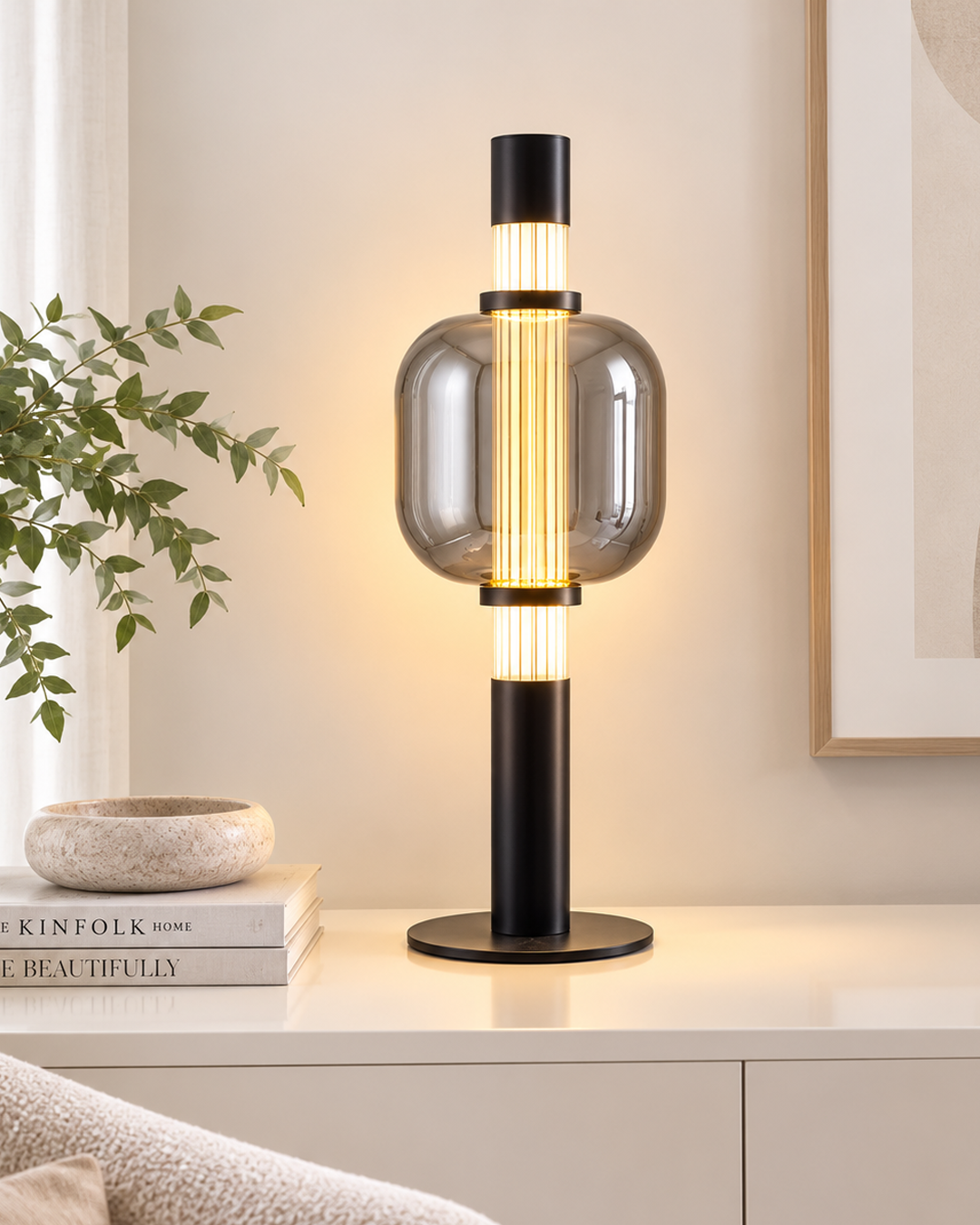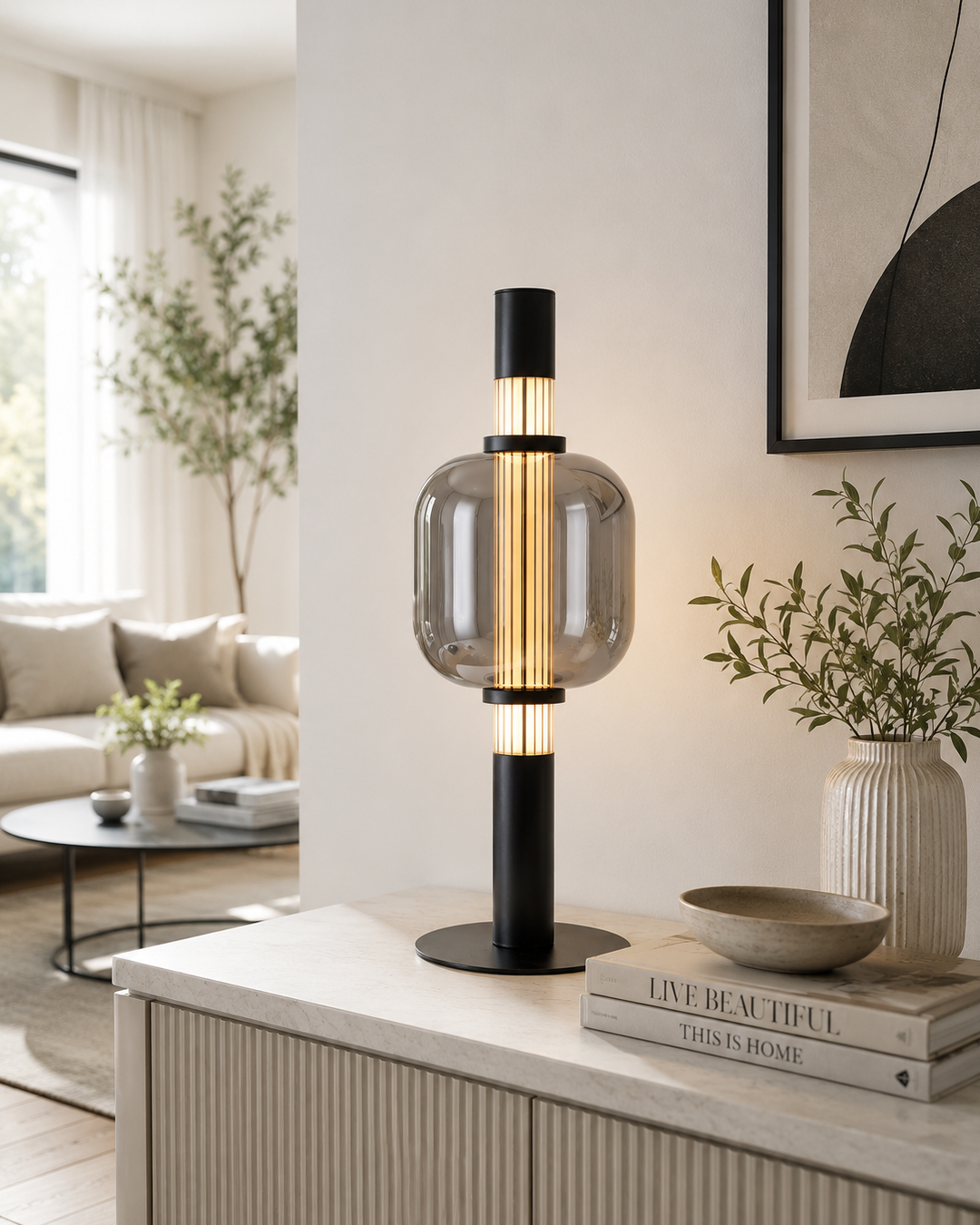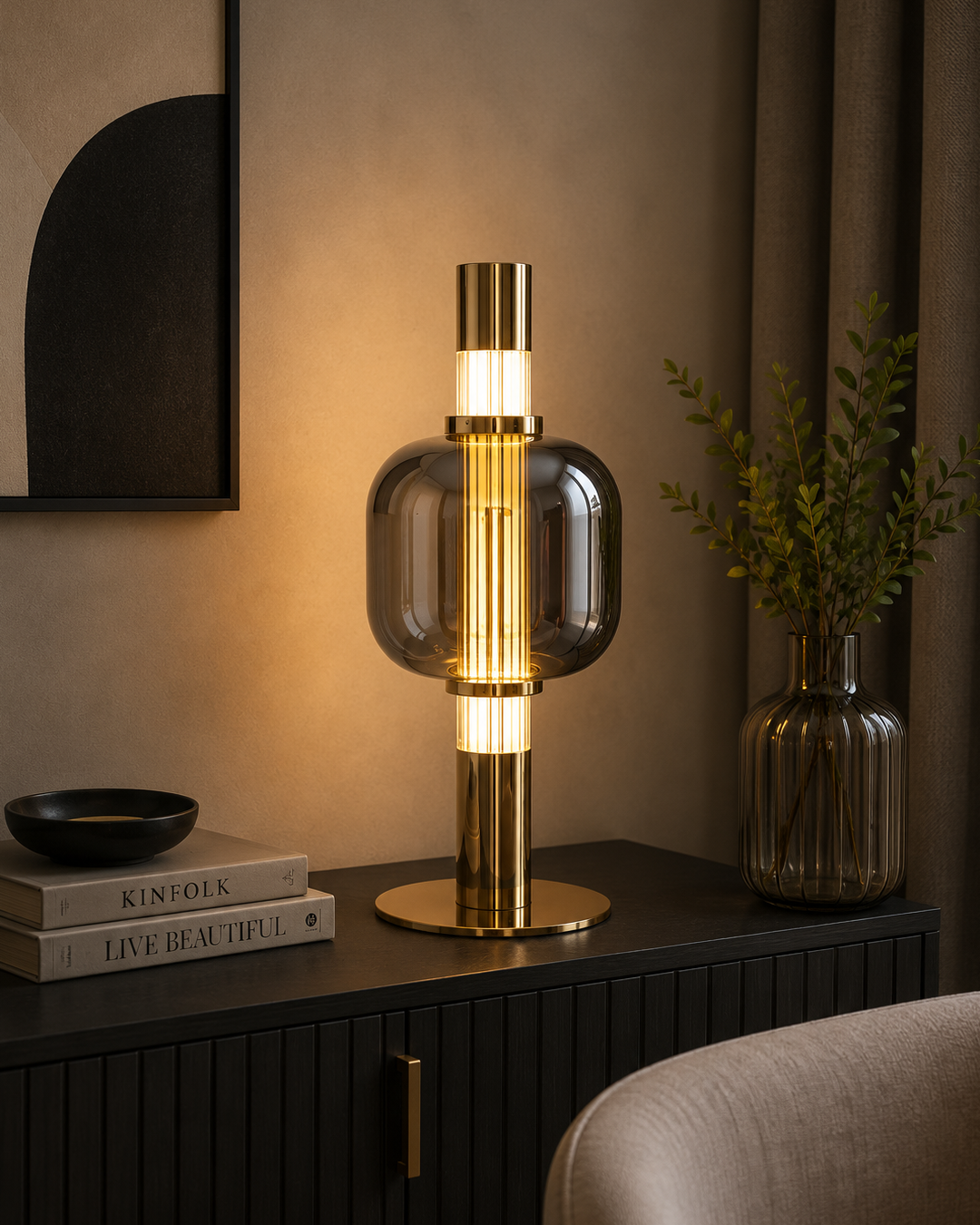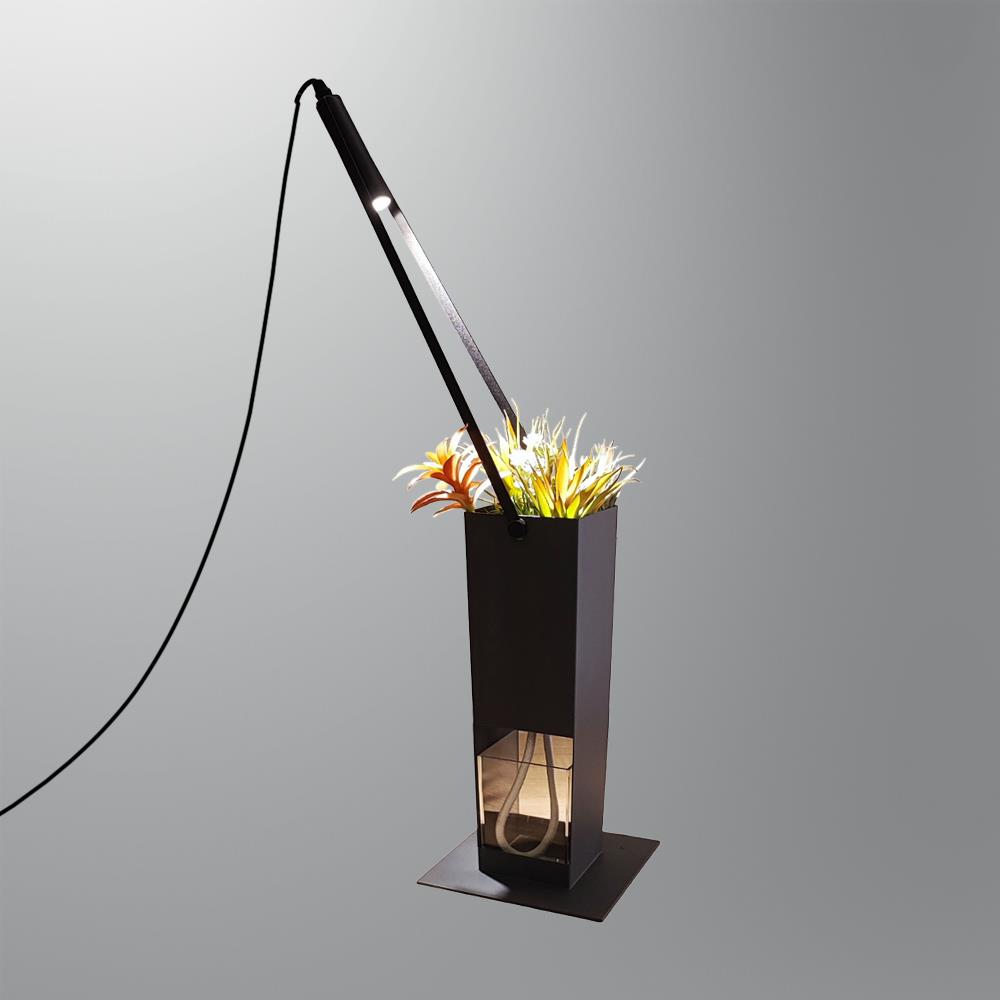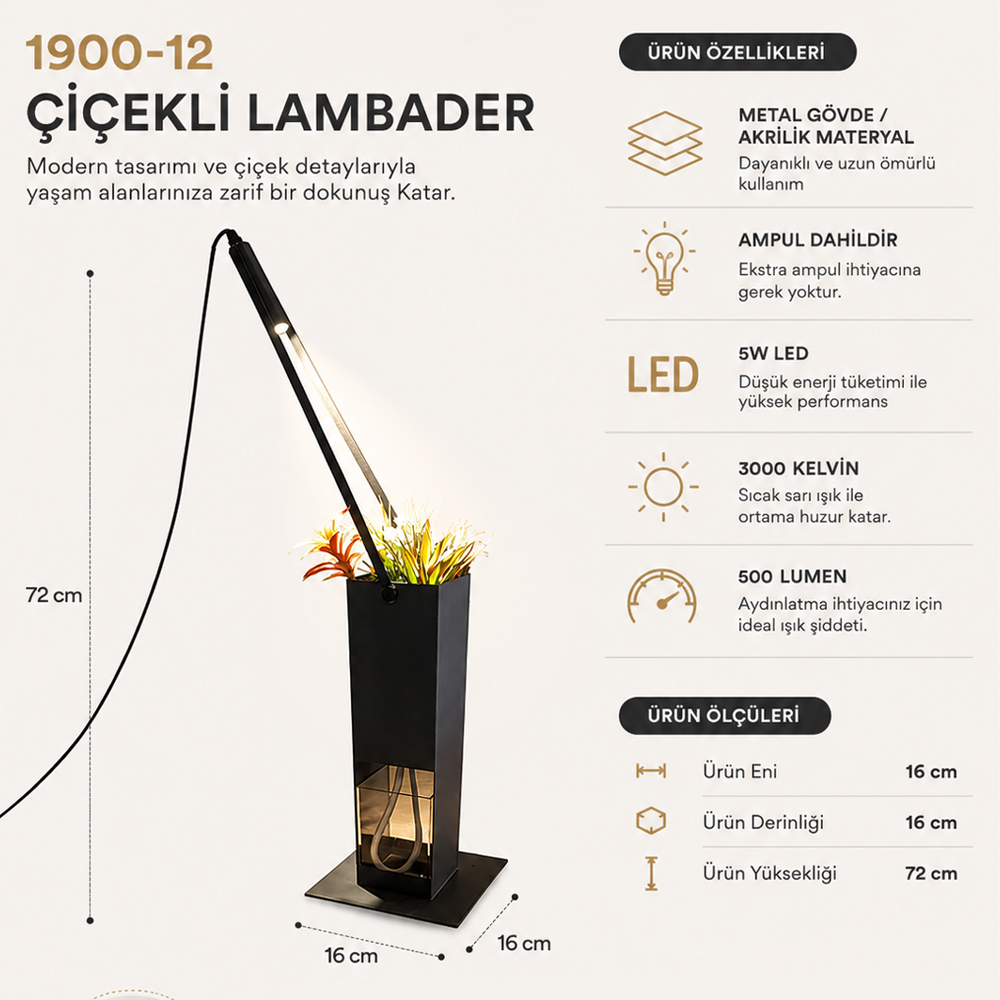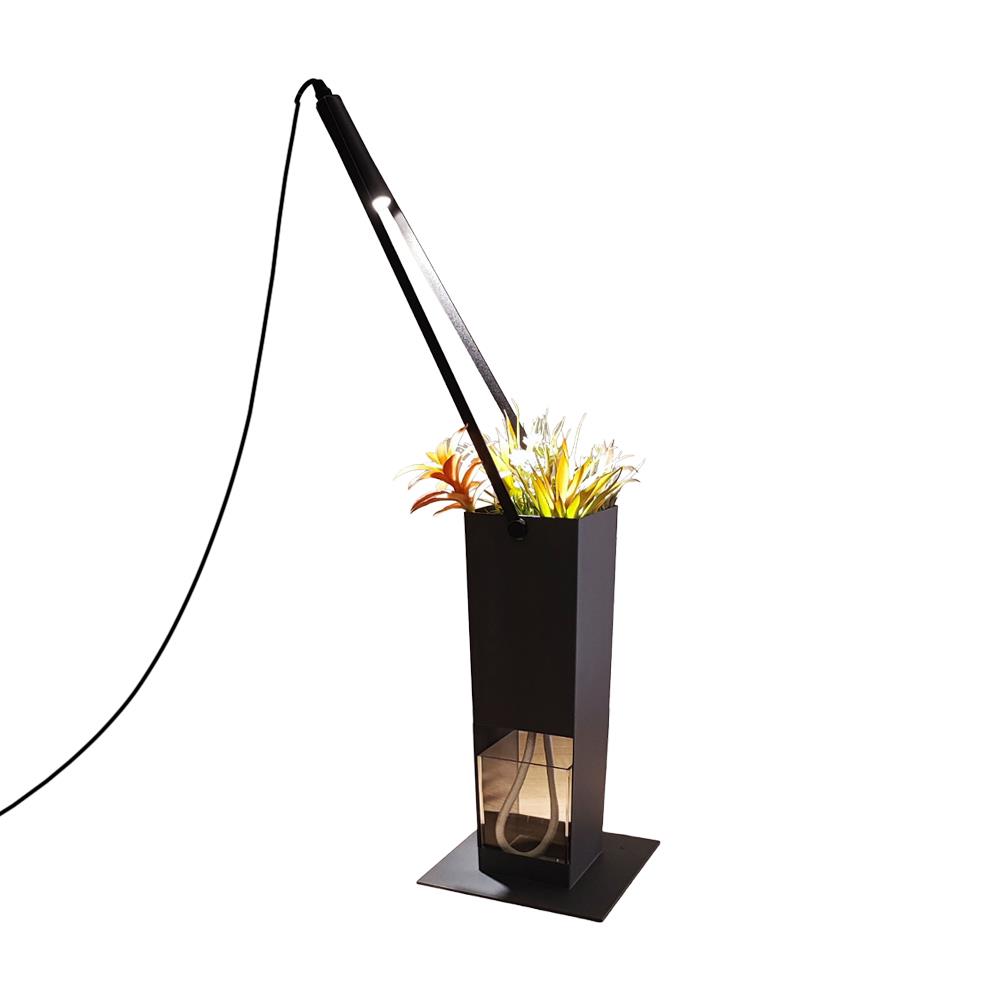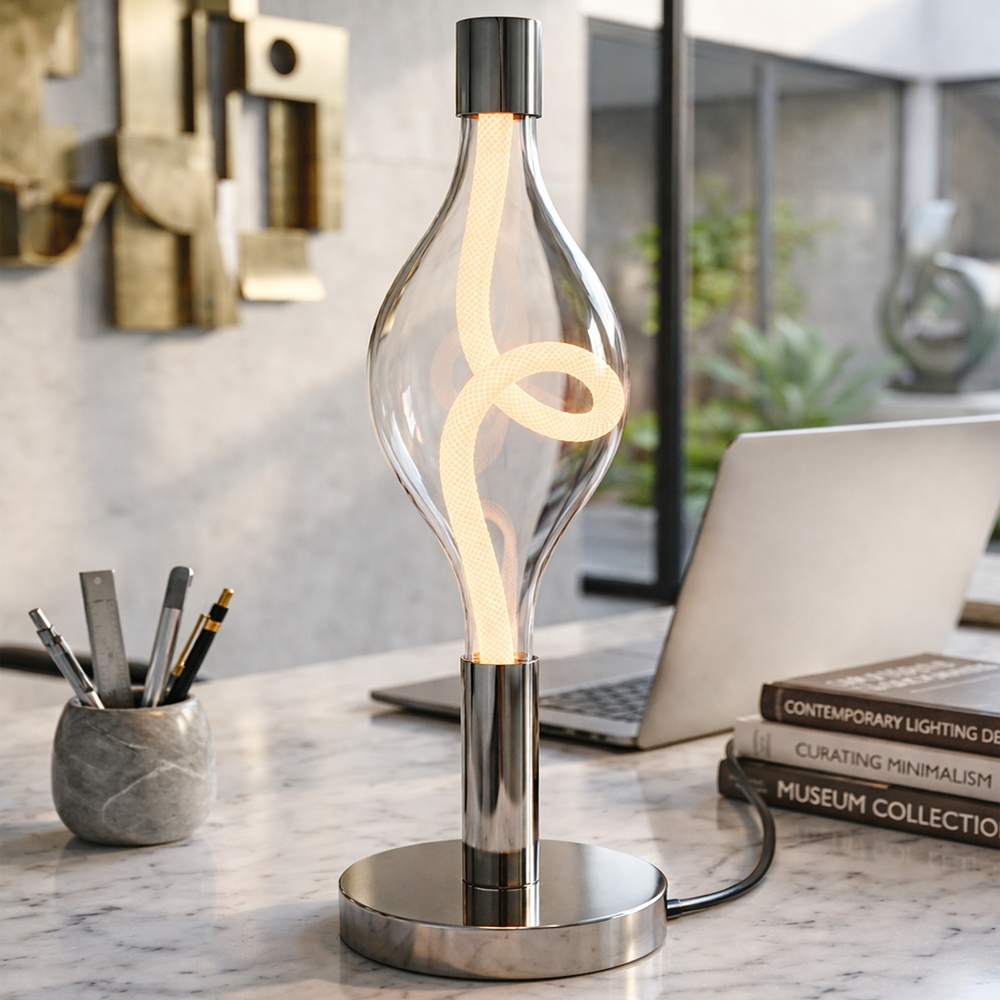

A desk lamp is one of the smallest fittings in a room, yet it provides the light the eye works under for the longest stretches. That is why mistakes in choosing one are not noticed immediately; they show up over time as fatigue. A good desk lamp does not merely give enough light — it gives light from the right direction, without shadow, and without reaching the eye directly. This guide works through the criteria in order: the direction of the light, the adjustability of the body, colour temperature, reflection in front of a screen, the amount of light needed, and the details specific to a child's desk.
A desk lamp does not replace general lighting
A bright desk lamp burning alone in a dark room may put enough light on the paper, but it tires the eye. The greater the difference between the lit surface and the dark surroundings, the more the eye has to keep adapting — and over long sessions that is felt as headache and fatigue.
The right setup has two layers: a ceiling or wall fitting lighting the room generally, and a desk lamp lighting the work surface separately. Nor should general lighting be expected to make the desk lamp unnecessary; a ceiling fitting casts the shadow of the person working onto the desk and darkens exactly the point being written on.
So a desk lamp is bought to add a layer, not to cover a shortfall. If the general lighting of the room is inadequate, the answer is not a more powerful desk lamp but fixing the general lighting itself.
- A single bright lamp in a dark room produces a contrast that tires the eye.
- A ceiling fitting casts the worker's own shadow onto the desk.
- The right setup is general lighting and a desk lamp together.
- If general lighting is inadequate, the answer is not a stronger desk lamp.
Which direction should the light come from?
When you write, the shadow of the pen falls on the paper, and where it falls is decided by the position of the lamp. For a right-handed person the light should come from the left, for a left-handed person from the right. Otherwise the hand and pen cut the light off exactly at the point being written.
Light from the front is not right either: light coming towards you enters the eye directly and glares. Light from behind casts your own shadow onto the desk. The correct direction is from the opposite side to the writing hand and slightly in front.
With a computer the rule shifts a little. The same direction applies for keyboard and paper, but the lamp must not sit opposite the screen; a screen is a glossy surface and reflects the lamp like a mirror. When setting the direction of the light, look at the paper and the screen at the same time.
- From the left for a right-handed person, from the right for a left-handed person.
- Light from the front glares; light from behind casts a shadow.
- The correct direction is opposite the writing hand and slightly in front.
- With a screen, the lamp is not placed opposite it.
Height and an adjustable body
The height of a desk lamp decides two things at once: the size of the area lit and whether the light source is visible. The higher the lamp, the wider the area lit but the lower the illuminance on the surface; the lower it goes, the brighter a smaller area becomes.
The decisive criterion is this: seated, in a normal working posture, the light source must not be directly visible. An eye that sees the bulb or module directly is uncomfortable however well the surface is lit. The lower edge of the head should stay below eye level when seated.
Models with an articulated arm and an adjustable head leave that setting to the user and make the same lamp usable for writing, craft work and reading alike. Models that clamp to the desk take up no base footprint and free up working space on small desks.
- Higher lights a wider area but lowers illuminance on the surface.
- Seated, the light source must not be directly visible.
- An articulated arm makes one lamp usable for different tasks.
- Clamp models free up working surface on a small desk.
Colour temperature: neutral for work, warm at the bedside
Colour temperature decides whether the light leans yellow or white. For long reading, writing and study, neutral white around 4000 K is widely preferred; that tone supports alertness and preserves the contrast of the text.
At a bedside, in a reading corner or in relaxation areas, warm white in the 2700–3000 K range gives a more comfortable setting. In the evening, warmer tones make for a softer transition towards the end of the day and suit use before sleep better.
Models with adjustable colour temperature combine both uses in one product and let the same lamp be a study light by day and a reading light in the evening. If a fixed colour temperature is chosen, the decision follows the hour at which the lamp will most often be used.
- Neutral white tones are the widespread choice for long working sessions.
- Warm white is more comfortable at a bedside and in a reading corner.
- Adjustable colour temperature suits one lamp to two jobs.
- With a fixed tone, decide by the hour of heaviest use.
Reflection and glare in front of a screen
A screen is a glossy surface and reflects every light source facing it. A desk lamp visible in the screen lowers the contrast of the text, and the eye works harder to compensate. So the lamp is placed not opposite the screen but beside it, slightly in front of the plane of the screen.
The second problem is the difference between the screen and its surroundings. Looking at a bright screen in a dark room is more tiring than in a lit room. Lightly illuminating the wall behind the screen reduces that difference and rests the eye; a separate wall fitting or a desk lamp on a low setting can do that job.
Dimmability is a decisive feature here. A brightness that is right by day is too much at night; being able to dim the lamp keeps the same workspace comfortable all day. When choosing a dimmable product, watch whether the light flickers while dimming.
- The lamp is placed beside the screen, not opposite it.
- Lightly lighting the wall behind the screen softens the contrast.
- Dimmability combines day and night use in one product.
- Flicker while dimming produces fatigue over long sessions.
How much light is needed?
What matters with a desk lamp is not the total light output of the lamp but the illuminance falling on the desk surface. Raise the same lamp and the illuminance on the surface drops; lower it and it rises. Comparing two lamps by their lumen values alone is therefore misleading.
The kind of work also changes the requirement. Working at a computer needs less surface illuminance, because the screen provides its own light. Handwriting, sewing, craft work, model making and anything involving small parts need markedly more. As we age, the illuminance needed for the same task increases.
The practical test is simple: if you can make out the text or the part without effort, without narrowing your eyes and without leaning your head towards the light, the illuminance is sufficient. A dimmable lamp leaves that setting to the user and removes the need to choose against a fixed figure.
- The criterion is illuminance on the desk, not total lumens.
- Craft work and small parts need the highest illuminance.
- Less surface illuminance is needed in front of a screen.
- Narrowing the eyes and leaning towards the light are signs of too little light.
A child's desk
On a child's desk the first criterion is stability. Models with a heavy, wide base or clamped to the desk prevent tipping; lamps with a light base and a long arm topple easily. Keeping the cable from hanging over the edge of the desk prevents both tipping and tripping.
The second criterion is the light itself. On a child's desk the light source must not be directly visible from any seated angle, and the body must not become hot enough to touch during long use. Neutral white tones are the widespread choice for study; dimmability matters for evening use.
The third is position. Watch which hand the child uses and place the lamp on the opposite side. When that detail is missed, the child tilts their head and body to avoid the shadow; the result is not only fatigue but, over time, a settled postural problem.
- A heavy base or a clamp prevents tipping from the outset.
- Route the cable so it does not hang over the edge of the desk.
- The light source must not be directly visible from any seated angle.
- The lamp goes on the opposite side to the hand the child uses.
Choosing a desk lamp by use
| Use | Colour temperature tendency | Light direction | Key feature |
|---|---|---|---|
| Study and writing desk | Neutral white | Opposite the writing hand | Adjustable arm and dimming |
| At a computer | Neutral white | Beside the plane of the screen | A position that does not reflect in the screen |
| Bedside table | Warm white | Turned away from the bed | An easily reached switch |
| Reading corner | Warm white | Over the shoulder | An adjustable head |
| Craft and hobby | Neutral white | From above the piece worked on | High surface illuminance |
| Child's desk | Neutral white | Opposite the hand used | A base that will not tip and tidy cabling |
Related guides: IP Ratings for LED Fixtures: Bathroom, Kitchen and Outdoors, Ceiling Lighting Types: Spot, Linear, Cove Lighting, and Chandelier, Choosing a Wall Light: Up-Down, Wall Washer and IP Rating, Choosing an LED Bulb: Base Type, Watts, Lumens and Colour Temperature. For product options for your project, see our Table Lamps page.