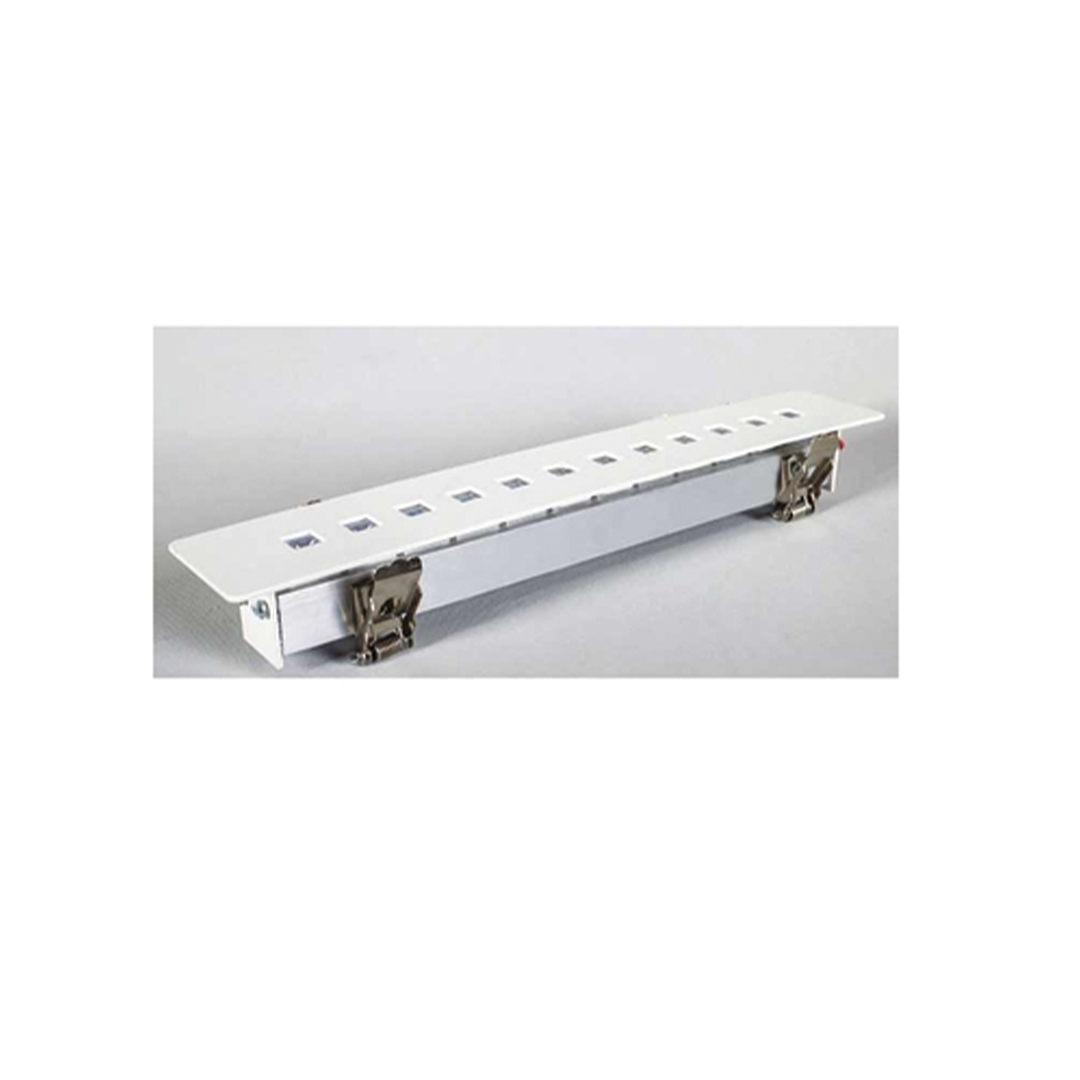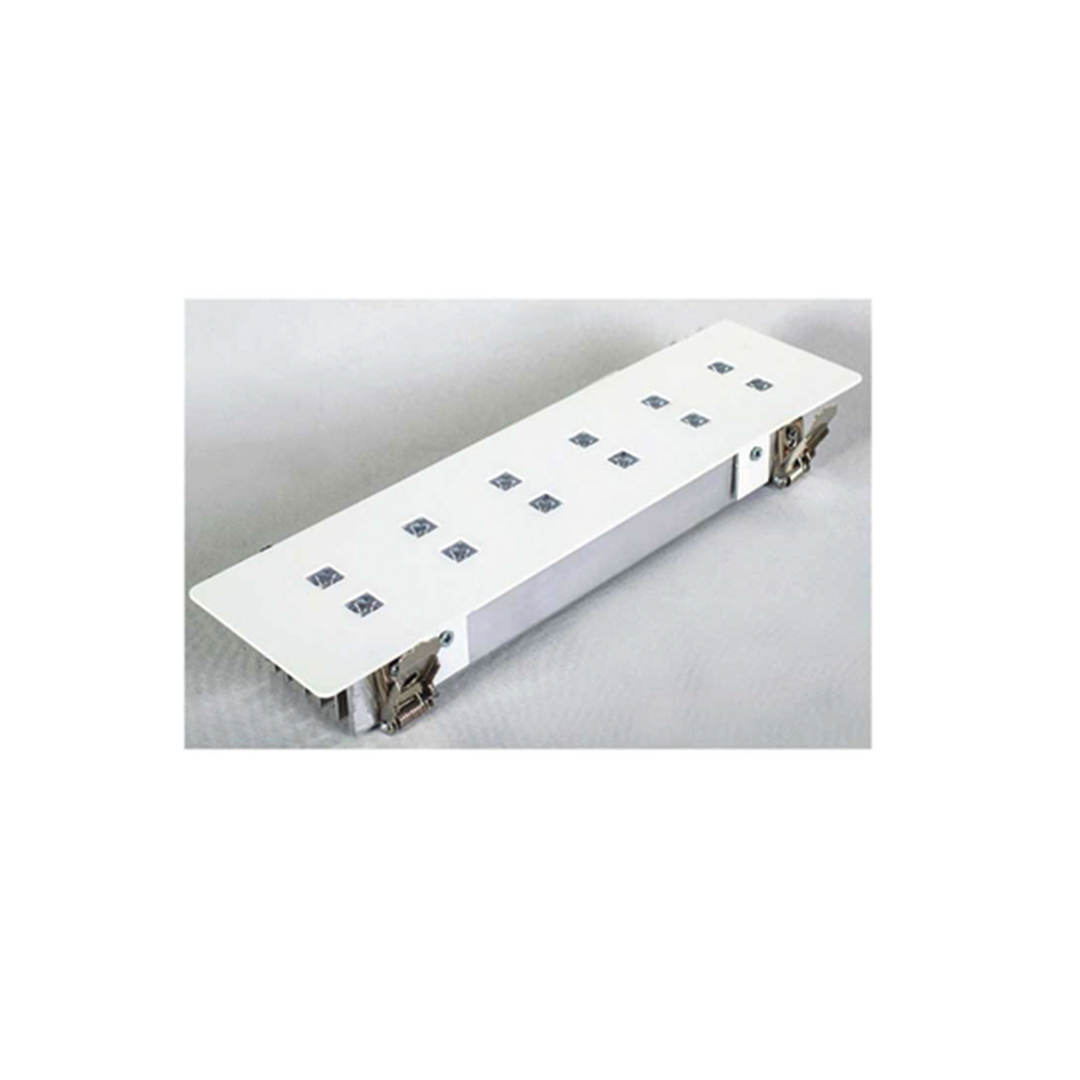

The jewellery or watch display is the smallest but most decisive area in a shop: the customer sees the piece under the light first and picks it up second. In this area the job of the lighting is not to light a volume but to show one surface correctly. A wrongly chosen display fitting washes out yellow gold, kills the sparkle of a stone and sends its own image off the glass into the customer's eye. This guide takes in turn the criteria that really decide the result: colour rendering, colour temperature, beam angle, positioning, glare and — the most neglected subject in a sealed case — heat.
Display lighting is not general lighting
General lighting sets out to light a volume evenly and adequately. Display lighting sets out to do the opposite: to separate the piece from its surroundings. The human eye responds not to absolute brightness but to a difference in brightness; when the inside of the case is markedly brighter than what is around it, the gaze goes there by itself.
That difference is built not by power alone but by the direction of the light and by a narrow beam. Strengthening the general fittings in the ceiling does not bring the case forward; it brightens everything together and the contrast disappears. Small powerful fittings placed inside the case or at its mouth give a stronger effect at far lower total power.
The first question when choosing a display fitting is therefore not the wattage. The right questions are: which surface will the light fall on, will it separate that surface from its surroundings, and how will it look from where the customer actually stands?
- The measure is not wattage but the brightness difference between piece and surroundings.
- Strengthening the general lighting lowers the contrast; it does not bring the case forward.
- The fitting is positioned against the point where the customer stands.
- Small, powerful, directional fittings beat one large fitting.
Colour rendering (CRI): the decisive figure in this category
Colour rendering describes how closely a light source shows colours compared with a reference light, and is usually given as Ra. A figure that can go unnoticed in general lighting touches sales directly in a display: the customer likes the piece in the colour the display light gives it, then sees another colour on stepping into daylight.
Under a light with low rendering, yellow gold turns grey, copper and rose gold lose their tone, and coloured stones go flat. High Ra values are therefore preferred in display lighting; the threshold commonly used in the trade is Ra 90 and above. The figure is on the product label or in its technical description. If it is not stated, it is not assumed but asked for.
Ra on its own may still not be enough, because it is an average. The deep red component is given separately as R9 and can disappear inside the average. In cases holding red and pink stones, that is very often exactly where the visible difference between two fittings comes from.
- The display is the area of a shop most sensitive to colour rendering.
- Ra is an average; with red stones, R9 is asked for separately.
- A rendering figure not stated on the label is not assumed.
- Fittings of different rendering are not mixed within one case.
Colour temperature: gold, silver and stone do not want the same light
Colour temperature is given in kelvins and sets whether the light leans yellow or white. Roughly, 2700–3000 K is called warm white, around 4000 K neutral white, and 5000 K and above a cool white close to daylight. In a display this choice is not a matter of taste but of conveying the product's colour truthfully.
Yellow gold looks fuller and more valuable in tones close to warm white; moving towards neutral white cools and washes out its colour. Silver, white gold, platinum and colourless stones keep their brilliance in neutral or slightly cool light; warm light makes them look yellowish and dirty.
In mixed displays there are two approaches: divide the case into compartments by product group and give each compartment its own colour temperature, or settle on one middle value near neutral for the whole. In a compartmented solution the division has to be clear; two different colour temperatures side by side on the same flat shelf read to a customer as a fault, not as design.
- Yellow gold: tones close to warm white fill out the colour.
- Silver, white gold and colourless stones: keep their brilliance in neutral light.
- In a mixed case, either separate by compartment or settle on a middle value.
- Different colour temperatures in the same row read as a fault.
Beam angle and fitting position
In display fittings the beam angle says how tightly the beam is gathered and is printed on the label in degrees. A narrow-beam fitting concentrates light on a small area and produces sparkle; a wide-beam fitting lights the whole shelf more evenly but weakens the emphasis. The two are not alternatives but complements.
In practice two layers are built together: a wide-beam base light that makes the shelf readable, and a narrow-beam accent light aimed at selected pieces. Cases built with one layer either look flat and lifeless or sit scattered under patches of brightness.
Position decides at least as much as angle. When the light comes straight down from above, the side and lower facets of a stone stay dark and the sparkle drops. An angle tilted forward carries the light returning from the facets into the customer's eye. With fittings placed at the mouth of the case, the body of the fitting must not enter the customer's field of view.
- A narrow beam accents, a wide beam makes the shelf readable; use both.
- Light straight from above reduces a stone's sparkle.
- The body of the fitting must not enter the customer's field of view.
- The angle is printed on the label in degrees; it is not guessed.
Glare and reflection in the glass
The glass of a case is both a protection and a source of trouble: the light source reflects in it and the customer sees the image of the fitting on top of the piece. The commonest mistake is placing the fitting so that it faces the glass squarely. However well such an installation lights the case, the piece stays behind the reflection.
The way to cut the reflection is to give the light at an angle to the glass rather than perpendicular to it, and to keep the source out of the customer's line of sight. Among in-case fittings, models with the source set deep inside the body lower glare markedly.
The second source of reflection is the shop's own ceiling lighting: a bright fitting opposite the case shows in the glass like a mirror and has nothing to do with the display fitting. When planning a display, therefore, not only the display fitting but also what stands opposite it is taken into account.
- The light source is not positioned square to the glass.
- Fittings with the source set back inside the body cause less glare.
- The reflection in the glass often comes from the ceiling fitting opposite.
- The installation is checked by looking from where the customer stands.
Heat and ventilation in a sealed case
A sealed case is a small and usually unventilated volume. Every fitting put inside it produces heat, and if that heat cannot get out it builds up. The result shows in three places at once: in the goods on display, in the life of the fitting and in the temperature of the glass the customer touches.
Heat is a direct risk to synthetic cords, leather straps, the velvet inside boxes and some heat-sensitive organic stones. A fitting that gets hot loses light output and its LED life shortens. A fitting that cannot shed its heat never delivers the life and the light printed on its label.
Low-power models are therefore preferred inside cases, the driver is taken outside the case volume wherever possible, and a gap is left behind the fitting body for air to move. A small opening or ventilation holes in the rear compartment protect both the goods and the fitting.
- Heat builds up in a sealed case; every fitting is also a heat source.
- The driver is taken outside the case volume wherever possible.
- A gap is left behind the fitting for air circulation.
- A fitting that cannot shed its heat does not deliver its stated life or light.
Choosing the light by what the case holds
| Case contents | Colour temperature tendency | Beam angle | Leading criterion |
|---|---|---|---|
| Yellow gold jewellery | Close to warm white | Narrow-beam accent | Colour rendering and a full yellow tone |
| Silver, white gold, platinum | Neutral white | Medium and narrow together | Brilliance held in a cool tone |
| Colourless and coloured stones | Close to neutral white | Narrow beam, tilted | Sparkle returning from the facets |
| Watches and leather-strap goods | Neutral white | Wide-beam base light | Keeping the heat inside the case low |
| Mixed display | Separated by compartment | Both layers together | A clear break between compartments |
Related guides: Choosing a Wall Light: Up-Down, Wall Washer and IP Rating, Choosing an LED Bulb: Base Type, Watts, Lumens and Colour Temperature, IP Ratings for LED Fixtures: Bathroom, Kitchen and Outdoors, Ceiling Lighting Types: Spot, Linear, Cove Lighting, and Chandelier. For product options for your project, see our Jewellery Display Lighting page.