
By Room
Nursery & Children's Room Lighting
In a child's room the ceiling is the most looked-at surface — both while sleeping and while playing.
Lighting a child's room calls for three things at once. The first is light that does not glare: a child looks at the ceiling lying down, so panels with a diffuser that spread light from a wide surface suit better than small, bright point sources. The second is a separate night layer: so that you do not have to light the whole room at bedtime, a dimmed light at the bedside is needed. The third is safety: the possibility of a fitting on a child's room ceiling coming out of place is not acceptable; clip-in framed models lock into the grid and do not fall.
- Light-transmitting diffuser surface
- Unperforated
- Clip-in frame, will not fall
- Locked
- Standard panel module
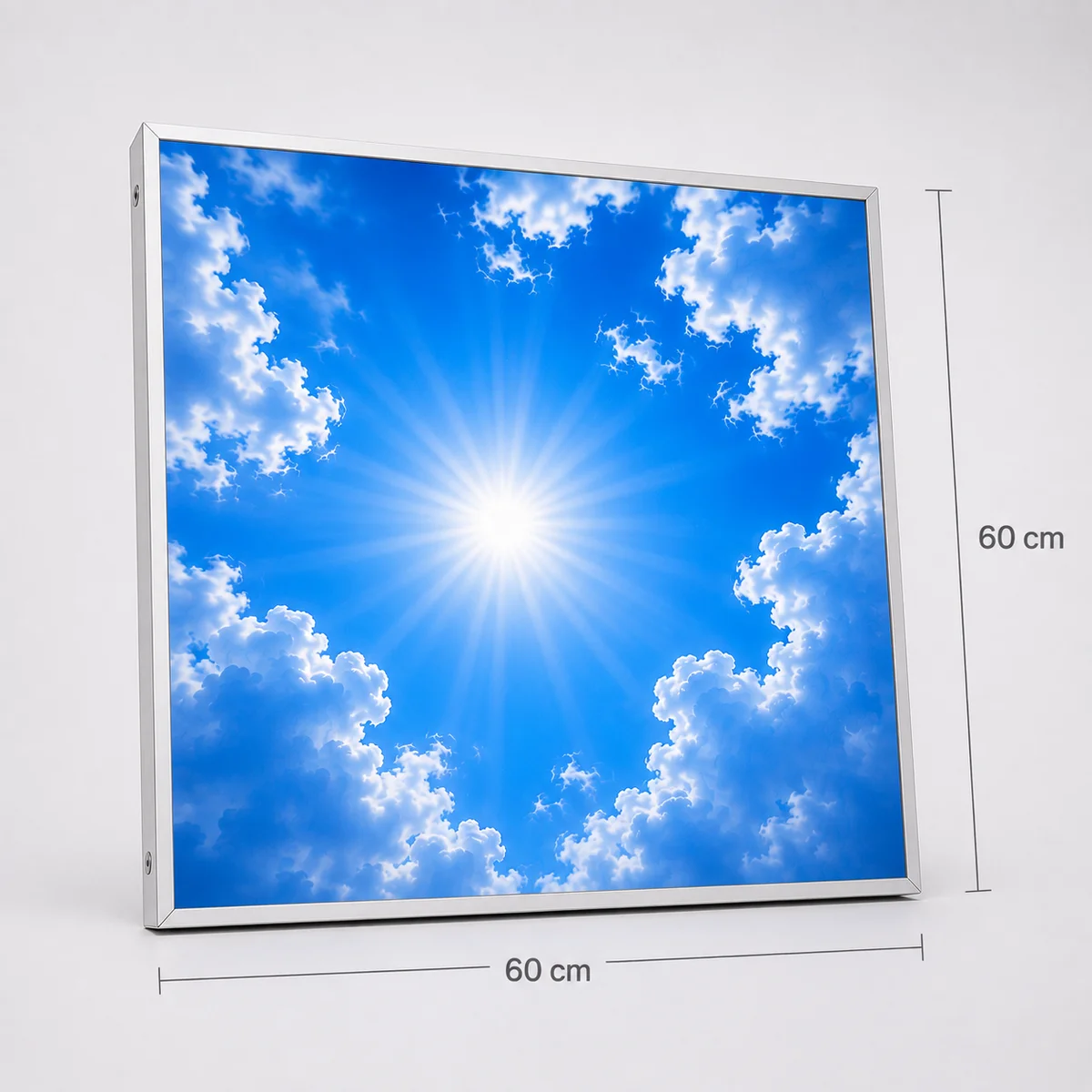
- 60×60 cm
- Product warranty
- 24 Months
Key features
Cloud ceiling effect
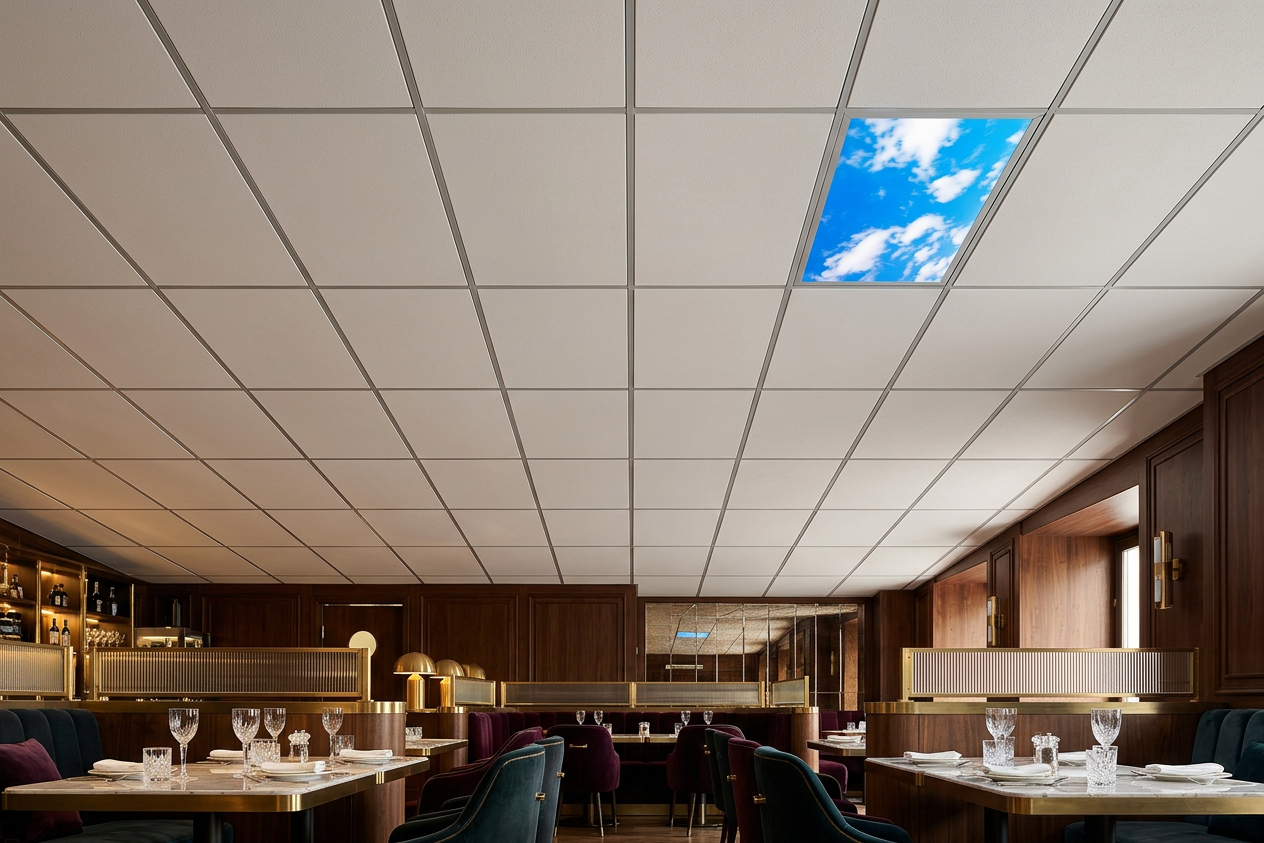
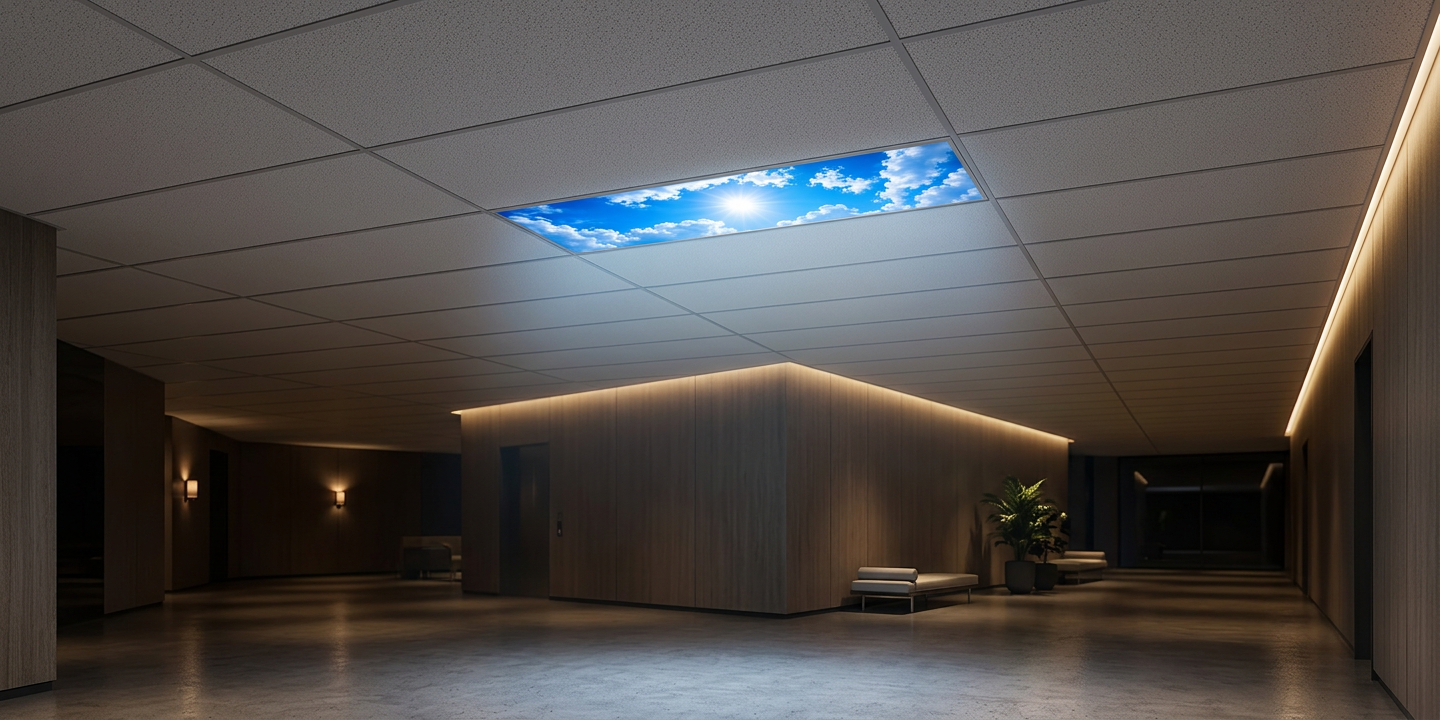
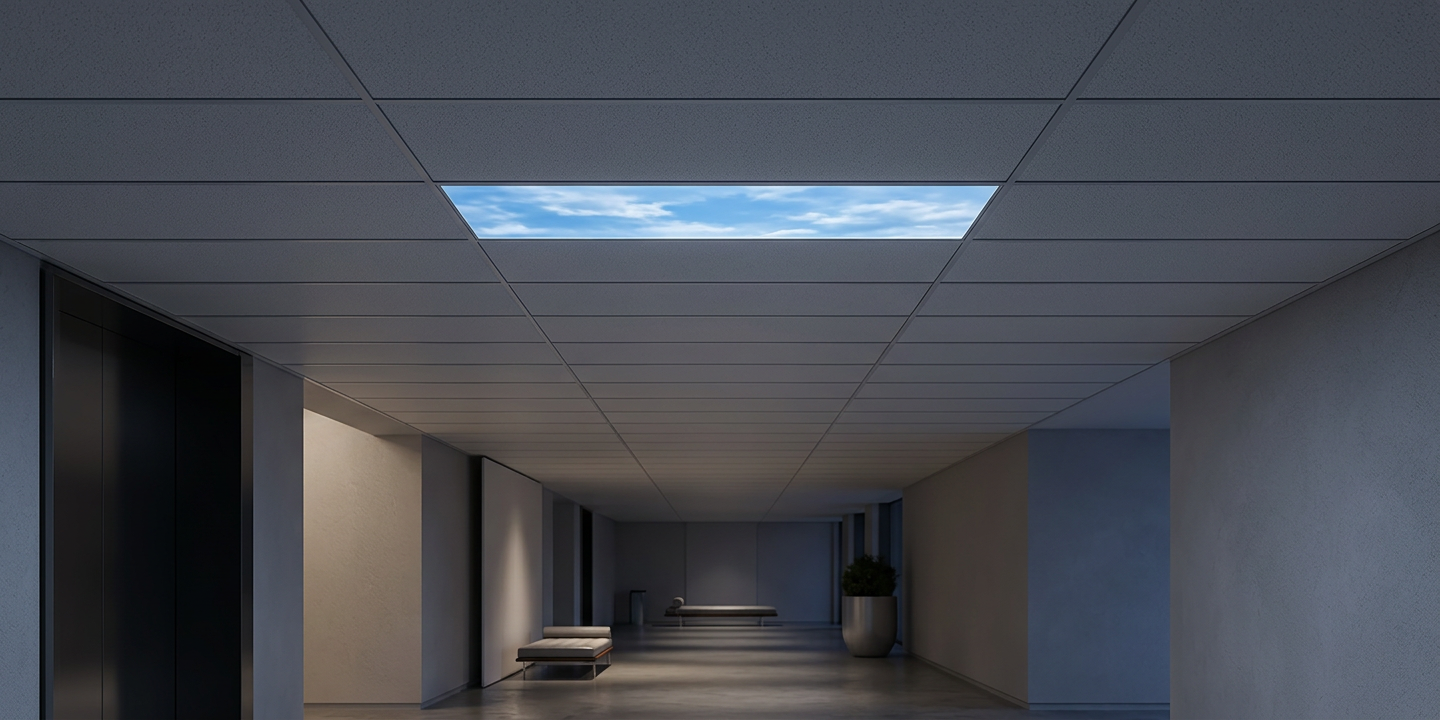
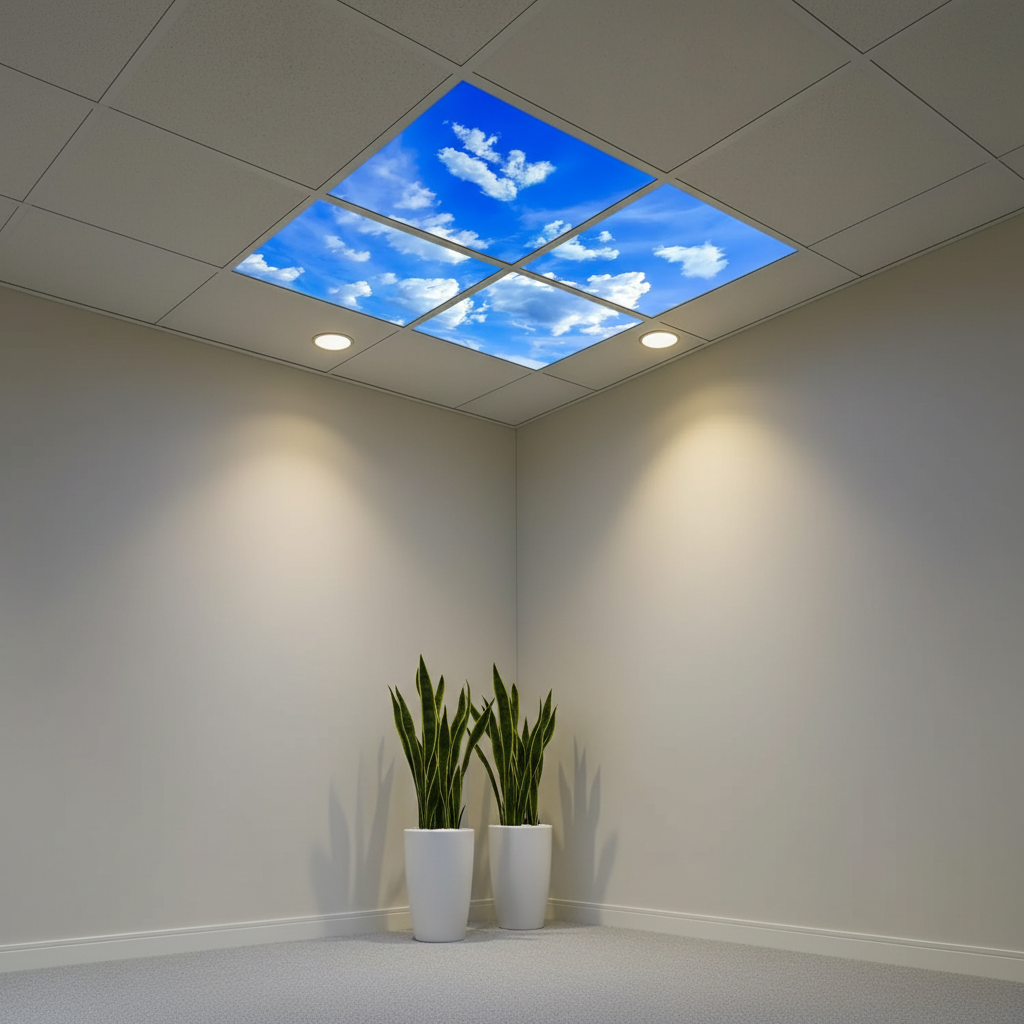
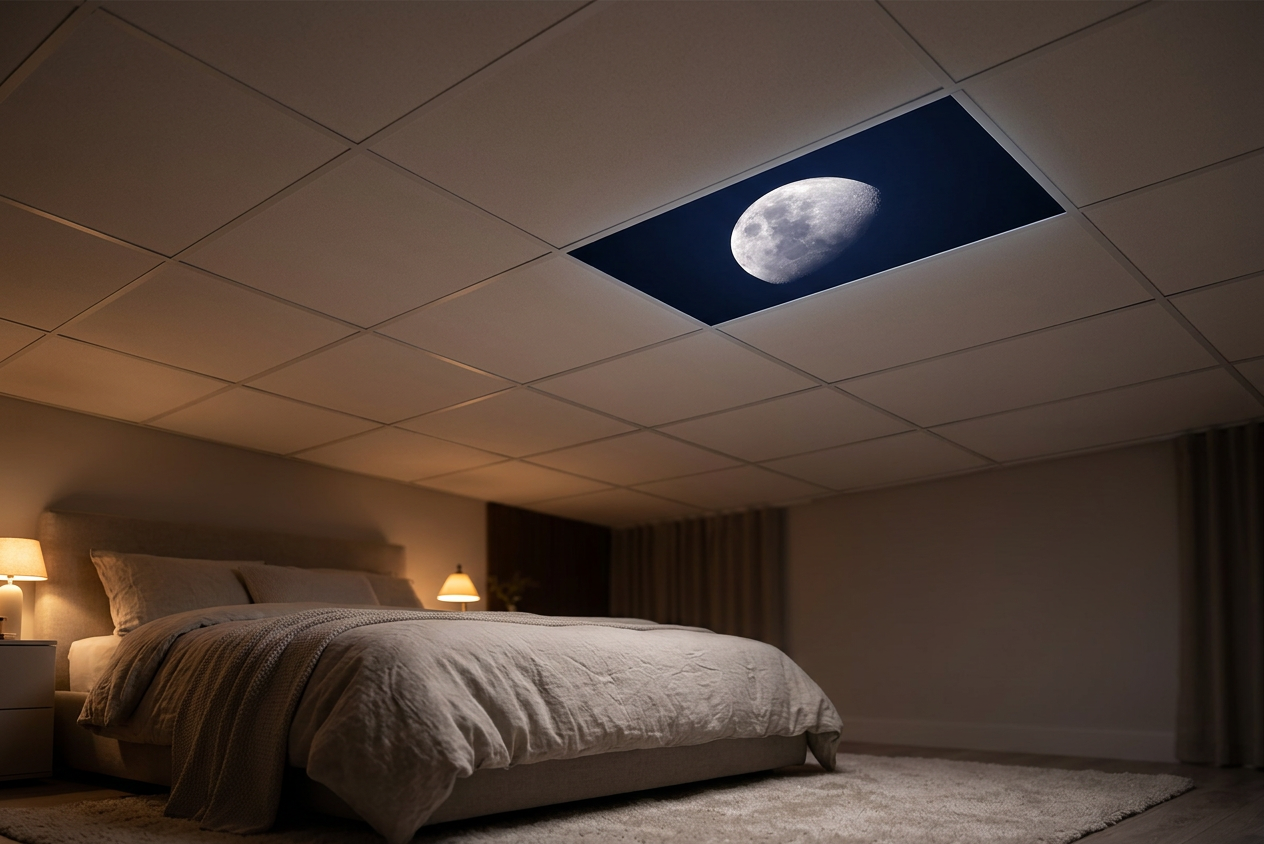
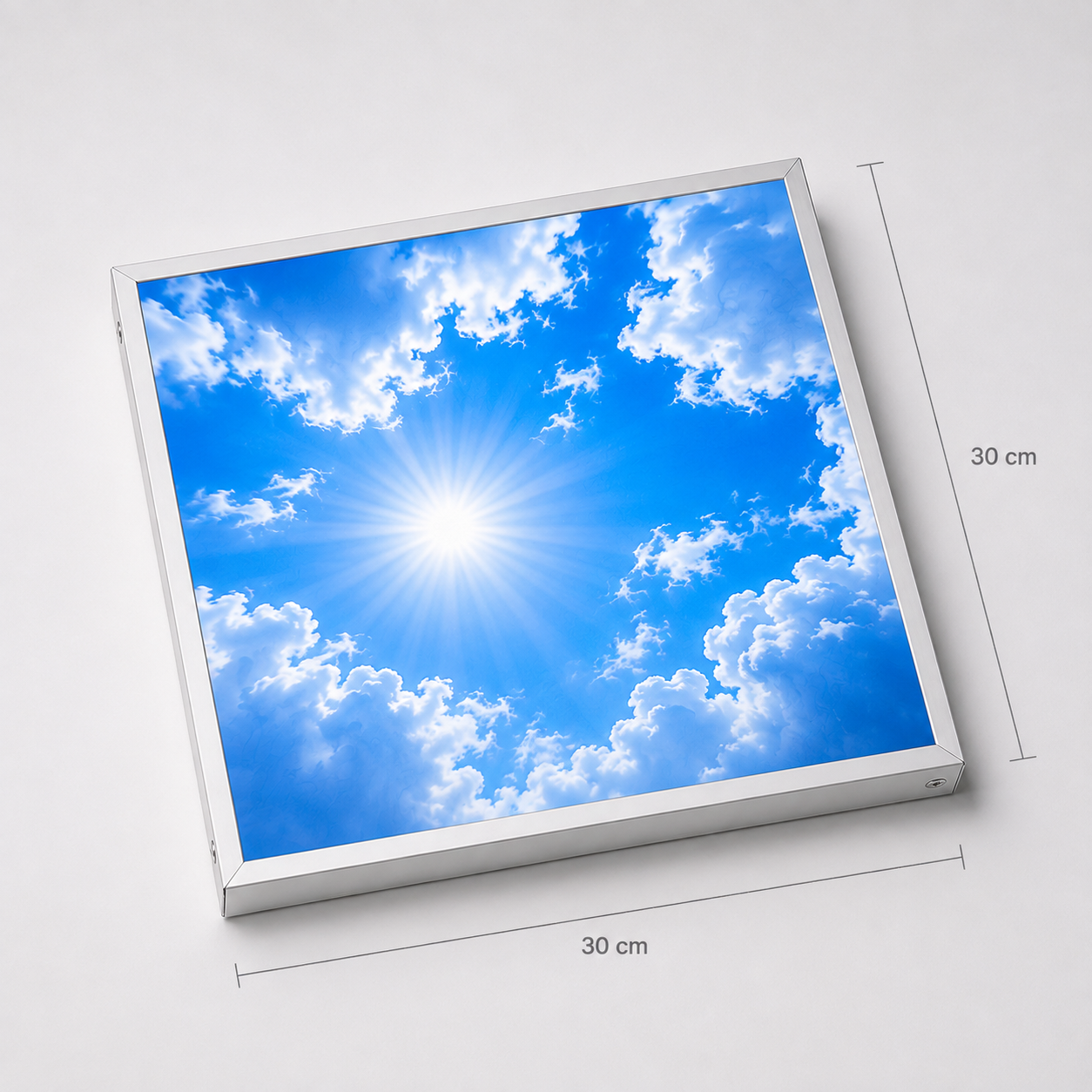
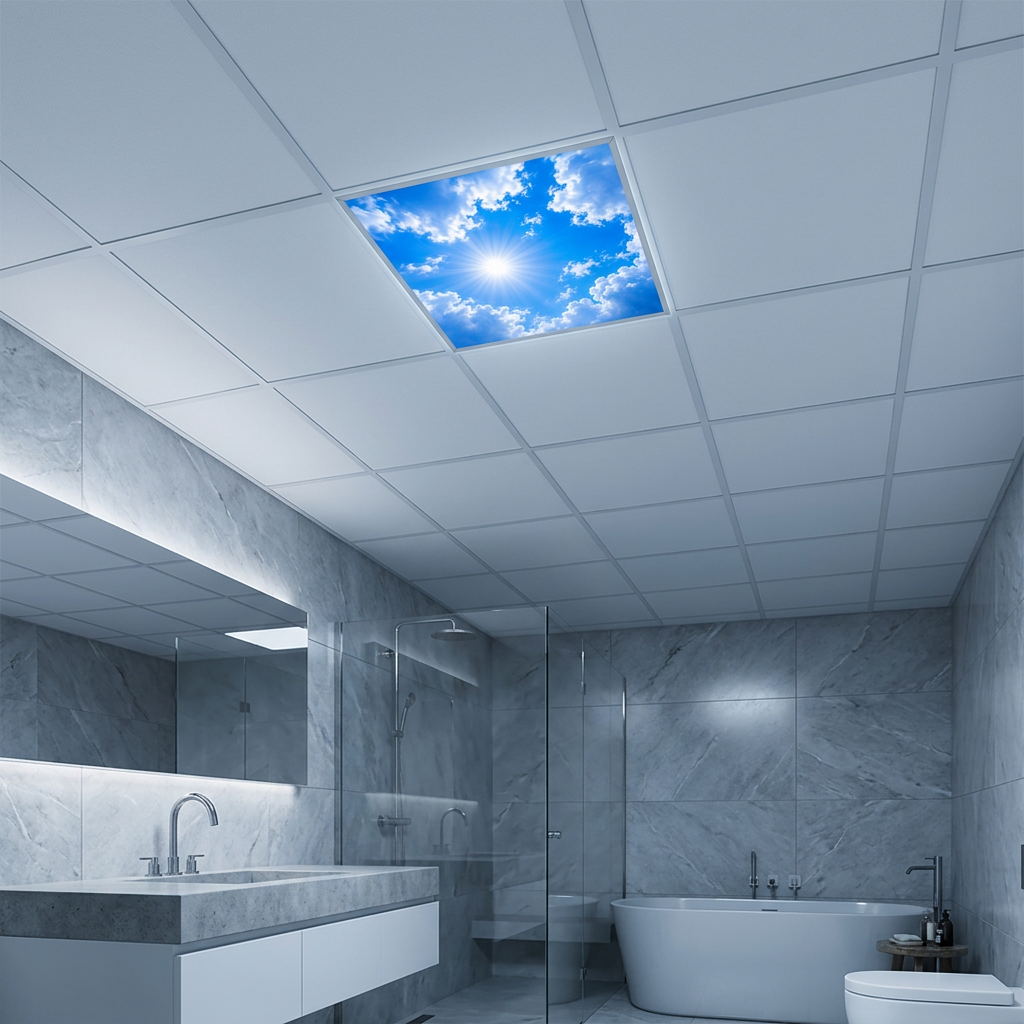
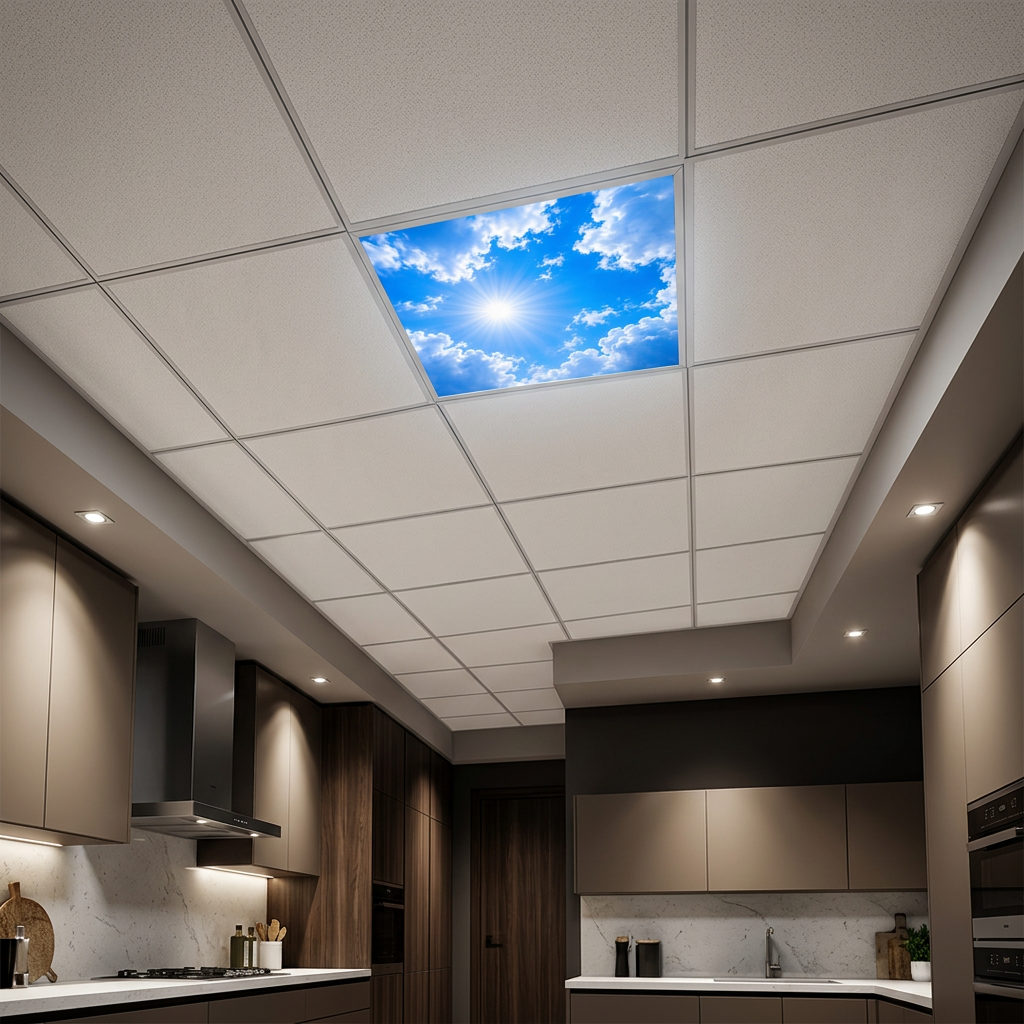
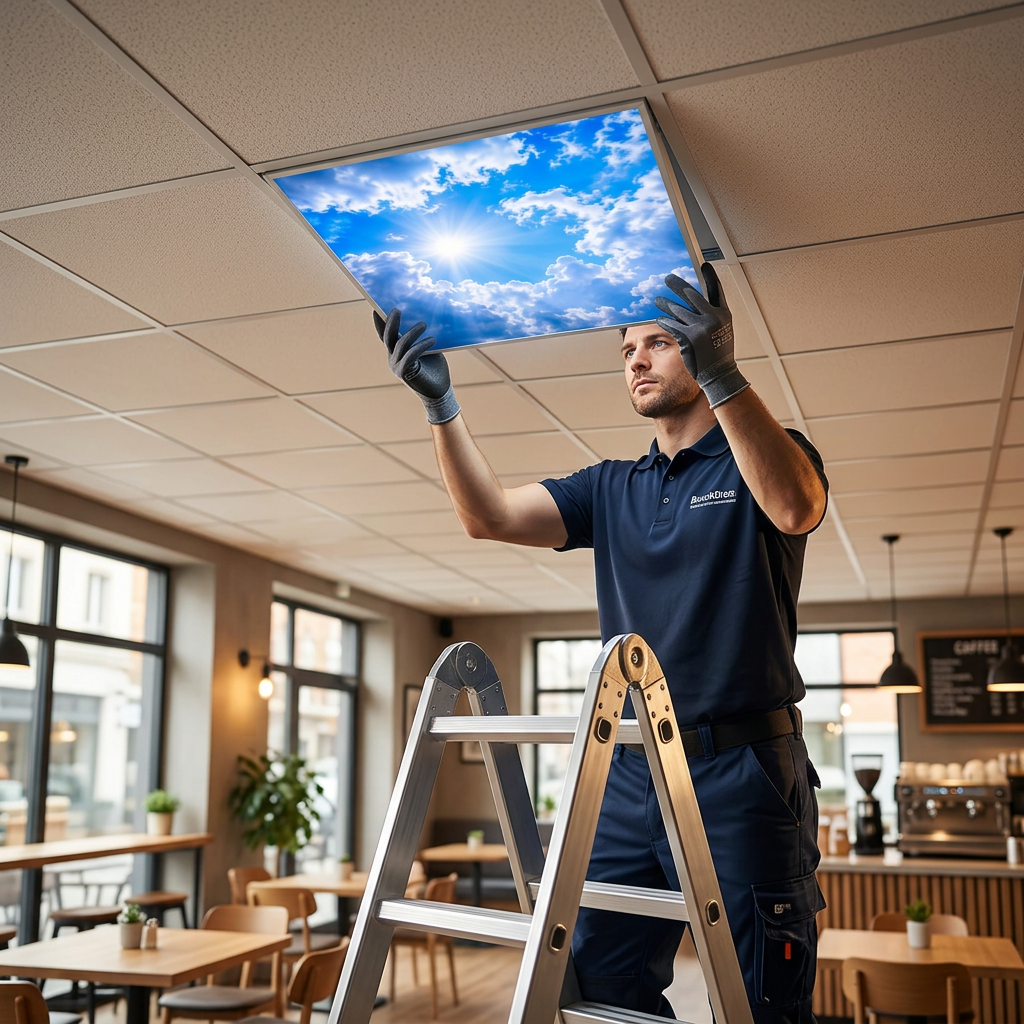
High-resolution sky and cloud printing turns the ceiling into a surface the child looks at every day.
Non-glaring surface
The light leaves the whole wide diffuser face; looked at lying down, it does not read as a bright point.
Locking mount option
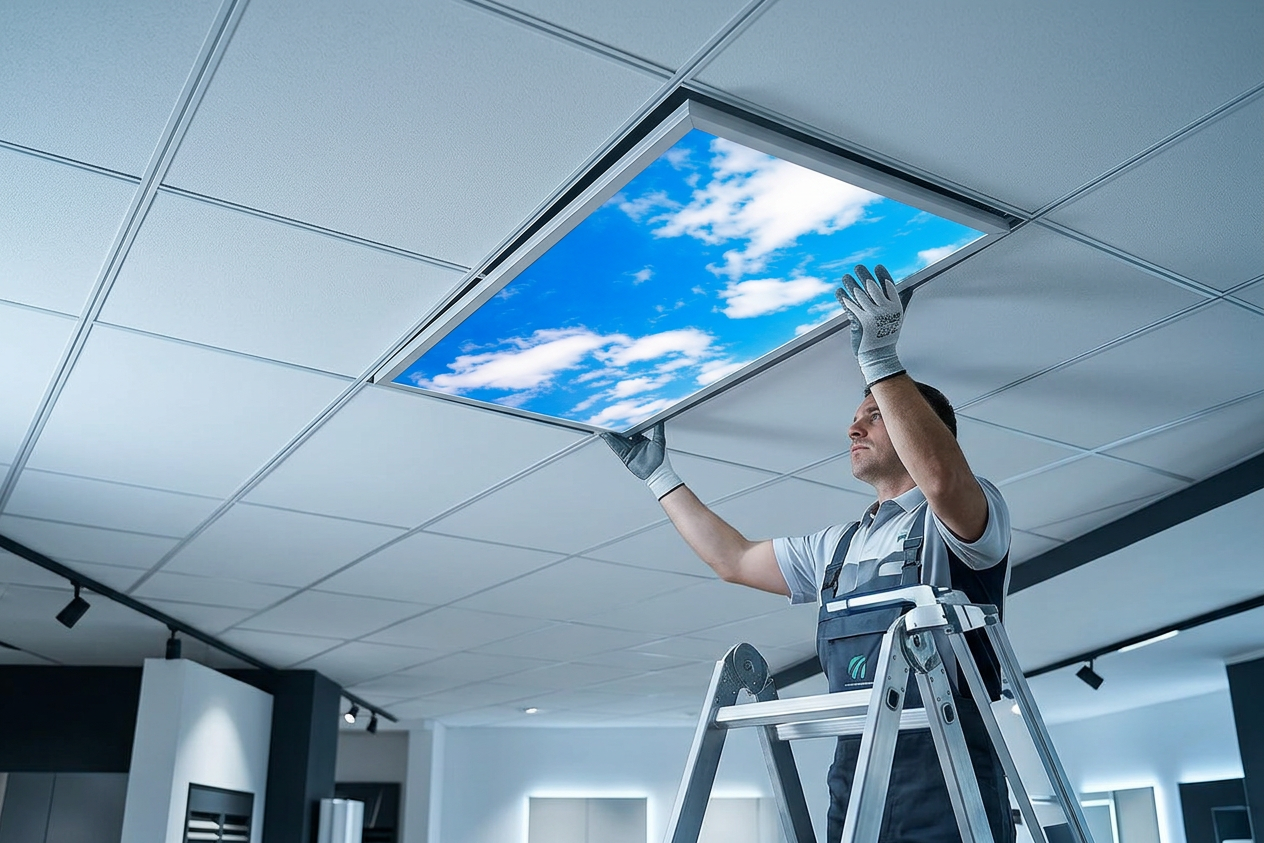
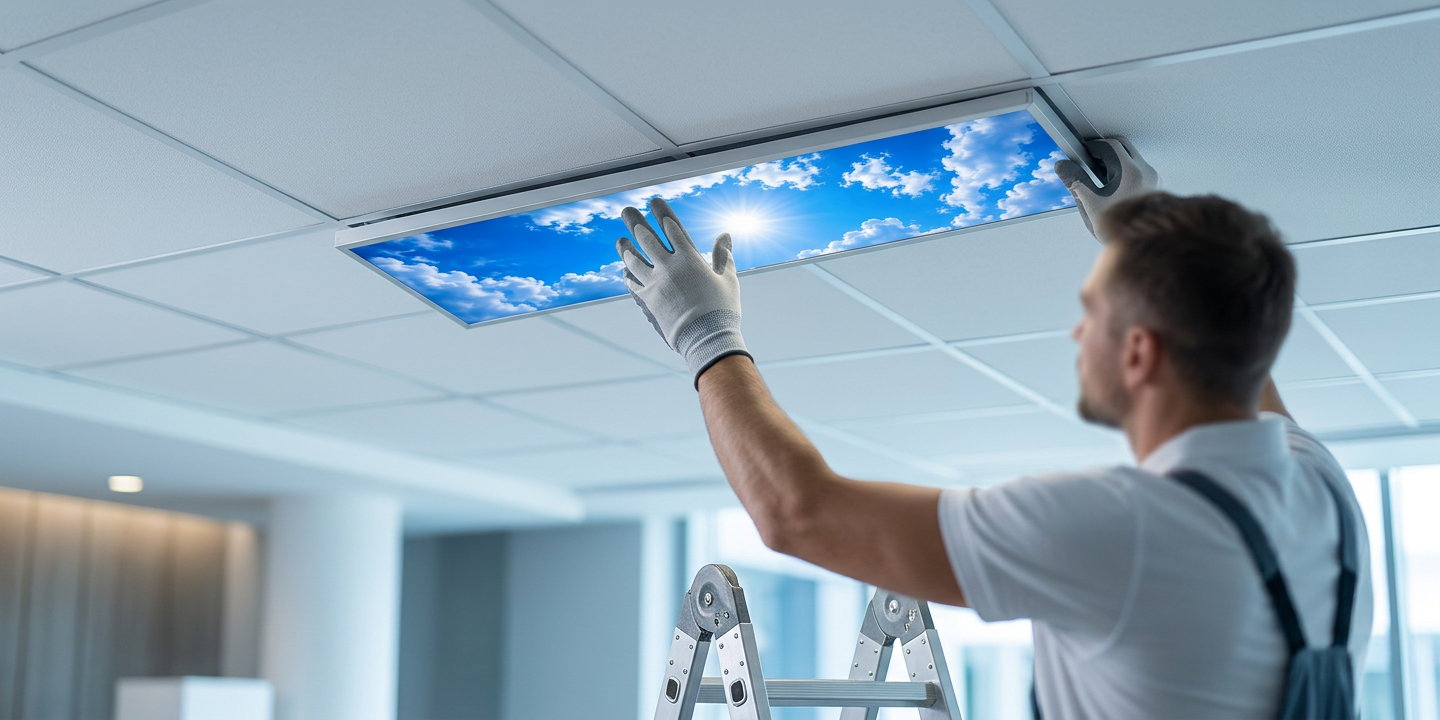
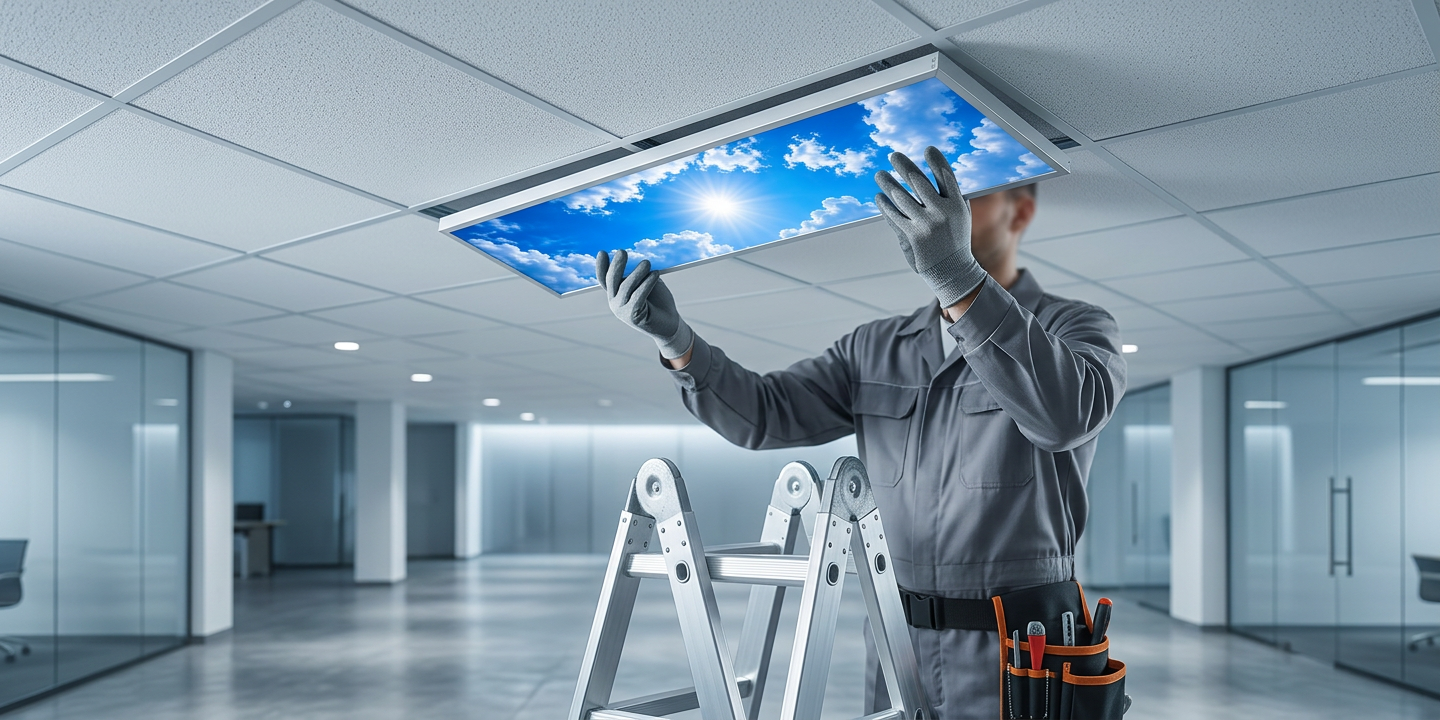
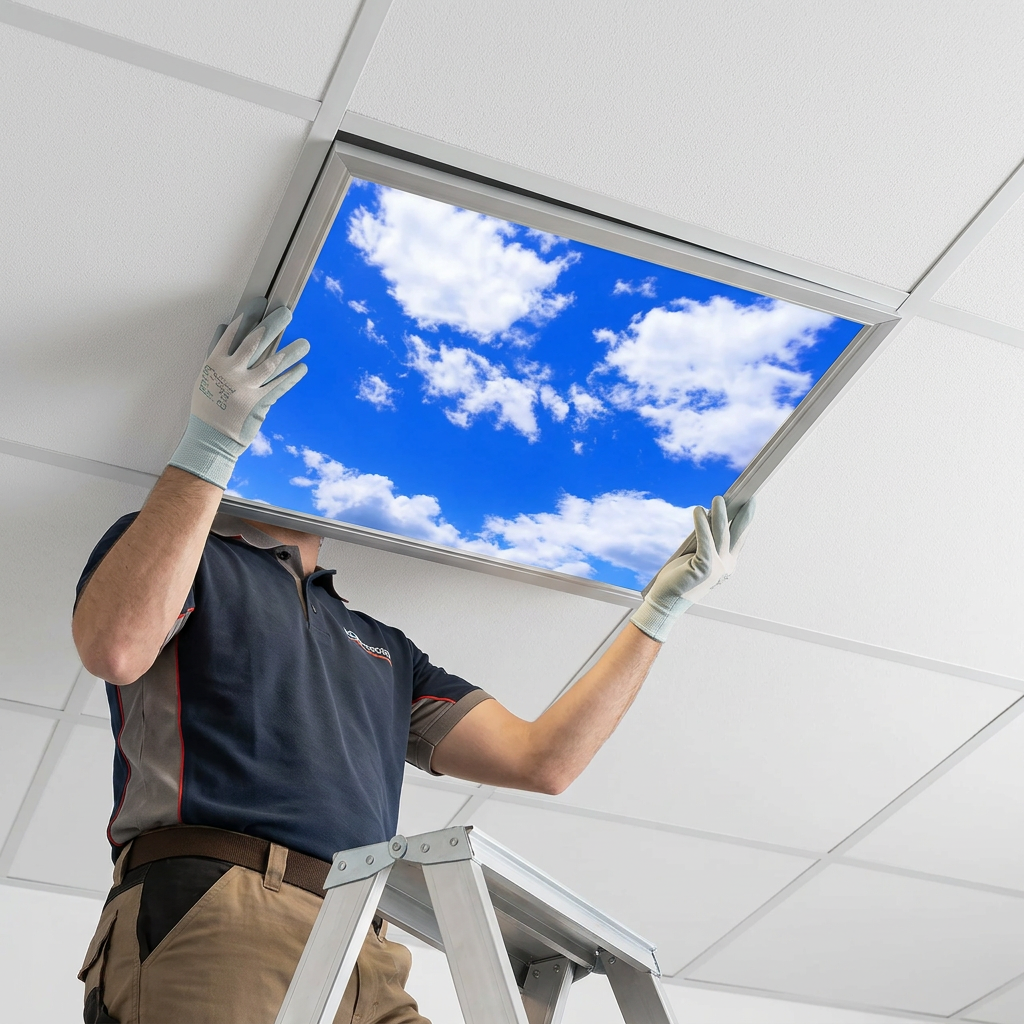
Clip-in framed models clip into the supporting grid and lock; once seated they do not fall.
Decoration when off too
With the fitting off the ceiling still carries its image; the room keeps its character in daylight as well.
Products for this service
Explore products →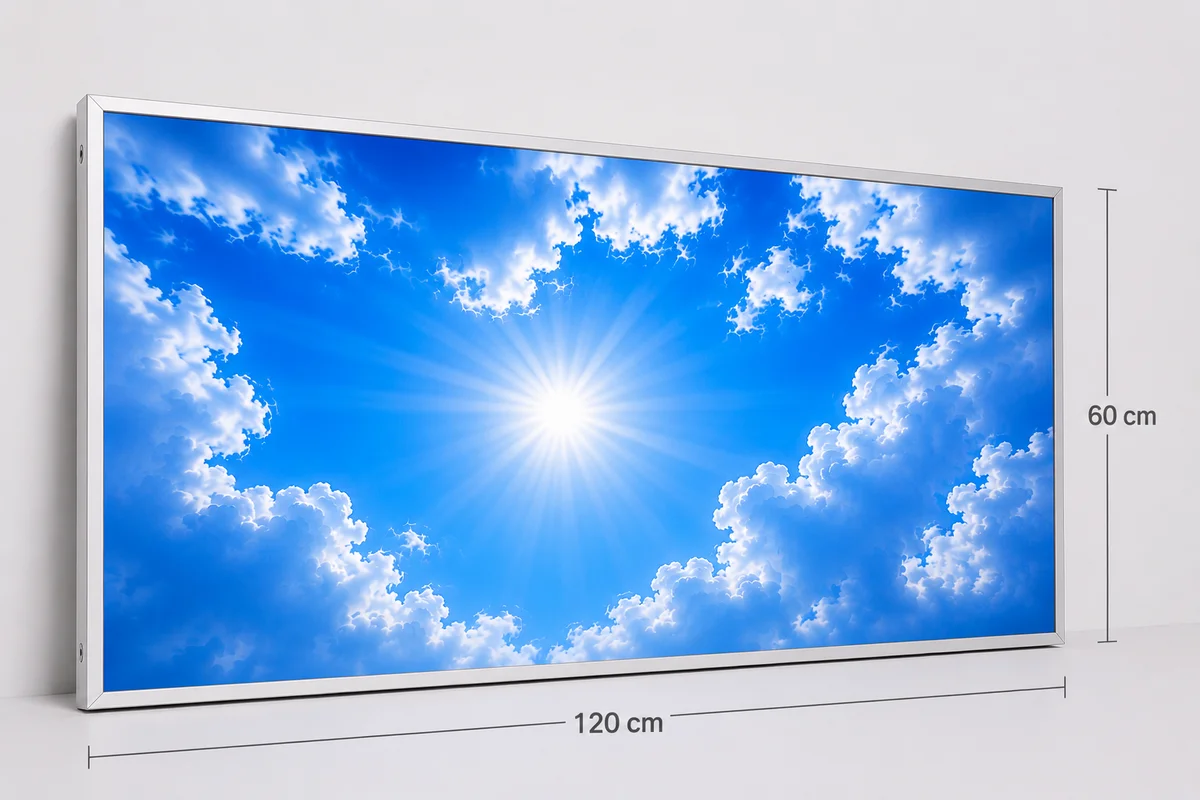
Why does the ceiling matter in a child's room?
In a child's room the ceiling is looked at for longer than in other rooms: while asleep, while waking, while playing on the floor. So the ceiling here is not just the surface the light source sits on, but the most looked-at surface in the room.
Panels printed with sky and clouds turn that surface into a decorative element. The image stays on the ceiling with the fitting off; the room looks characterful in daylight too.
Glare and the night layer
On a ceiling looked at lying down, small bright sources are uncomfortable. A panel that spreads light over a wide surface gives the same amount of light from a much larger area, and so lowers the brightness per unit area.
A separate layer is needed for bedtime. Without a dimmed light at the bedside the only option is to light the whole room, and that leads to waking up.
Safety: a mount that does not fall
The possibility of a part fixed to a child's room ceiling coming out of place is not acceptable. Lay-in T24 tiles lift by hand and can shift in a draught.
Clip-in framed models clip into the supporting grid and lock; once seated they do not fall. A child's room is the space where that difference matters most.
An important warning when mounting to a plasterboard ceiling: plasterboard does not carry load on its own. The fitting must always be fixed to the supporting framing or to a suitable supporting element.
As the child's age changes, the room's centre of light moves
The functional centre of a child's room is not fixed: first the cot, then the floor, then a desk against the wall. The furniture moves every few years, while the fitting on the ceiling usually stays where it is. Making the position decision not by today's furniture layout but by the room's own geometry therefore produces a far longer-lived solution.
In the baby stage the person really using the room is not the child but the adult. Decisions are therefore made along the route the adult follows through the night: the path between the door, the cot and the surface where the baby is changed. That this route should not become one walked by feel in the dark is a more decisive criterion than the room's total illumination.
In the preschool years play happens largely on the floor; the child works constantly bent over and leaning forward. When the light source stays behind their back, their own shadow falls straight in front, onto the surface under their hand. If light reaches the play area not from a single point but from a wide part of the ceiling, the edges of that shadow blur and the working surface is not left inside it.
With school age the need shifts from the centre of the room to the wall. The longer study time gets, the more the decisive factor stops being the room's general illumination and becomes the narrow area holding the exercise book and the screen. From that stage on, general, task and accent light should be thought of together as three separate layers; a single source cannot be expected to cover all of them.
The desk: task light and the desk's orientation to the window
Task light is not a shrunken version of general lighting; it does an entirely different job. Light coming from the ceiling gives a spread similar for the whole room, whereas the desk surface is a narrow area holding the pencil, the book and the hand. Because the need of that narrow area does not match the room average, it has to be handled with a separate source.
Which direction the task light should come from is set by the geometry of the shadow. When the source is behind you, your shadow falls forward, onto the very surface you are working on. For a right-handed child it makes sense for the light to come from the left, so that the shadow of the writing hand does not fall on the pencil tip; for a left-handed child, the opposite. This preference is worth discussing before the desk is bought.
The desk's position relative to the window follows the same logic. Sitting with your back to the window, your own shadow falls directly on the desk during the day; sitting directly facing it, the eye has to adapt continuously between the brightness outside and the surface inside. Having the window to the side of the desk softens both situations.
The effect of shelves and bookcases above the desk is nearly always overlooked. A shelf fixed to the wall cuts off the light coming from the ceiling and takes the area directly beneath it into its own shadow; yet that is exactly the area used most during study. Resolving the strip left under the shelf separately is a requirement independent of where the desk stands.
Separating the play area and the sleeping area with light
Two opposite things are done in one room: playing and sleeping. The most practical way to separate them without building a wall is a difference in brightness. The eye reads the brighter zone within the same volume as brought forward and active, and the dimmer one as drawn back; for a child, that reading produces a sense of place as decisive as a physical boundary.
For that separation to work, the sources on the play side and the bed side have to be controllable independently of each other. The decision is made before the ceiling is closed; thinking about a separate circuit afterwards means going back to the ceiling. On how to set up the sleeping zone, the layered approach on the bedroom lighting page is a useful guide too.
Colour temperature is the second tool of that separation. The choice between 4000K neutral white and 6500K cool white is made at the time of order; that is, the decision is a one-off. As the room's centre of gravity will move to the desk as the child grows, it is sounder to choose not by today's age but by the use of a few years from now.
The floor and textiles are part of this equation too. A light-coloured floor returns some of the light falling on it to the room, while a dark, deep-pile rug laid in the play area absorbs much of that same light. Two zones with the same source can read at different brightness to the eye simply because their surface colours differ.
Rebuilding the layout as the room grows
A child's room is the most frequently rearranged room in the home: the bed gets bigger, the desk changes wall, the wardrobe moves. That the product comes down and travels is a decisive advantage here; the panel is lifted from its place, leaves no permanent mark on the ceiling, and is reinstalled in a different position. For the same reason it can be used comfortably in a rented home too.
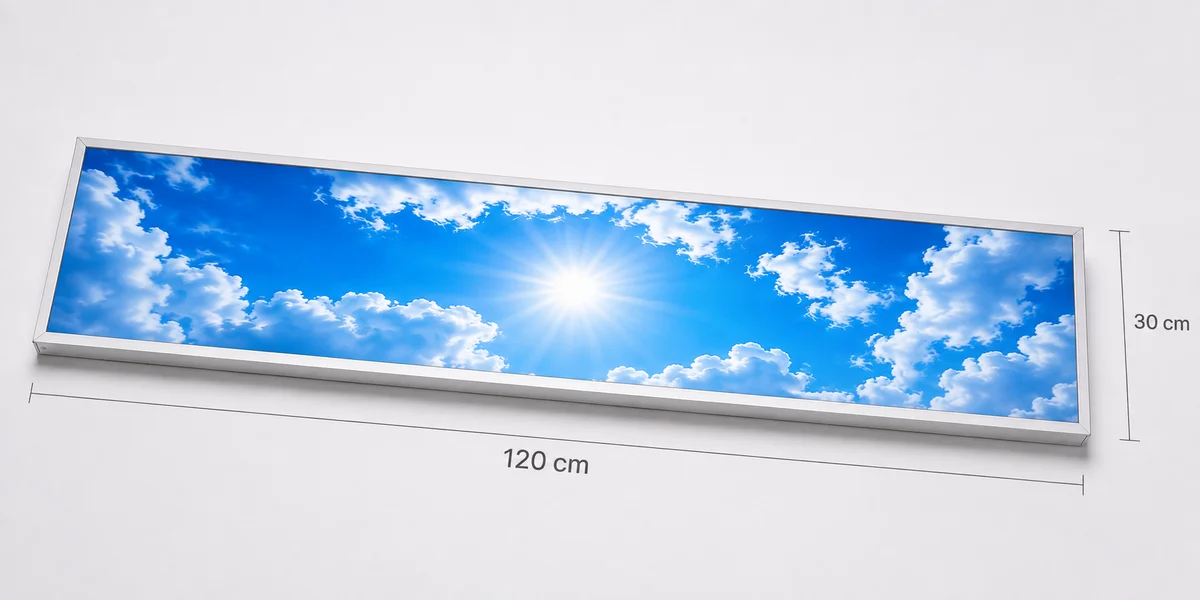
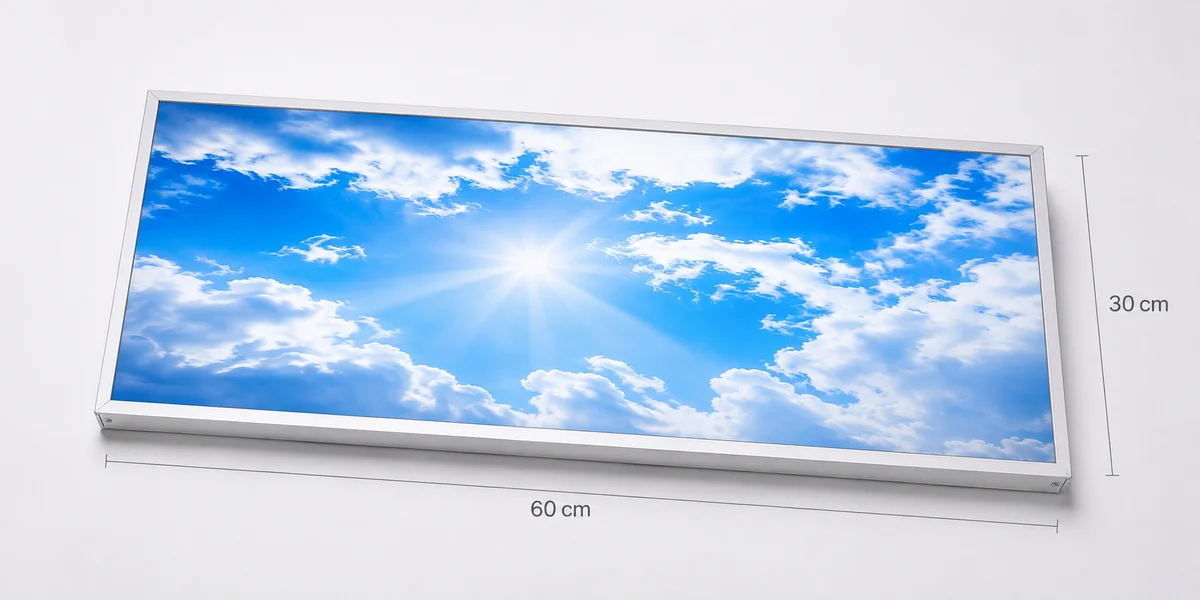
The composition can be enlarged later. The standard module measures 60x60 cm and a single panel covers 0.36 m²; panels set side by side become one large surface. Divide the area you want to cover by 0.36 m² to see in advance how many modules a given layout corresponds to.
What is most often overlooked when rearranging is the room's proportion. In a narrow, elongated child's room, gathering the light at a single point makes the far end look drawn back and the room read as longer than it is. Spreading the surface along the ceiling balances that sense of distance and makes the room look more collected.
A suspended ceiling is not a requirement: the surface-mounted model fixes straight to the existing ceiling and projects about 5 cm. It runs on a 220–240 V supply, and the warranty period is 24 months. Because the flat, unperforated surface wipes down with a damp cloth, cleaning requires no dismantling; in a room where dust and fingerprints gather often, that makes a practical difference.
Who is it for?
Parents
Ceiling solutions that do not glare, do not fall and give the room character.
Nurseries and daycare
Panels with locking mounts, unperforated surfaces and simple cleaning.
Children's clinics
A calming sky surface for the child looking at the ceiling during an examination.
Frequently asked questions
Which fitting suits a child's room best?+
Panels with a diffuser that spread light from a wide surface. Because a child looks at the ceiling lying down, small bright sources enter the field of view directly and glare.
Is a cloud ceiling panel suitable for a child's room?+
Yes. The ceiling is the most looked-at surface in a child's room; a panel printed with sky and clouds uses that surface as both lighting and decoration, and leaves an image on the ceiling even with the fitting off.
Can the panel fall?+
Clip-in framed models clip into the supporting grid and lock, and once seated they do not fall. Lay-in T24 models do lift by hand; in a child's room a locking mount should be preferred.
Can it be mounted to a plasterboard ceiling?+
Plasterboard does not carry load on its own. The fitting must be fixed to the supporting framing or to a suitable supporting element; hanging it directly from the board is not safe.
Is a night light necessary?+
A separate dimmed layer for bedtime is necessary in practice; otherwise the only option is to light the whole room, and that leads to waking up.
How is the layout set up if two siblings share the room?+
As there are two centres of use, the layout is built not around the centre of the room but per child: each child's bed and desk counts as a zone of its own. Because panels can be set side by side, you are not obliged to align the composition with the geometric centre; an asymmetric layout covering both zones can be built. Leaving the shared area between them more neutral stops one side overwhelming the other.
How does ceiling height affect the choice in a child's room?+
The shorter the distance between the source and the plane of use, the more the light gathers into a narrow area and the more marked the difference between the centre and the far corners; the greater the distance, the wider the spread but the weaker the light reaching that same surface. In a low-ceilinged room a wide-surface solution close to the ceiling gives a more even spread, while in high-ceilinged rooms pendant fittings are preferred to bring the source closer to the plane of use.
Can two different colour temperatures be used in the same room?+
They can; colour temperature is chosen separately for each product at the time of order. However, when two different temperatures sit side by side on the same ceiling, the eye compares them directly and the difference reads as inconsistency rather than design. So a distinction by temperature is meaningful not on one surface but between zones that are visually separated from each other.
What if there are reflections on the screen while studying?+
A reflection forms when a bright surface returns to the eye off the glossy screen as if off a mirror; the answer is not to dim the source but to break the angle of incidence. Turning the screen slightly so that it does not sit directly opposite the lit surface on the ceiling, or moving the desk, changes the result in most cases. Matt screen finishes scatter incoming light and reduce the sharpness of the reflection.
Is ceiling lighting needed if there is a desk lamp?+
It is; they do different jobs. A desk lamp resolves only the work surface, and when the rest of the room stays dark the eye has to adapt continuously between the lit desk and the dark surroundings. Portable sources also take up room on an already narrow desk surface and, with their cable, remain a piece that can be knocked over; a general layer resolved from the ceiling leaves those surfaces clear.
Let's determine a safe, non-glaring scheme for the child's room together
Share your room dimensions and ceiling type; together we will work out which mounting suits.
🌍 Installation and shipping worldwide