
By Room
Bedroom Lighting
The bedroom is the only room whose ceiling is looked at lying down — which is why the choice of fitting is different here.
There is one decisive difference between bedroom lighting and every other room: the ceiling here is looked at lying down, not standing up. In that position a bare light source enters your field of view directly and becomes uncomfortable. That is why wide diffusing surfaces are noticeably more comfortable in a bedroom than small, bright sources. The second rule is not to rely on a single fitting: without a separate reading light at the bedside, you have to light the whole room in order to read at night.
- Standard panel module
- 60×60 cm
- Projection of the surface-mounted model
- ~5 cm
- Light-transmitting diffuser surface
- Unperforated
- Product warranty
- 24 Months
Key features
Light spread from a wide surface
The light leaves the whole unperforated diffuser face; looked at from the bed, it does not read as a bright point.
Stays as decoration on the ceiling
Thanks to the image printed on the surface, the fitting remains part of the ceiling even when switched off.
No suspended ceiling needed
Surface-mounted models fix to the existing ceiling; the bedroom does not have to go into building work.
Removable and portable
Because it comes down and travels, it can be used in rented homes too.
Products for this service
Explore products →
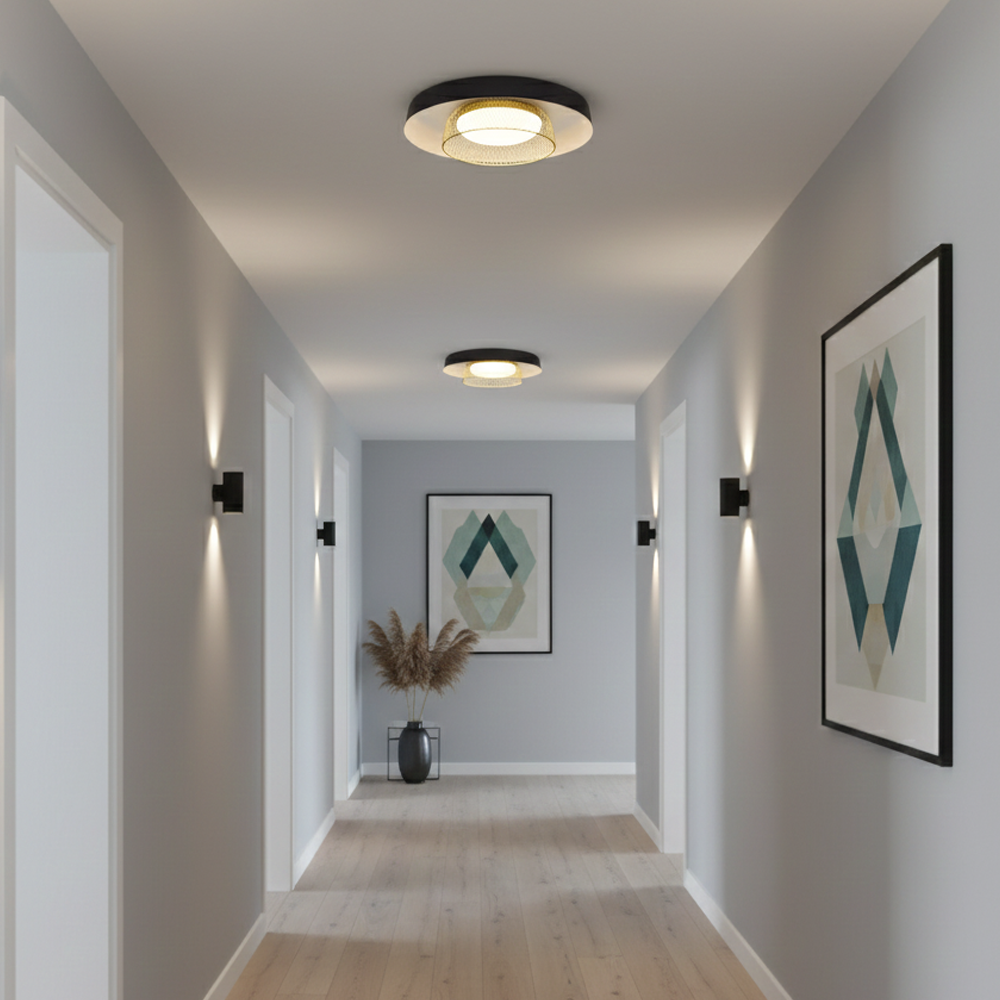
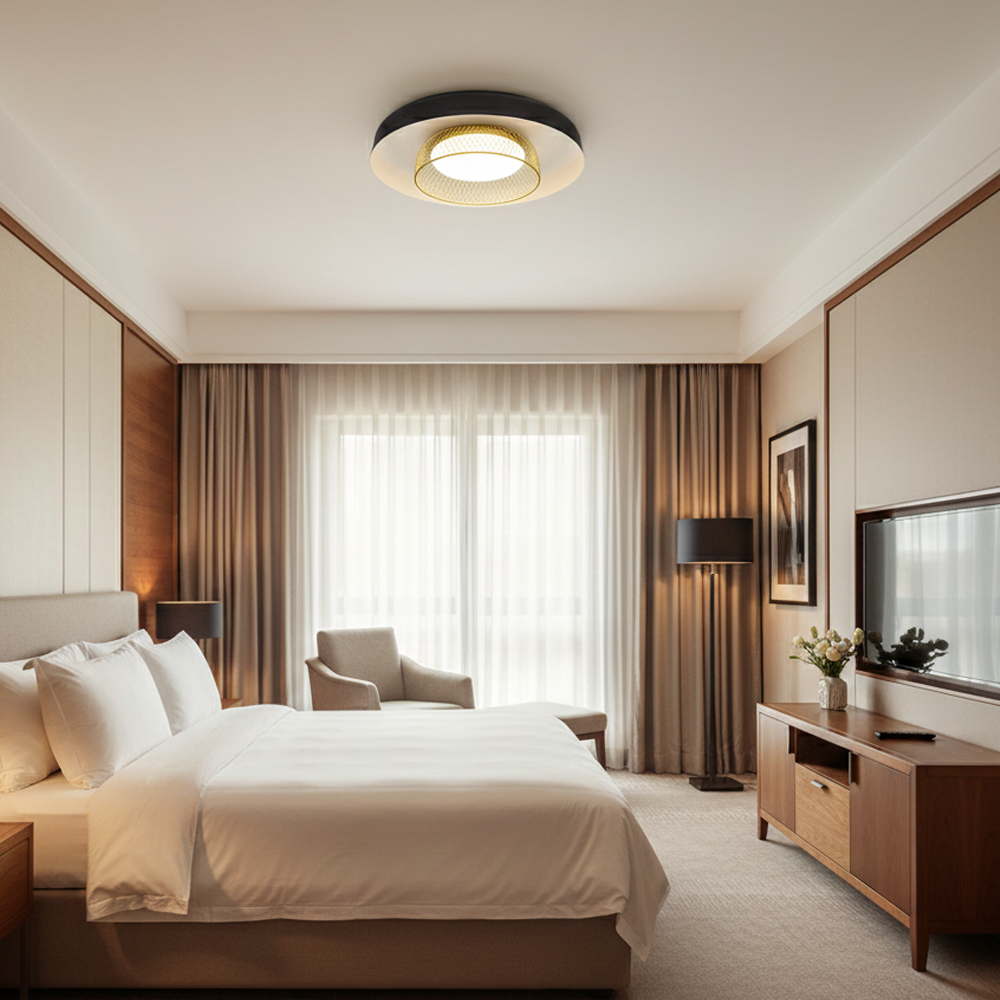
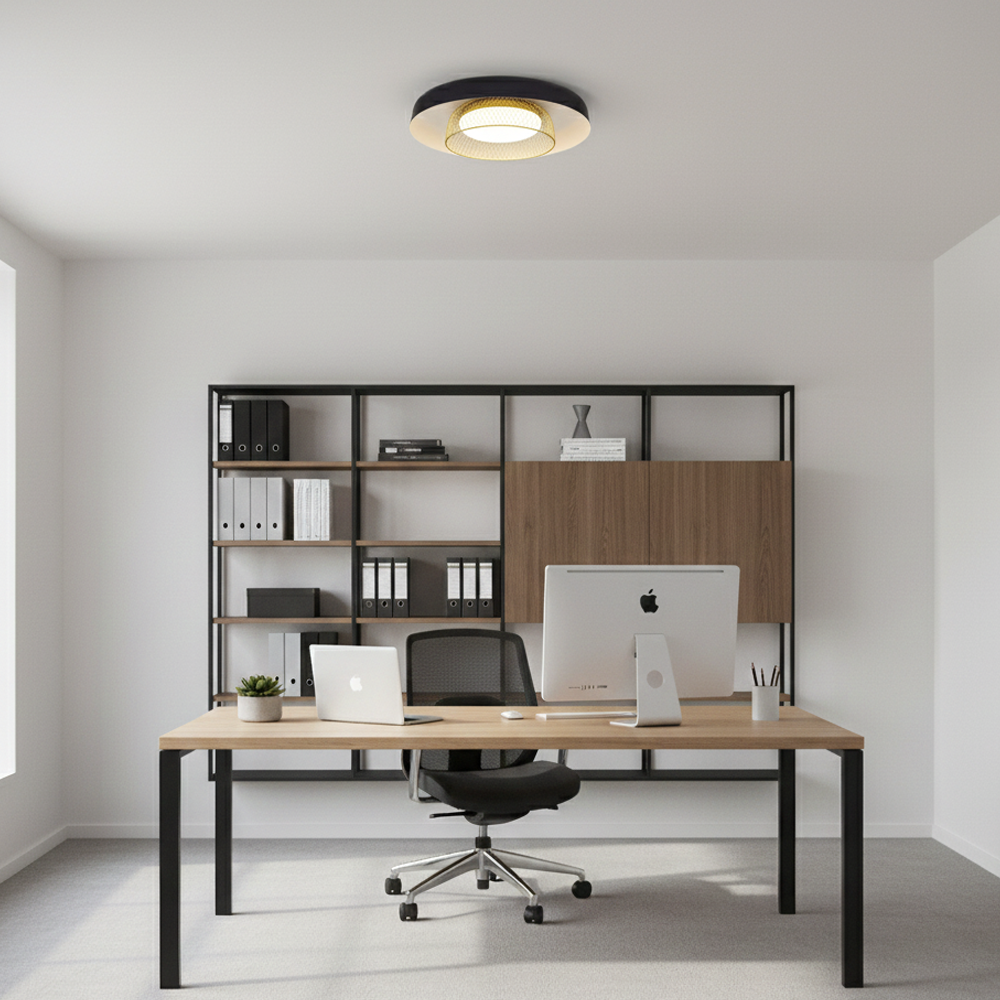
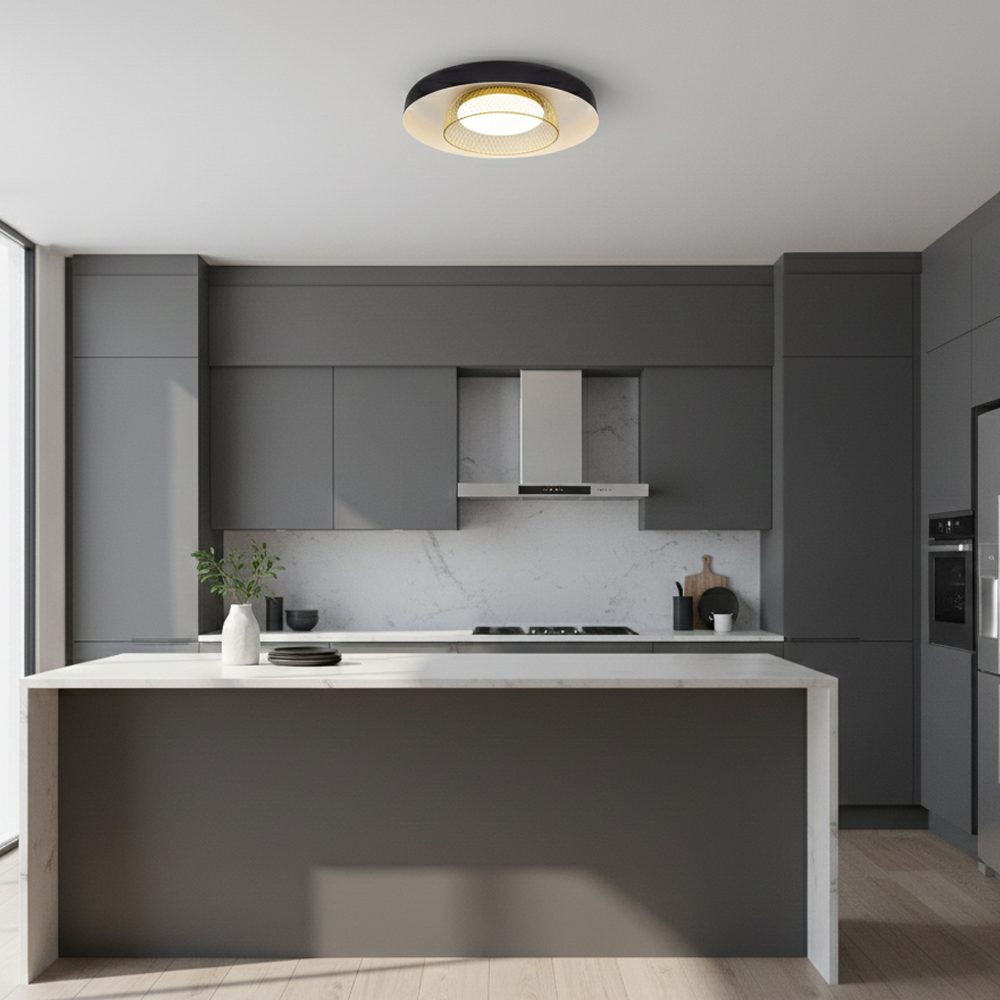
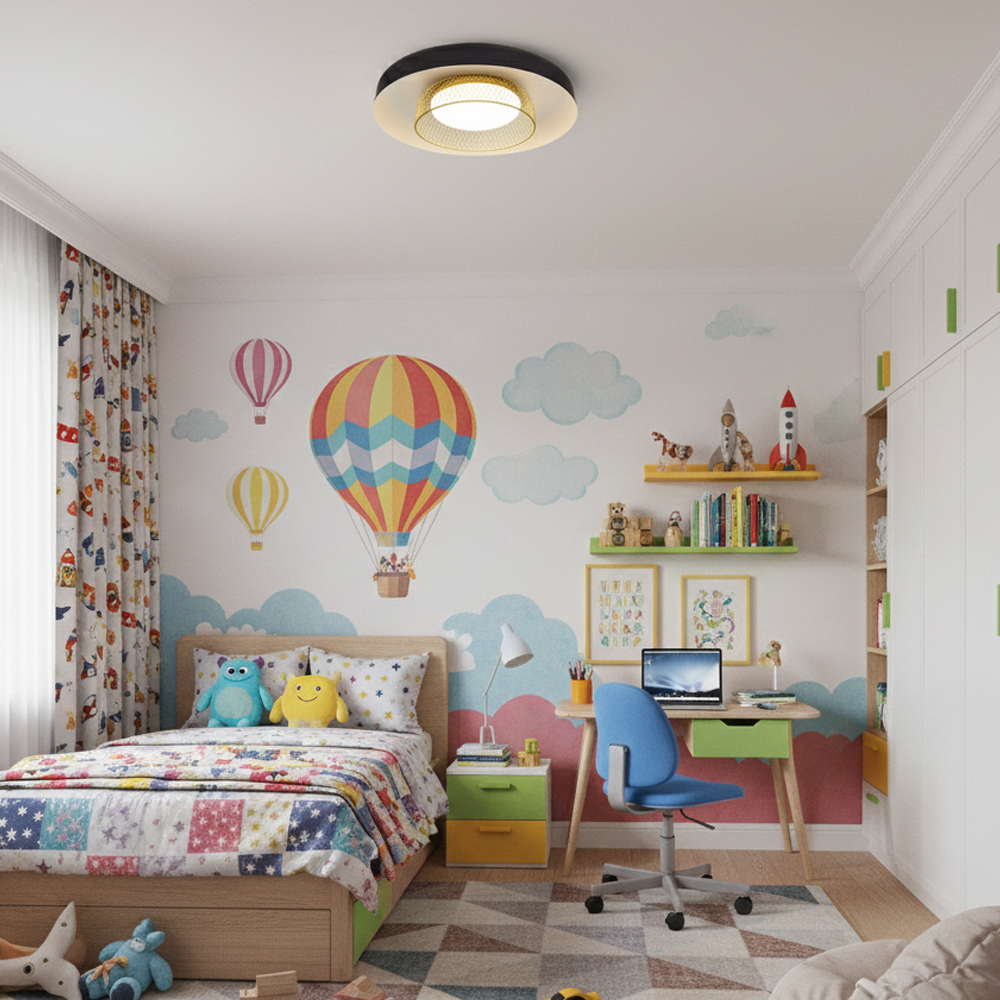
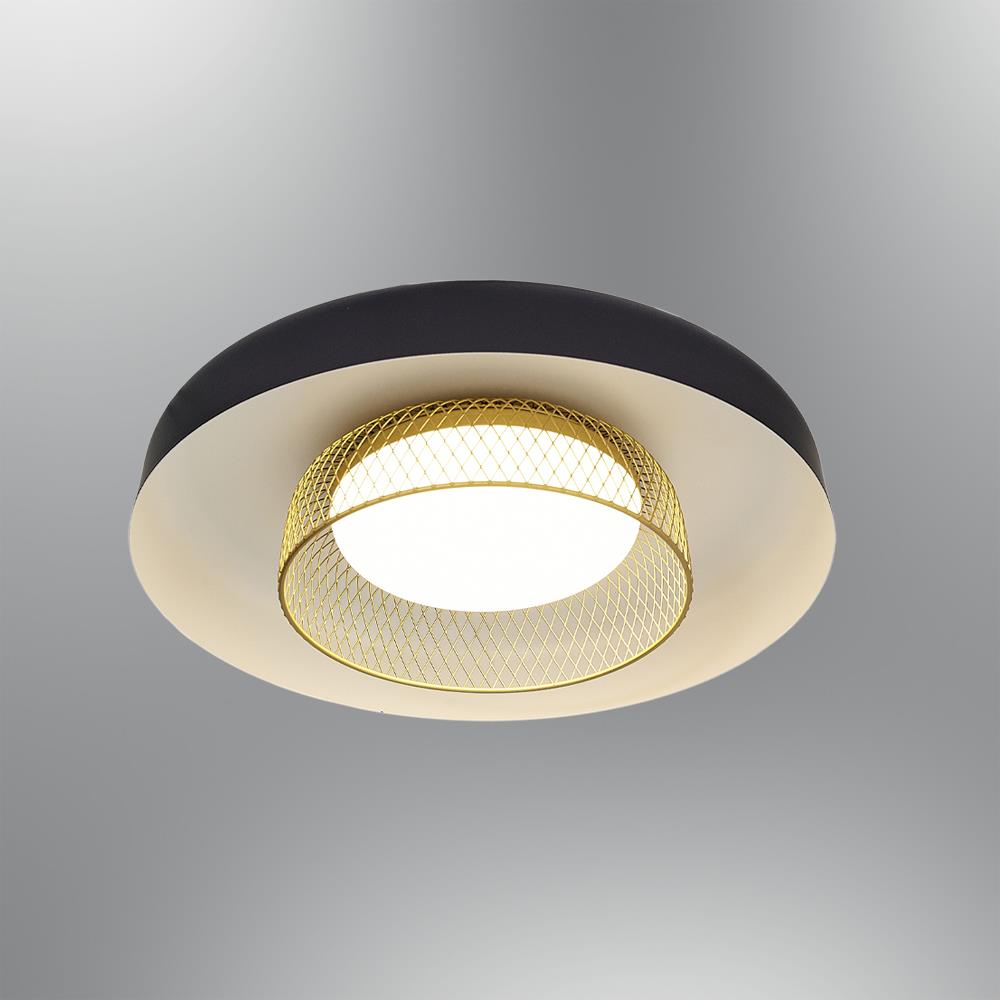
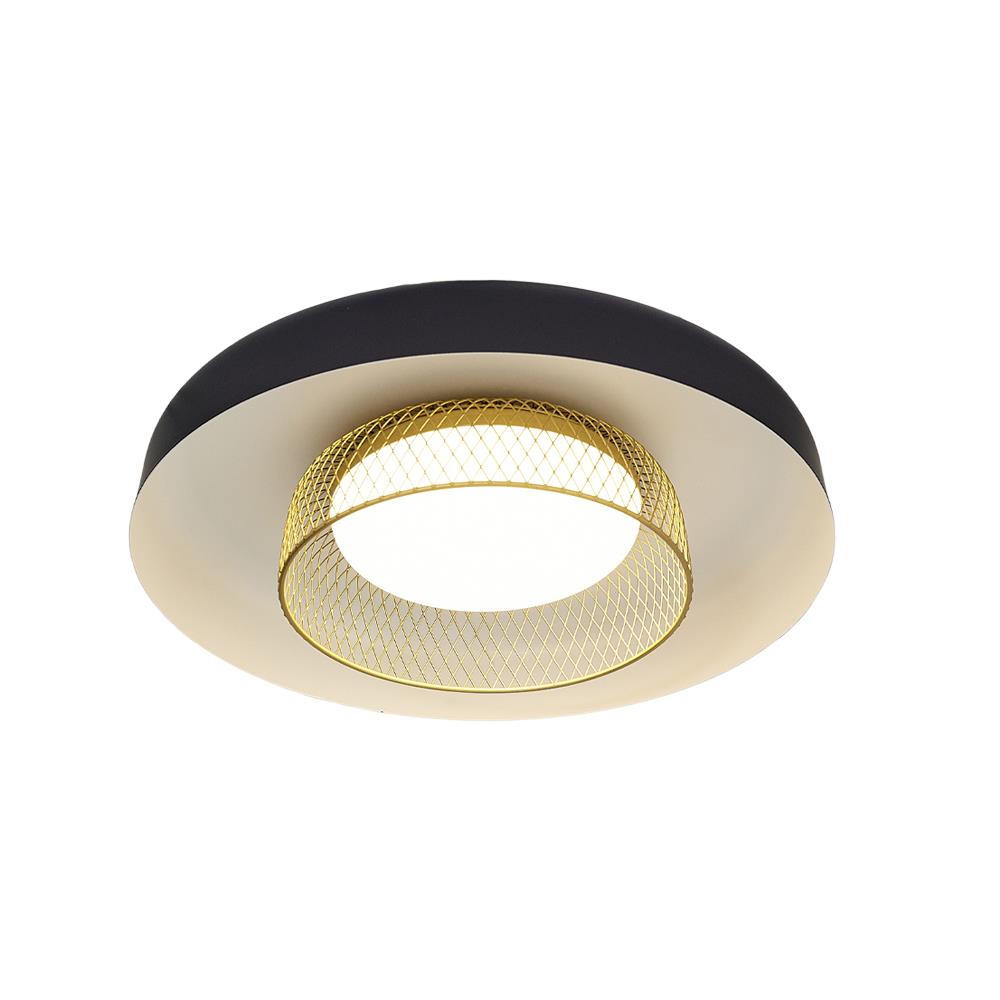
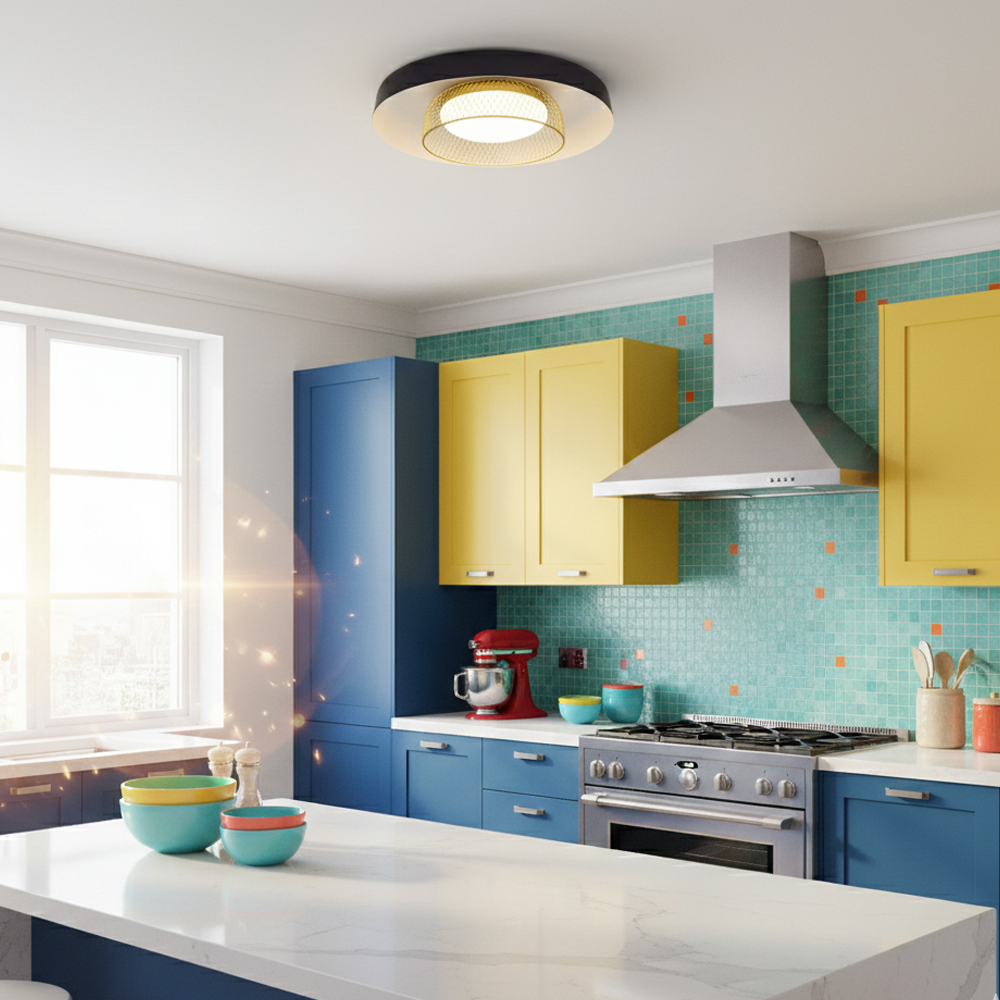
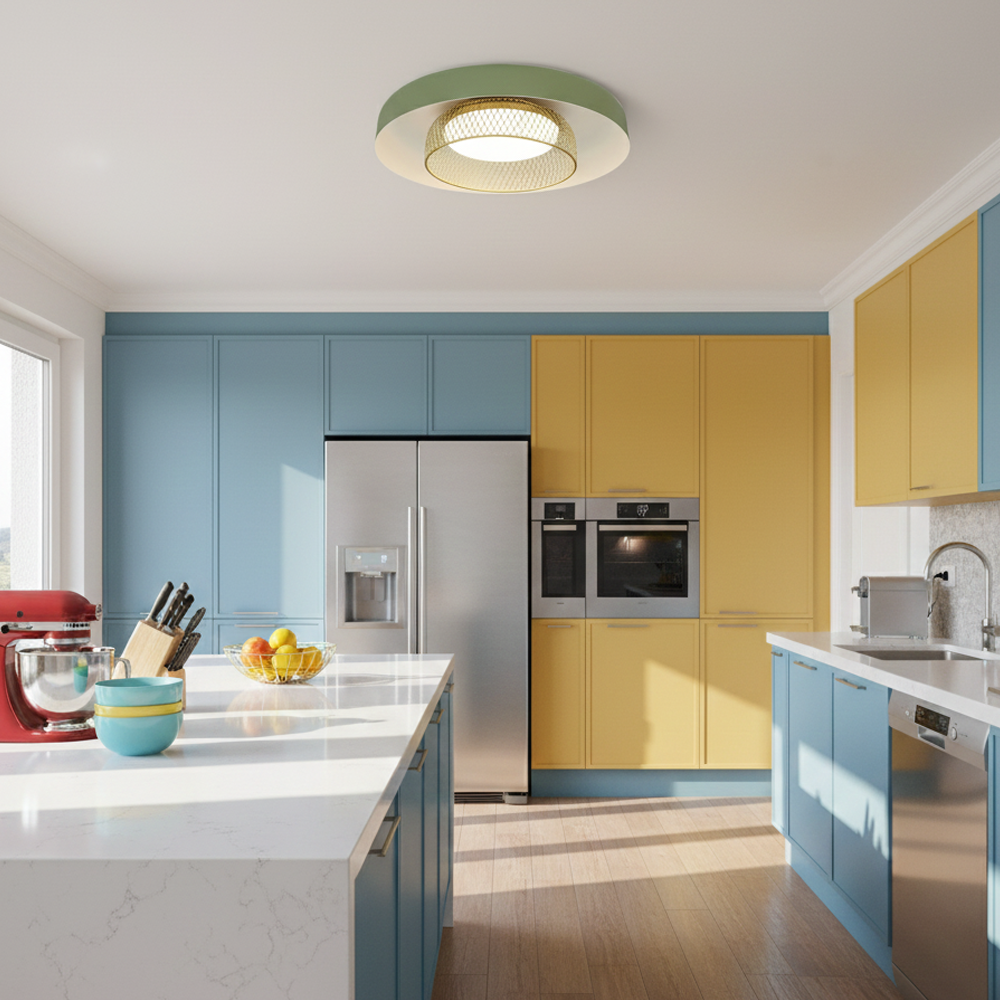
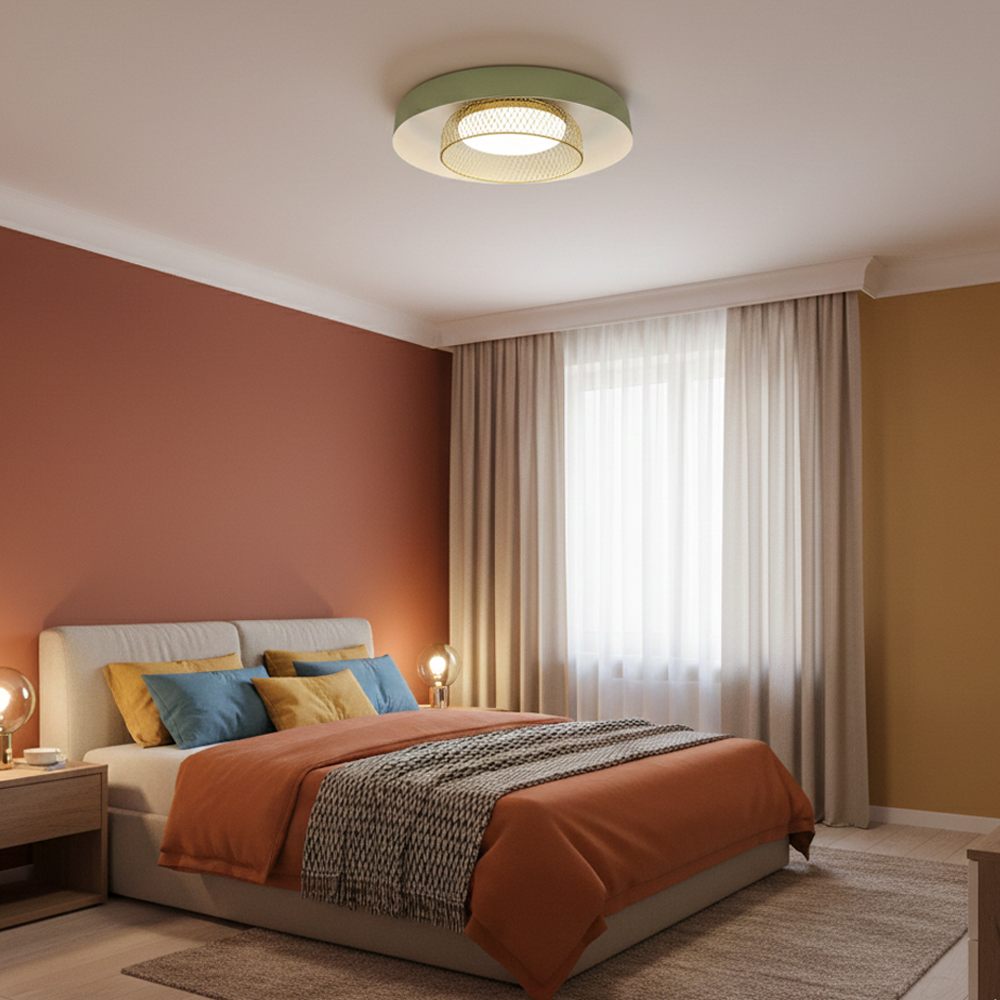
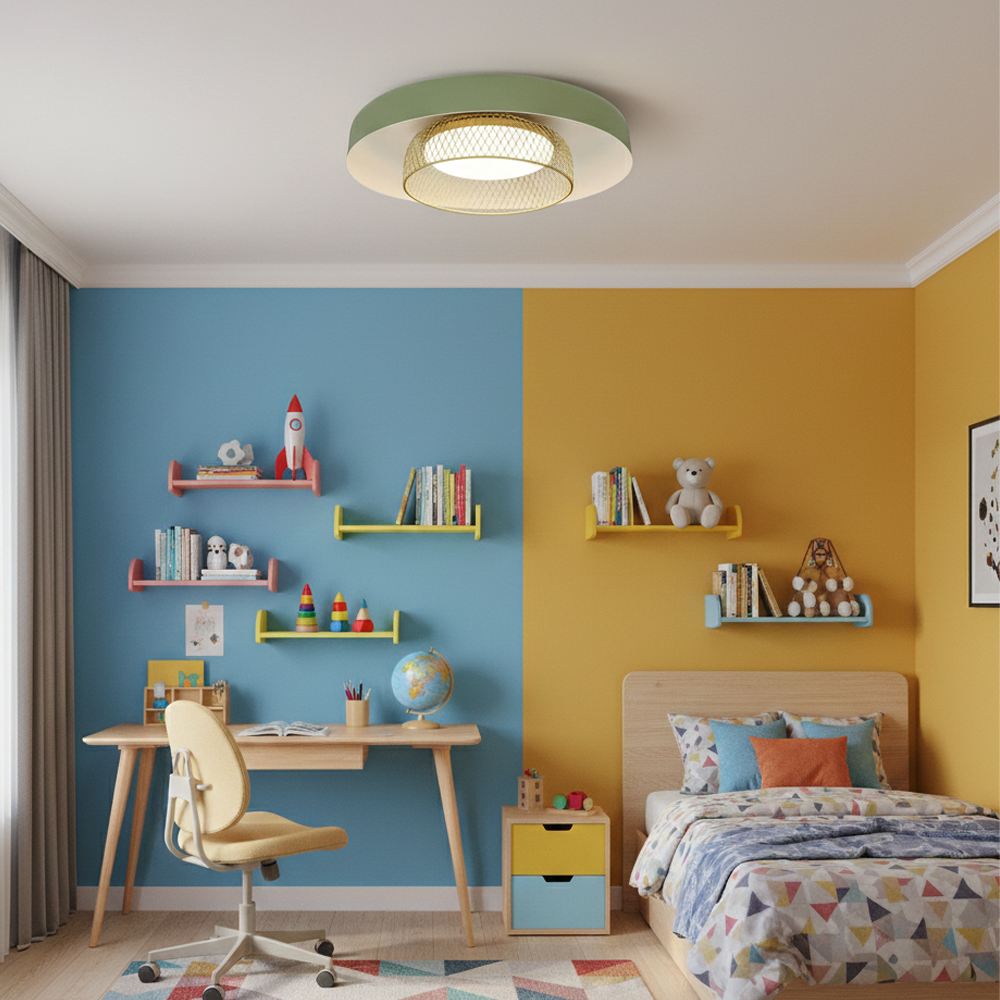
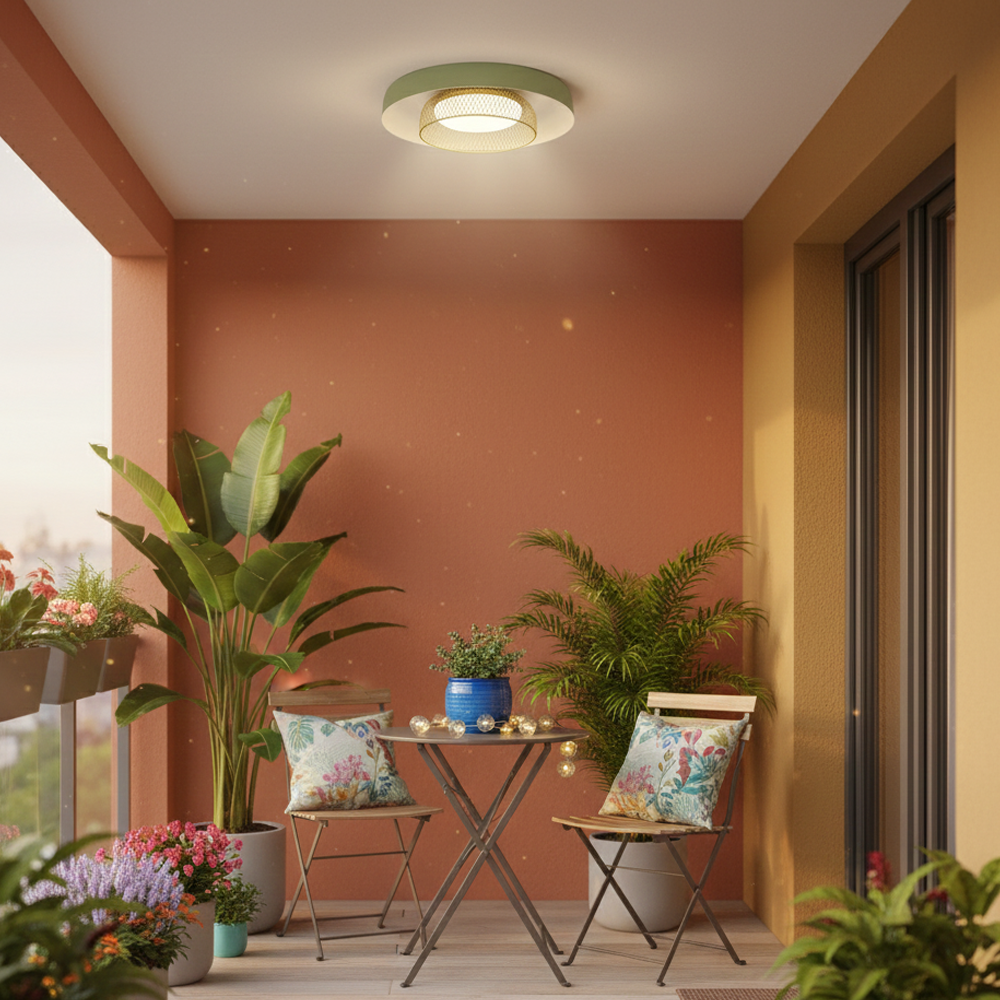
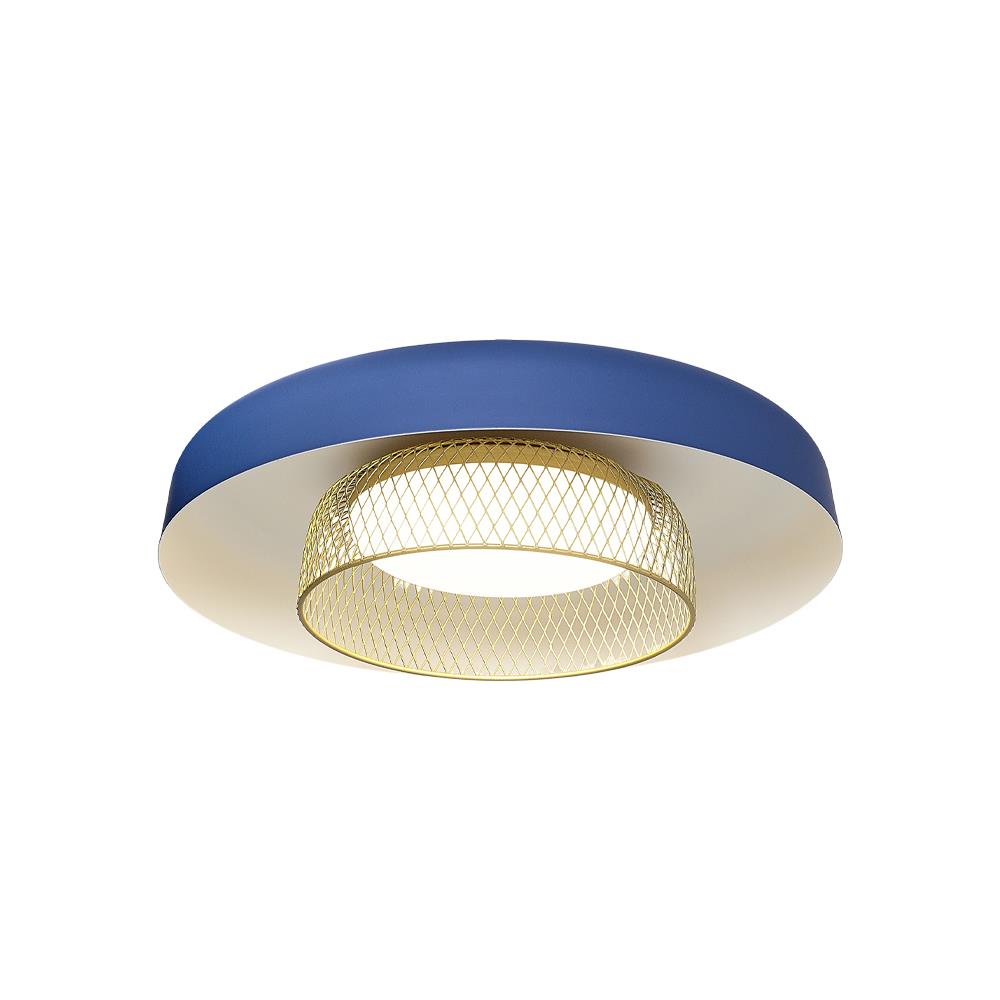
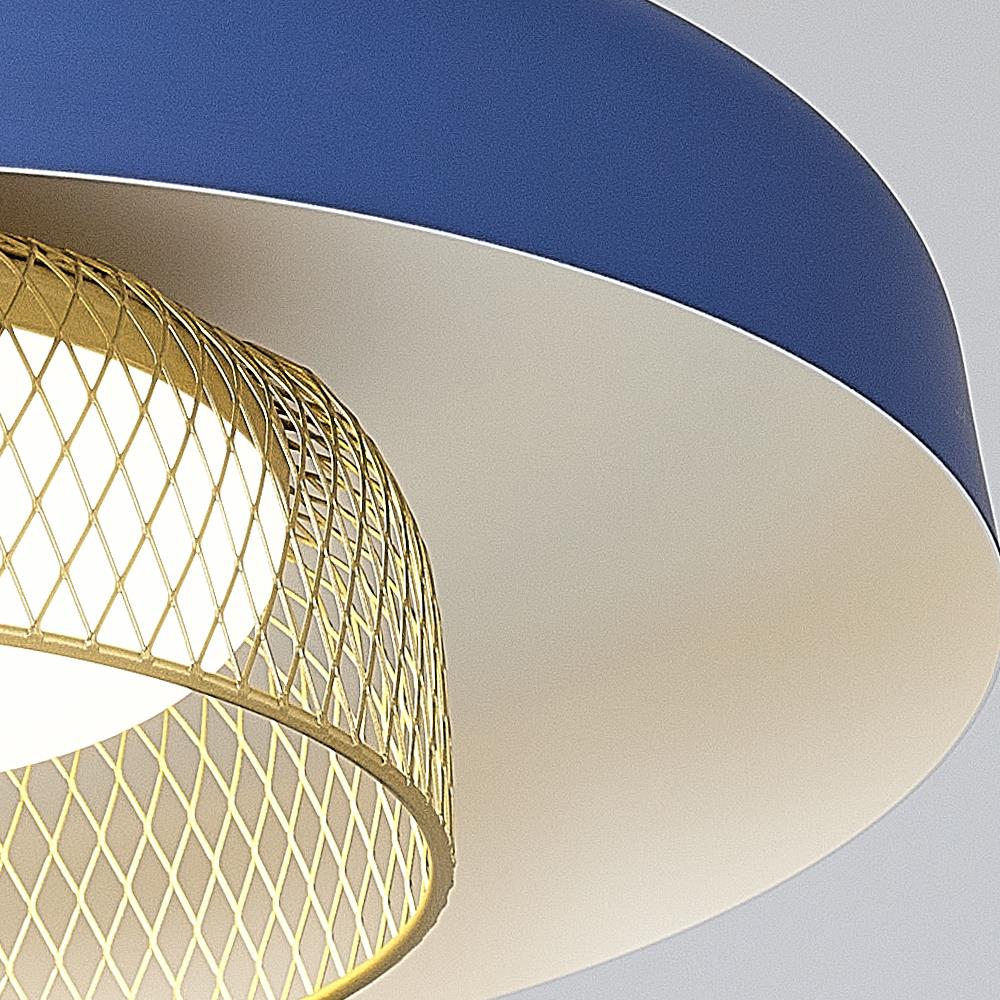
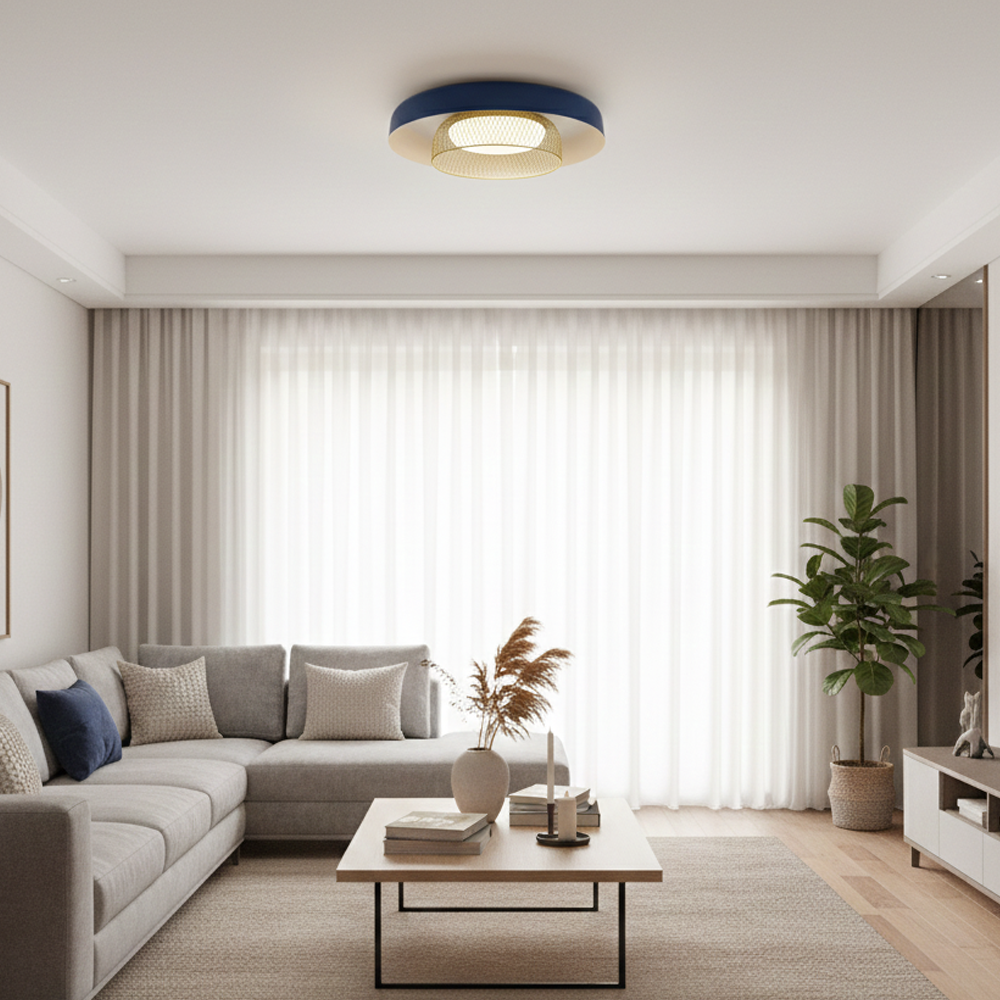
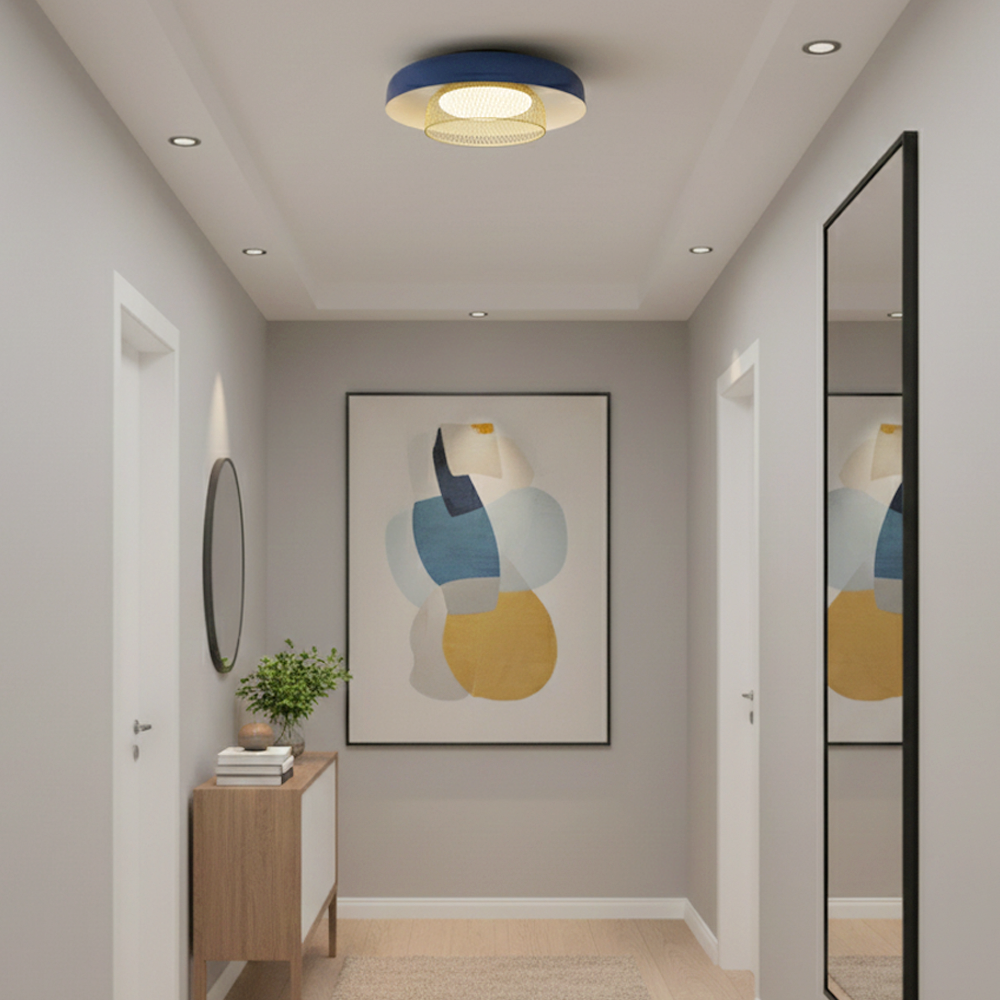
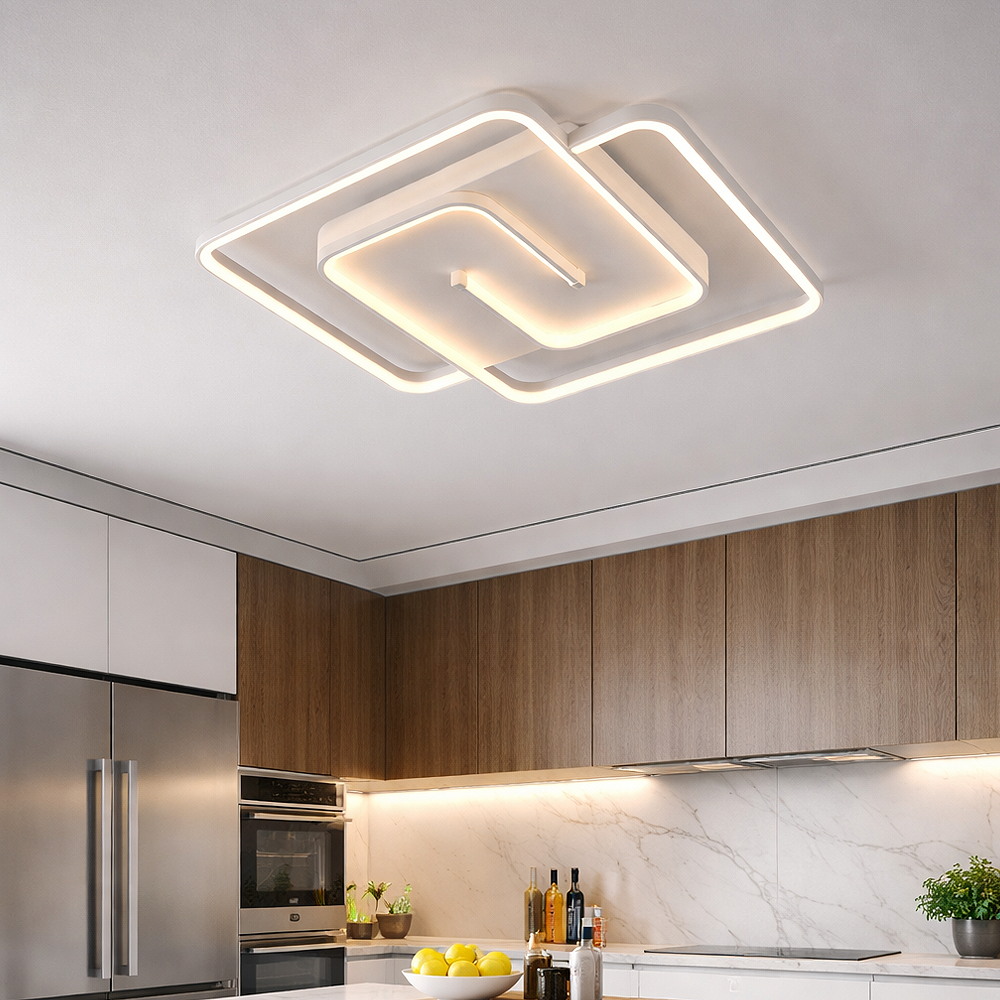


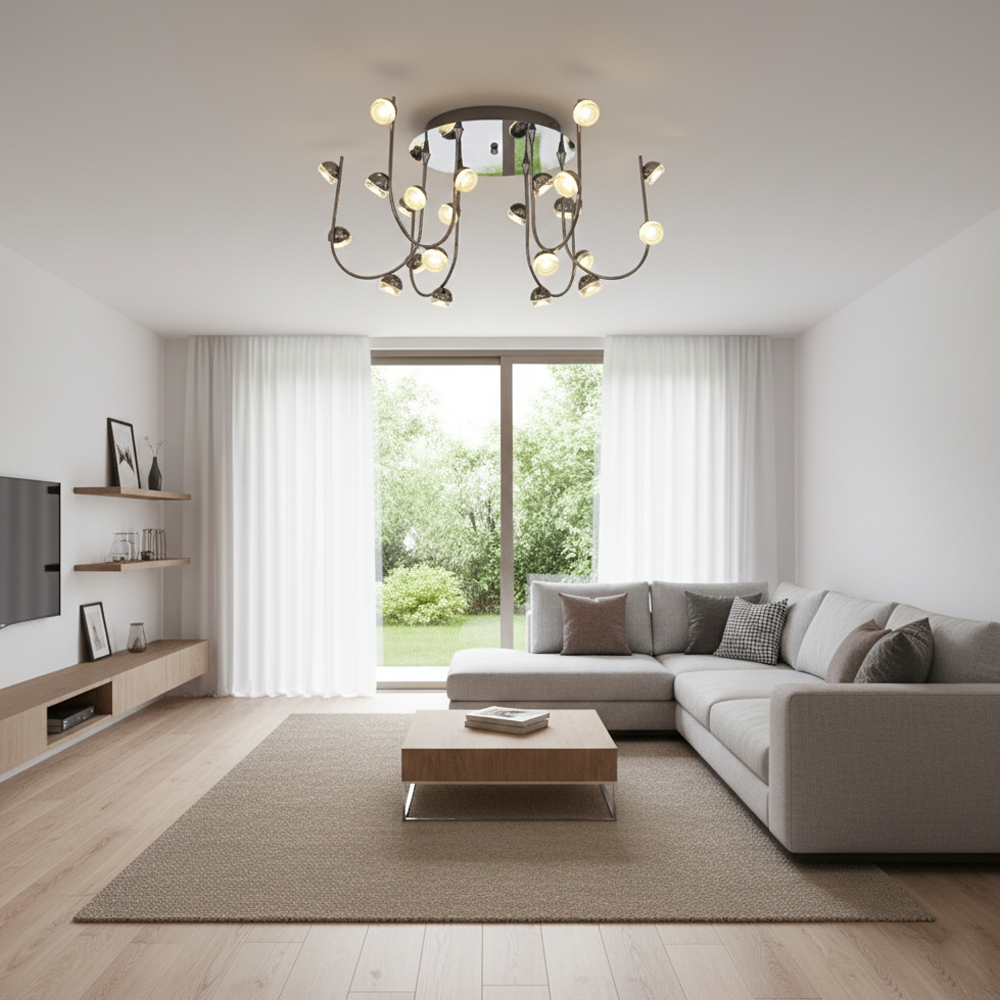
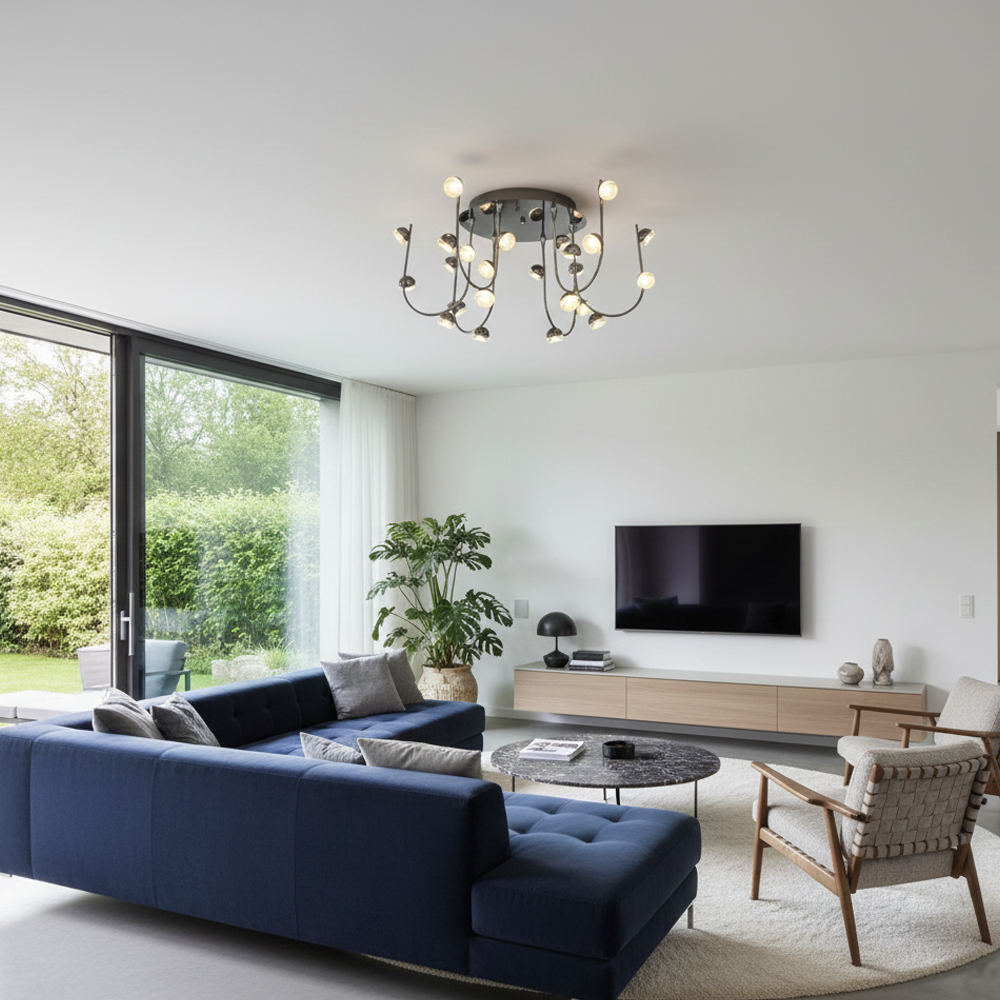

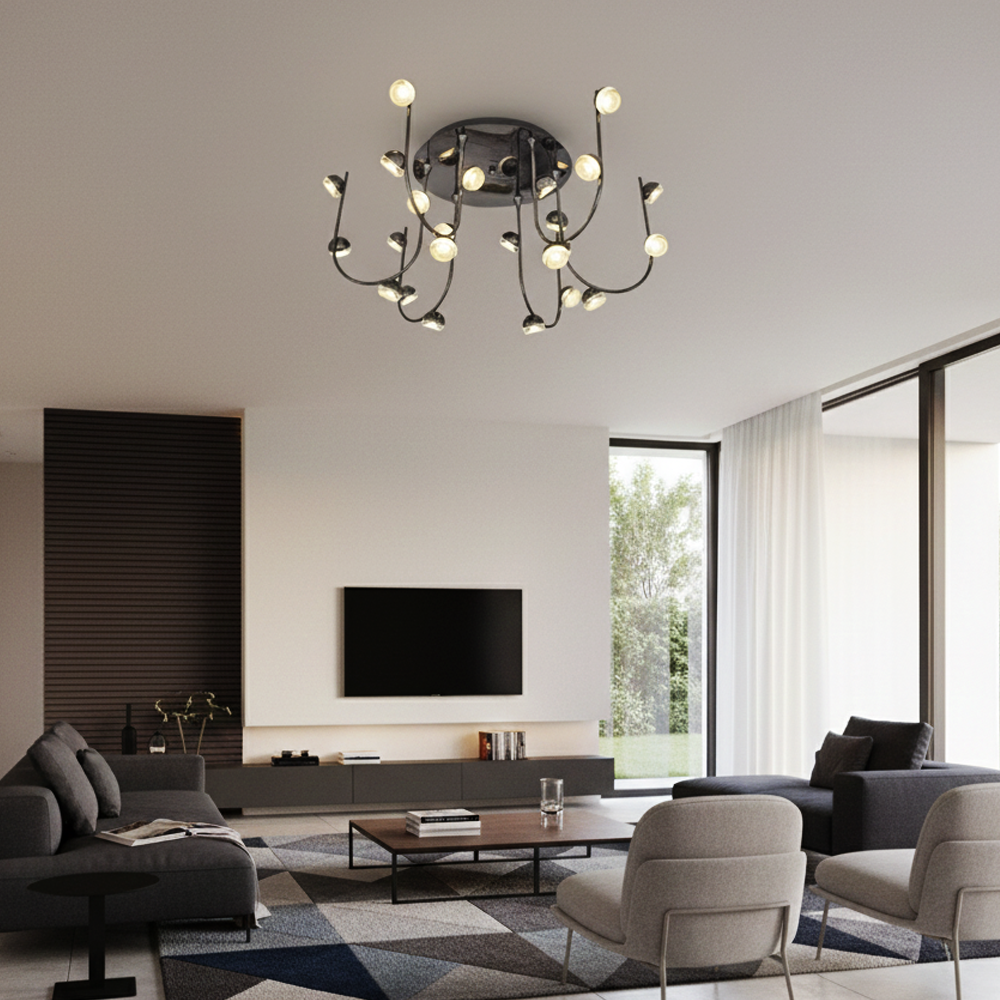
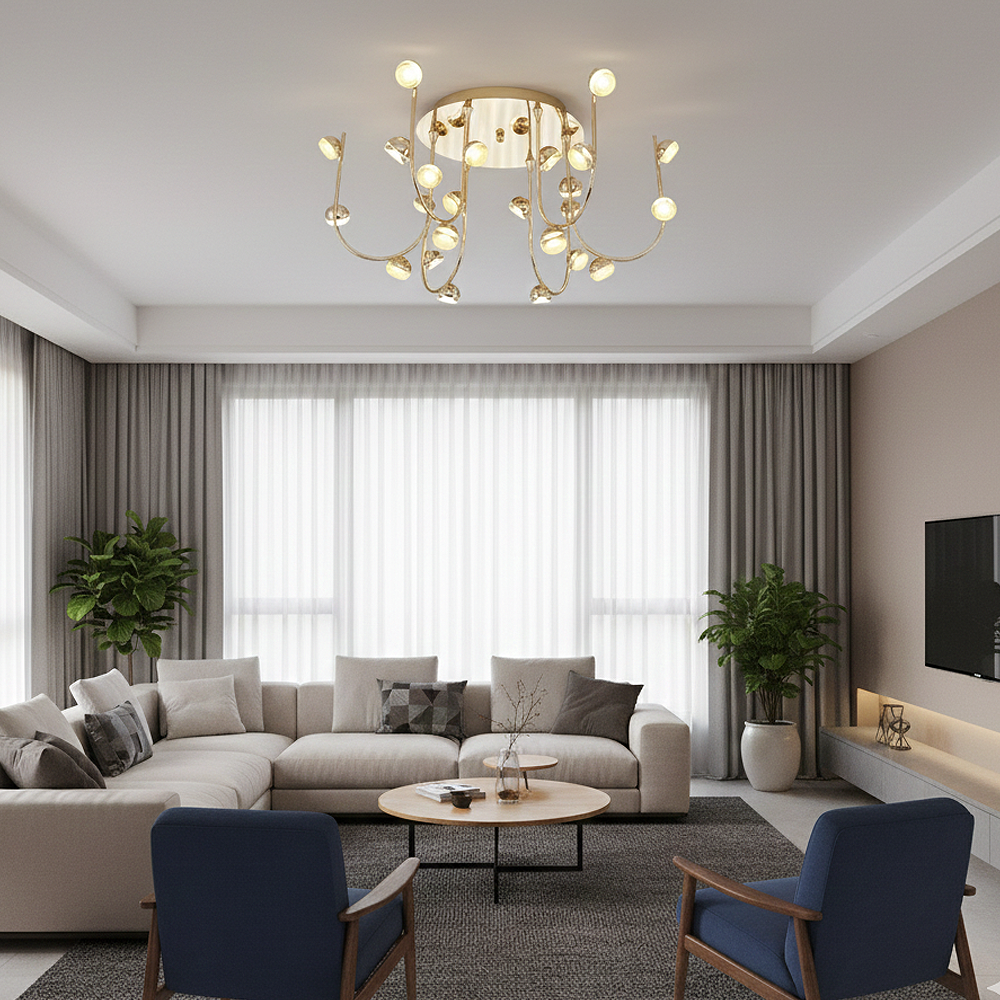
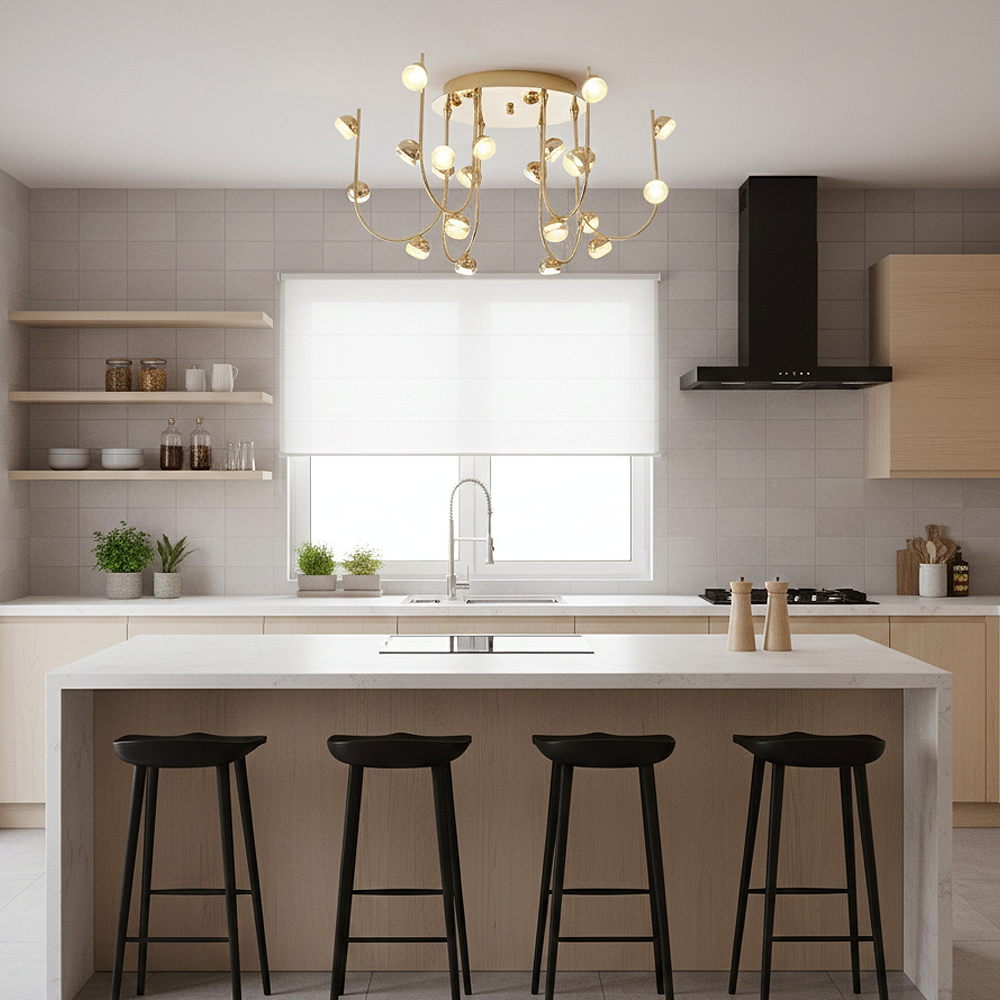
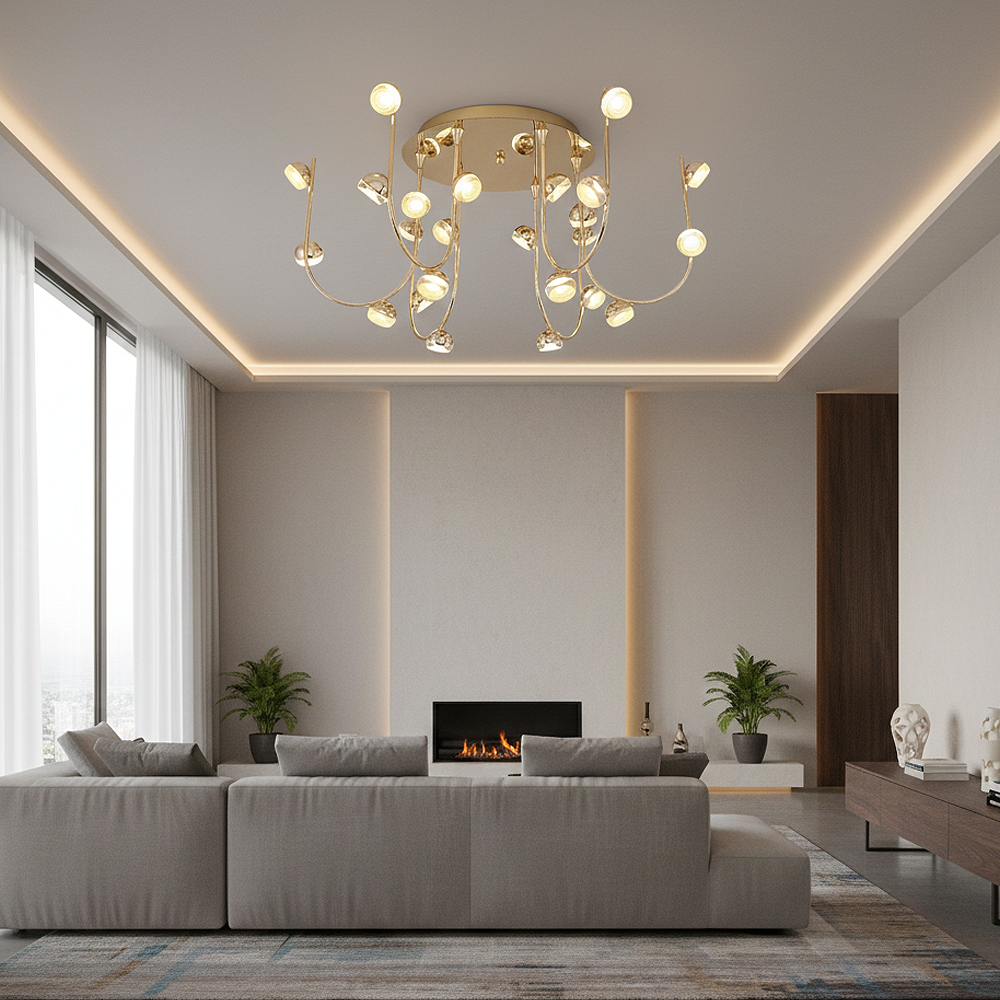
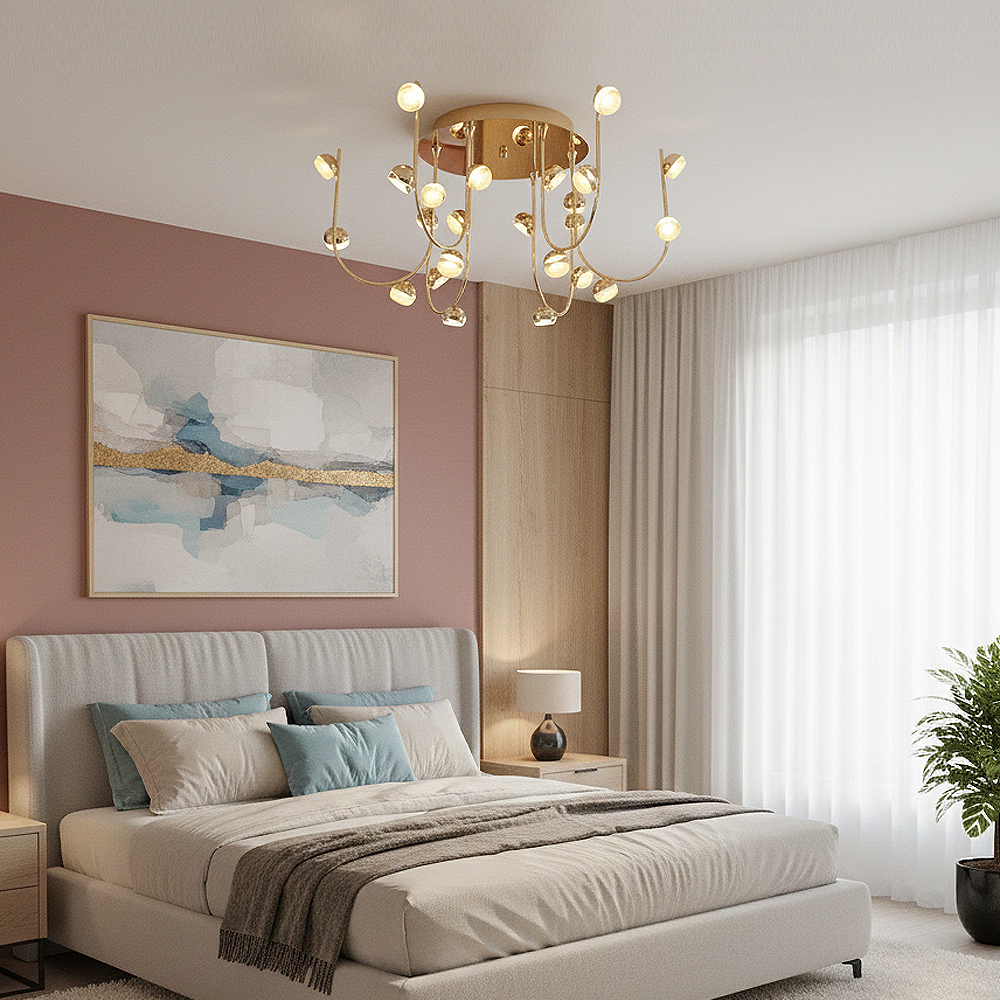
The ceiling that is looked at lying down
In the living room and the kitchen you look at the fitting standing up and from the side; the light source does not enter your line of sight directly. In a bedroom, the position from which the ceiling is looked at longest during the day is lying down.
In that position a small, bright source — a bare lamp, a narrow-beam downlight — leaves glare in the eye. Panels with a diffuser that spread the light over a wide surface solve this structurally: because the same amount of light leaves a much larger area, the brightness per unit area drops.
One fitting is not enough: the bedside must be separate
General lighting pulls a bedroom together; but reading at night, getting dressed, or the times when only one person is awake all call for a separate layer.
A bedside lamp or a wall light illuminates only the spot that is needed, without switching on the ceiling fitting. Without that layer the only option is to light the whole room — which is impossible if the person next to you is asleep.
An evening room: colour temperature
A bedroom is used mainly in the evening and at night. For general lighting, 4000K neutral white is a balanced choice: it shows colours faithfully and is not as stimulating as 6500K.
Where you need to tell colours apart — at the wardrobe and the dressing corner — a more neutral light helps; in the resting area, a softer light is preferred.
The number of modules is set by the axis of the bed, not the floor area
On this product the standard module is 60x60 cm and a single panel covers 0.36 m² of ceiling. So planning a bedroom does not begin with the question "how many square metres of light do I need" but with "how many modules, and in what arrangement of rows and columns". The same total area can be built as a long narrow band or as a group close to a square; the two produce entirely different compositions on the ceiling and pull the perceived length of the room in opposite directions.
In bedrooms the bed almost never sits at the geometric centre of the room: it leans against a wall, and the wardrobe goes opposite. If you build the composition on the mathematical centre of the ceiling, the eye looking up from the bed reads it not as centred but as offset; because your axis of view is not the middle of the room but the middle of the bed. The reference point, therefore, is not the centre of the ceiling but the centre line of the headboard.
Once the arrangement is built on that axis, the difference between an odd and an even number of columns becomes clear. With an odd number, the centre column lines up with your axis and the composition reads as symmetrical. With an even number, the joint between two modules falls exactly in the middle and the surface looks split in two when you are lying down. Work out the total area and divide it by 0.36 m² for the matching module count, then shift the arrangement onto that axis.
Where the shadow falls at the wardrobe and dressing corner
The direction of a shadow is not a matter of preference but of geometry: when the light source is behind you, your shadow falls in front of you. That is exactly what happens when you open the wardrobe door and look inside; your back is to the source on the ceiling and the shadow of your own body lands on the shelves. The result is that the part of the wardrobe where you most want light becomes, at the same time, the part your body blocks, and picking out the items on the rail gets harder.
The answer is not to strengthen the fitting but to move part of the lit surface in front of the line of the wardrobe. When light comes not from a single point but from separate areas of a wide surface, the gap cut out by your body is filled by light arriving from the neighbouring area. The shadow does not disappear altogether, but its edge loses its hardness and the inside of the shelves stays readable. That is the only difference you feel standing in front of the wardrobe.
If the wardrobe has a mirrored door, a second constraint comes into play: the mirror returns the area of ceiling opposite it back to you. Standing in front of the mirror while dressing, the reflection of the lit ceiling surface can arrive at eye level. Pulling the edge of the composition a little towards the bed side, instead of leaving it directly opposite the mirrored door, breaks that reflection: the front of the wardrobe stays lit while no direct image of the source forms in the mirror.
How the ceiling affects perception in a small, narrow bedroom
In small rooms the ceiling is the largest surface seen unbroken after the walls, and when it is divided the volume shrinks. Several separate small fittings spread across the ceiling break that surface up; the eye counts each fragment as a separate object. Bringing several modules together into one large composition, by contrast, makes the same ceiling read as a whole surface and pushes the limits of the room back.
In narrow, elongated bedrooms a second effect is added: the eye interprets a difference in brightness as distance information. If the end furthest from the door stays noticeably dimmer than the entrance, that end is perceived as further away, or the room as shorter than it is. Continuing the arrangement of the lit surface along the longer side reduces that difference between the ends and shows the volume as it is. This rule does not contradict the axis rule in the first section but completes it: the axis of the bed decides WHERE the composition is centred, and the longer side of the room decides WHICH WAY it extends.
In rooms with a suspended ceiling, the direction of the arrangement also runs into the grid layout. Because clip-in framed models lock into the grid opening and stay in place, the direction of the composition has to be decided together with the direction of the supporting runners. If the runners have been set perpendicular to the longer side of the room, the arrangement is forced that way and the direction the ceiling emphasises turns out to be the opposite of the room's real one. When the two criteria clash, set the order like this: the direction of the supporting runner is a physical constraint and, if it cannot be changed, it is followed first; the composition is then kept narrow and symmetrical on the axis of the bed rather than widened in the direction it cannot grow. An arrangement stretched the wrong way hides the room's own proportion.
The order of measuring, and what must be settled before the ceiling closes
The correct order for taking measurements starts not at the ceiling but at the furniture layout on the floor. First the final position of the bed and wardrobe is set, then the axis of the composition is drawn to that layout, and only last are the total area and module count worked out. Go the other way round and the square metres come out right but the arrangement sits in the wrong place; that error only shows once the panels are up on the ceiling, and at that stage it is the most expensive decision to correct.
If a suspended ceiling is to be built, three things must be settled before it is closed: the point where the supply will come out of the ceiling, the direction of the supporting runners, and the position in the grid of the openings the fitting will sit in. The supply is 220–240 V, and once the run is closed, moving the outlet means opening the surface again. These three decisions depend on each other; leaving one until later keeps the other two in the air.
If you plan to leave the existing ceiling as it is, the chain of decisions gets shorter, because the choice between cloud ceiling panel models links directly to the mounting method and the obligation to fit the grid module falls away. Even so, the axis and arrangement decisions are made in the same order. Let's assess together which solution suits your room's layout and where the composition should sit.
Who is it for?
Homeowners
A refresh that finishes in a day, without breaking into the ceiling.
Tenants
Fittings that come down and travel, leaving no mark.
Hotels and accommodation
Non-glaring surface lighting for a ceiling the guest will look at lying down.
Frequently asked questions
Which fitting is more comfortable in a bedroom?+
Panels with a diffuser that spread light from a wide surface. Because the ceiling in a bedroom is looked at lying down, small bright sources enter the field of view directly and glare; when the same light leaves a large surface, that problem disappears.
Can a chandelier be used in a bedroom?+
It can, but a chandelier with a hanging body looks lowering in rooms with ceilings under 2.60 m, and models with bare lamps are uncomfortable when looked at from the bed. A flush ceiling light close to the ceiling plane, or a surface-mounted panel, is more comfortable in these rooms.
Is a bedside light essential?+
In practice, yes. Without the bedside layer, reading at night means lighting the whole room; if someone is asleep next to you, that is not possible.
Which colour temperature suits a bedroom?+
For general lighting, 4000K neutral white is balanced. Because the room is used mainly in the evening, 6500K cool white feels too stimulating to most people.
Does the panel have to be taken down to clean its surface?+
No. Because the light-transmitting face is a flat, unperforated diffuser, it wipes down in place with a damp cloth; there is no need to lower the fitting to clean it. A bedroom has more textile surfaces than other rooms, and fine dust on the ceiling becomes visible over time. Access varies by model: a panel resting freely in a T24 grid can be lifted by hand when needed, while a clip-in framed panel is cleaned directly on the ceiling because it locks into the grid and does not come out of place.
Is the projection of the surface-mounted model a problem in low rooms?+
The surface-mounted model projects about 5 cm from the ceiling; because that projection is not at head height but in the plane of the ceiling itself, it affects not the passing height of the room but only the perceived depth of the ceiling surface. A fine shadow line forms at the edge of the body and the panel reads as a surface slightly separated from the ceiling rather than recessed into it. If you want the surface to stay flush with the ceiling, models that seat into the grid opening in a suspended ceiling arrangement produce no such projection.
Can I change the colour temperature later?+
Colour temperature is chosen at the time of order; it is not a setting adjusted on the panel after manufacture. It is therefore safer to decide once the wall colour, the wardrobe door finish and the floor tone are settled, because the same light reads differently on light and dark surfaces. If you leave the furniture decisions until later and fix the colour temperature first, the way to correct the balance when the room is finished is by adding further layers, such as bedside and accent lighting.
Can the panel be mounted directly onto a plasterboard ceiling?+
Plasterboard does not carry load on its own; the fitting must be fixed not to the board itself but to the supporting framing behind it. The mounting point therefore cannot be chosen freely on the ceiling: it has to coincide with the line of the framing, and that line is invisible from outside once the ceiling is closed. Because the panel's position in a bedroom is set by the axis of the bed, it is worth checking before the ceiling closes whether the direction of the framing has been built to suit that axis.
If I move, can I use the same panels in the new bedroom?+
Yes. Because the modules come down and travel, they can be installed again in the new home; what changes in a move is not the panel but its arrangement. As the module size stays the same, you can build different row and column layouts with the same number of panels and realign the composition to the proportions of the new room and the new position of the bed. The product carries a 24-month warranty; in a new installation it is worth reworking the arrangement decision from the start together with the room's dimensions.
Let's work out a non-glaring scheme for your bedroom together
Share your room dimensions and ceiling height; together we will work out which fitting suits.
🌍 Installation and shipping worldwide