Modern architecture and interior design are shaped by the awareness of natural light's positive effects on human psychology and productivity. However, abundant windows or access to natural light are not always possible. This is where sky ceiling panels come into play, bringing the tranquility of blue skies or clouds to indoor spaces. More than just a lighting fixture, these panels transform spatial perception while creating a fresh, peaceful atmosphere that improves mood.
So, what exactly are sky ceiling panels, and how do you choose the most suitable model for your space? In this comprehensive guide, we will delve into everything you need to know, from the types of sky ceiling panels and their technical specifications to their areas of use and the right selection criteria.
What Are Sky Ceiling Panels and Why Are They Important?
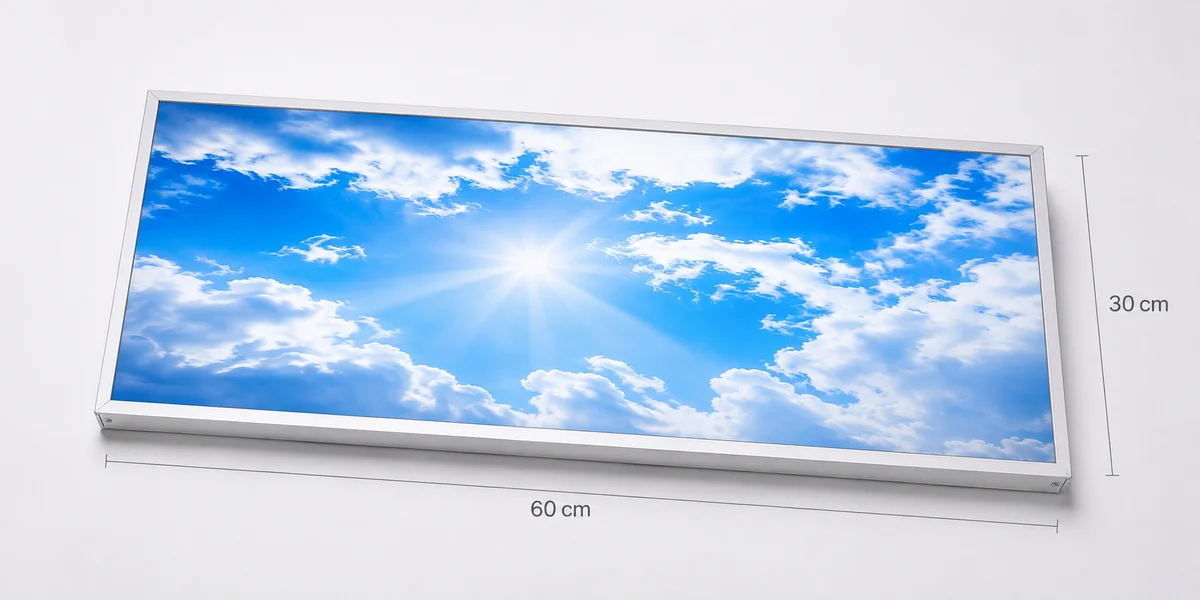
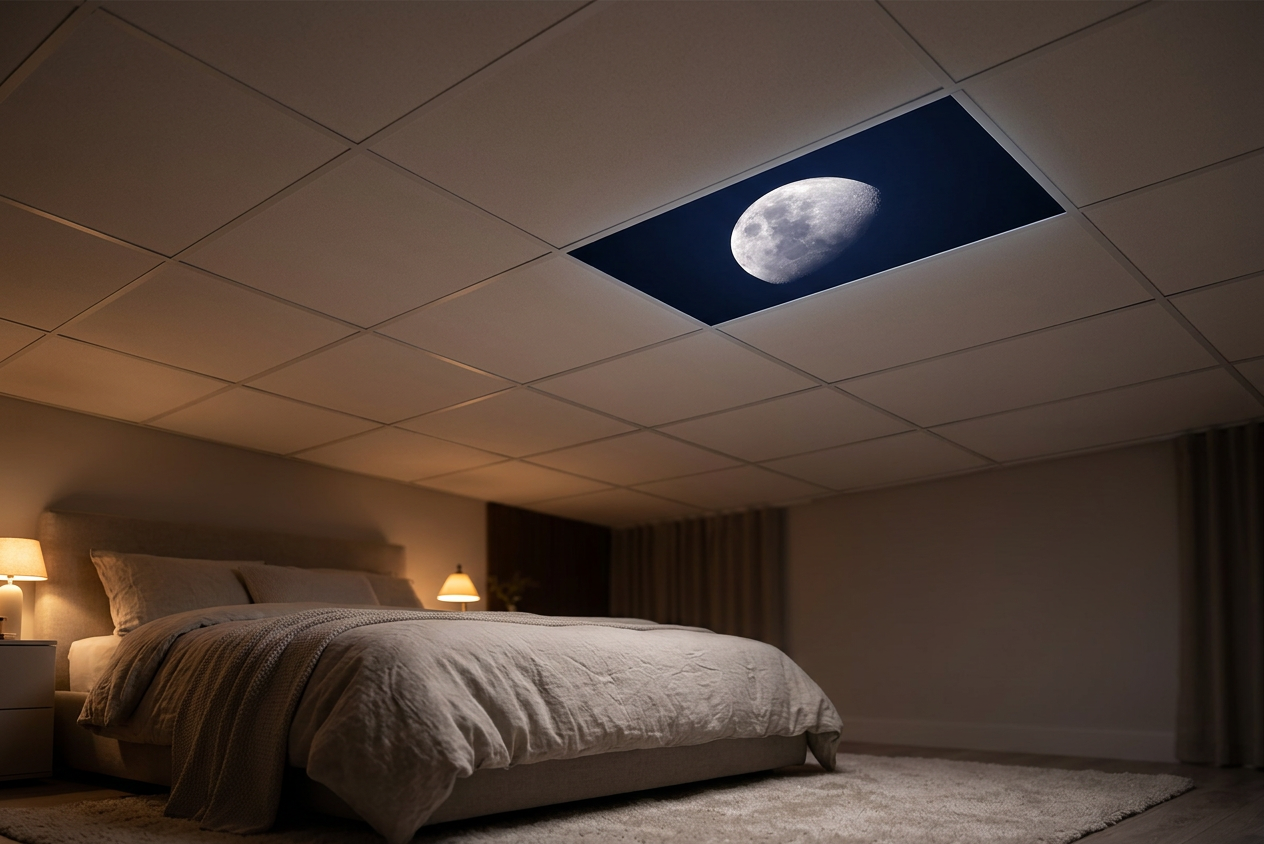
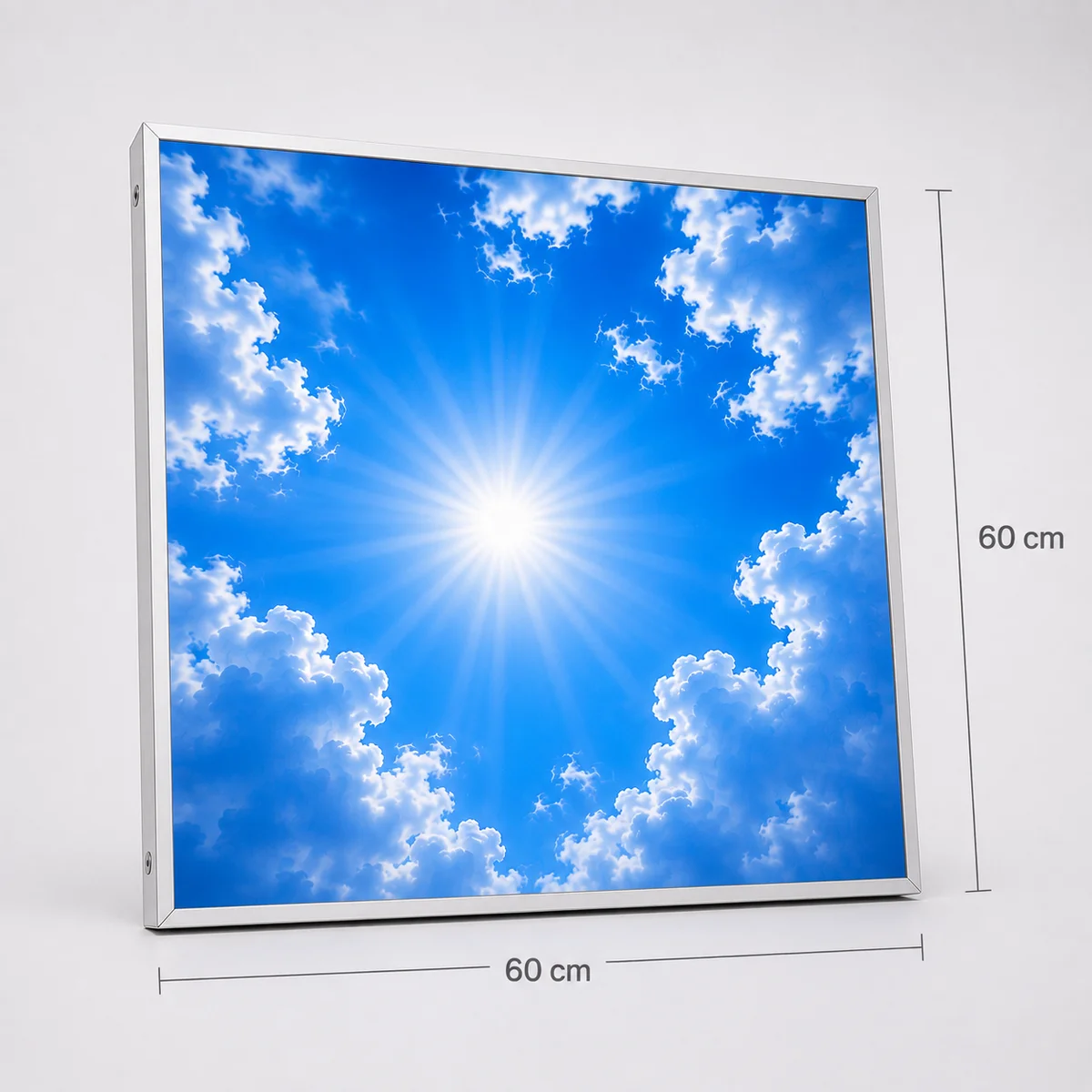
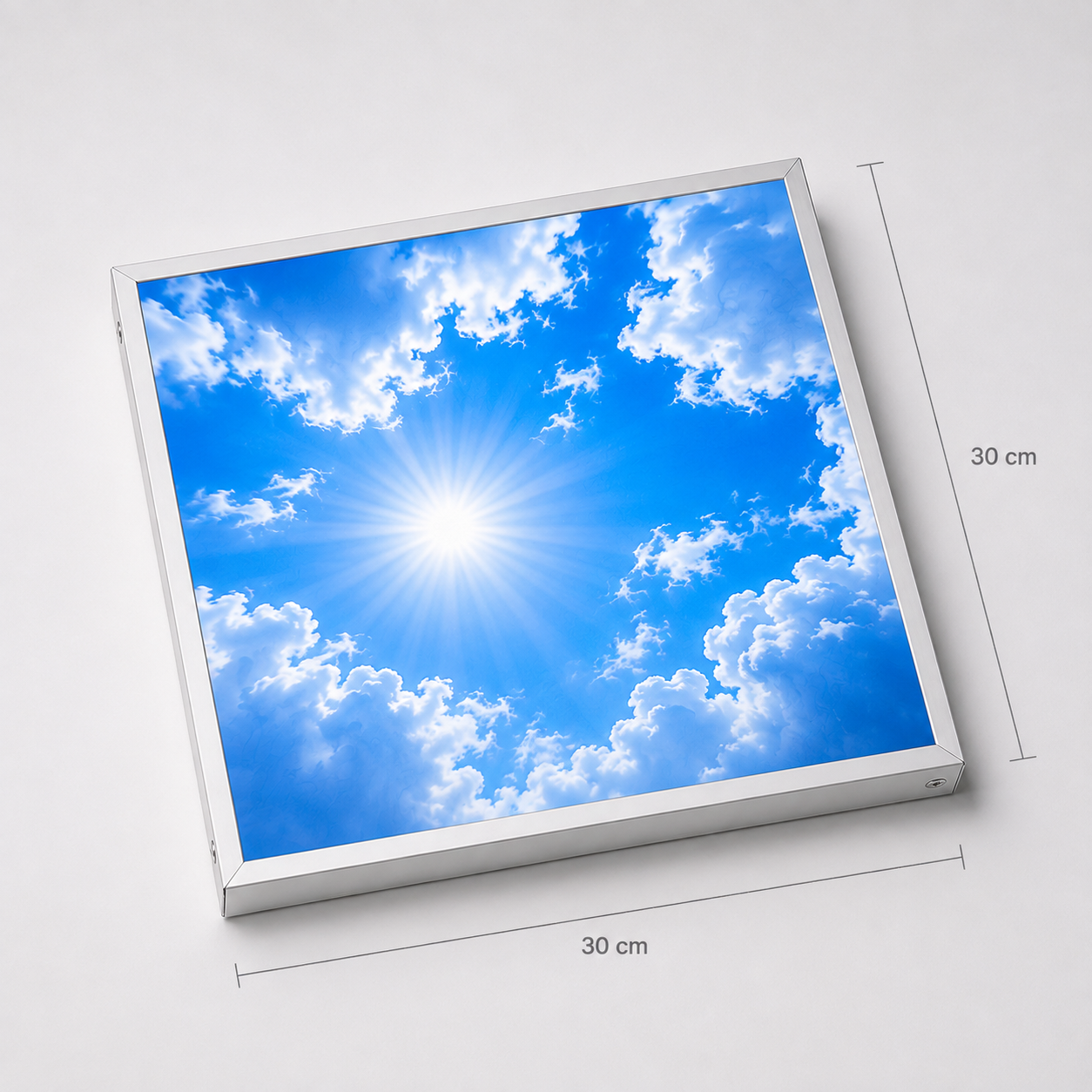
Sky ceiling panels are lighting fixtures that bring a realistic sky or cloud appearance to indoor spaces through advanced LED technology and specially designed diffusers. Typically mounted on ceilings or walls, these panels not only provide light but also create an aesthetic depth and an outdoor feel.
So, why are they so important?
- Psychological Benefits:
- Supporting Circadian Rhythm: Panels that mimic the natural light cycle can help regulate the body's natural sleep-wake cycle (circadian rhythm). This is critically important for individuals working or living in enclosed environments with limited access to daylight.
- Mood and Well-being Improvement: The calming effect of blue skies and clouds helps reduce stress, lower anxiety, and improve overall mood. It can mitigate the risk of enclosed space syndrome.
- Increased Concentration and Productivity: Natural light simulation, especially in offices and educational institutions, contributes to productivity by enhancing mental alertness and focus.
- Physical Benefits:
- Reduced Eye Strain: Providing illumination similar to natural light can alleviate eye strain and headaches caused by artificial lighting.
- Spatial Perception: Especially in windowless rooms or basements, sky ceiling panels add depth and spaciousness to a room, while reducing feelings of claustrophobia.
- Aesthetic and Design Value:
- Modern and Innovative Appearance: They lend a contemporary, sophisticated, and unique ambiance to spaces.
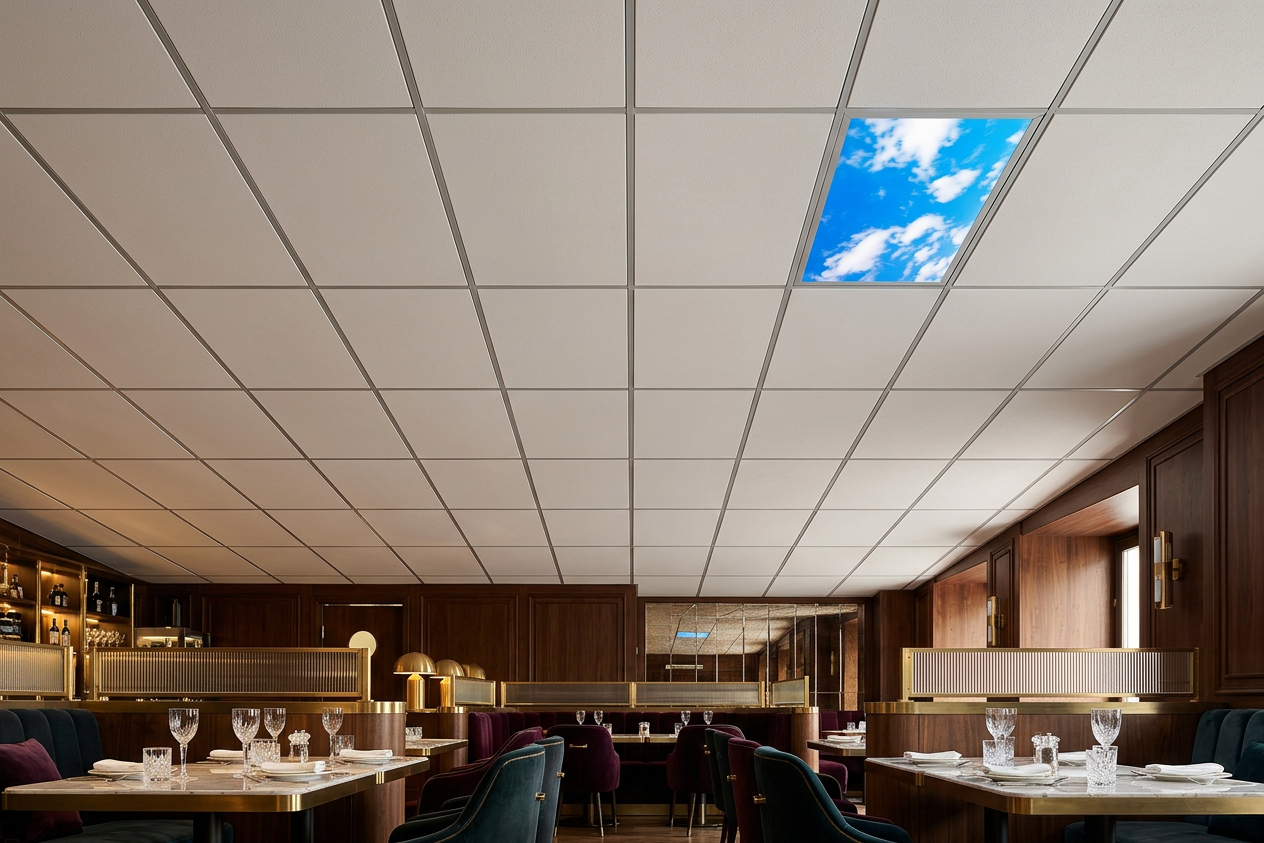
- Unique Ambiance: They create a unique and inviting atmosphere in many different environments such as offices, healthcare centers, spa salons, residences, and retail areas.
Types of Sky Ceiling Panels
Sky ceiling panels are categorized based on their technology, intended use, and additional features. Understanding these types is crucial for making the right selection.
1. By Technological Structure
- Fixed Image Panels (Static Sky Ceiling Panels):
These panels display a single, predetermined sky or cloud image statically. Typically, a high-resolution print or digital image is placed behind a light source and diffuser.
- Advantages: More cost-effective, simpler to install. Ideal for aesthetic purposes in areas that do not require constant change.
- Disadvantages: Does not offer dynamic changes; the sense of realism may diminish after a certain point.
- Dynamic Image Panels (Real-Time Simulation Panels):
These panels offer changing images and light colors that mimic different times of day or weather conditions. Thanks to advanced LED control systems, they can simulate the movement of clouds, sunrise/sunset, or different shades of the sky.
- Time-Scheduled / Pre-Defined Scenario: Automatically changes according to specific time intervals or user-selected scenarios. For example, a sunny sky in the morning, partially cloudy weather in the afternoon.
- Real-Time Weather Integration (High-End): Some high-end models can retrieve real-time weather data via the internet, reflecting actual outdoor weather conditions (e.g., grey clouds on a rainy day). These types of panels are highly advanced and costly solutions.
- Advantages: Provides the highest level of realism and immersion. More effective in supporting circadian rhythm. Offers users more control and customization options.
- Disadvantages: Their costs are higher than fixed-image panels, and installation and control systems are more complex.
2. By Application Area
- Ceiling-Mounted Panels:
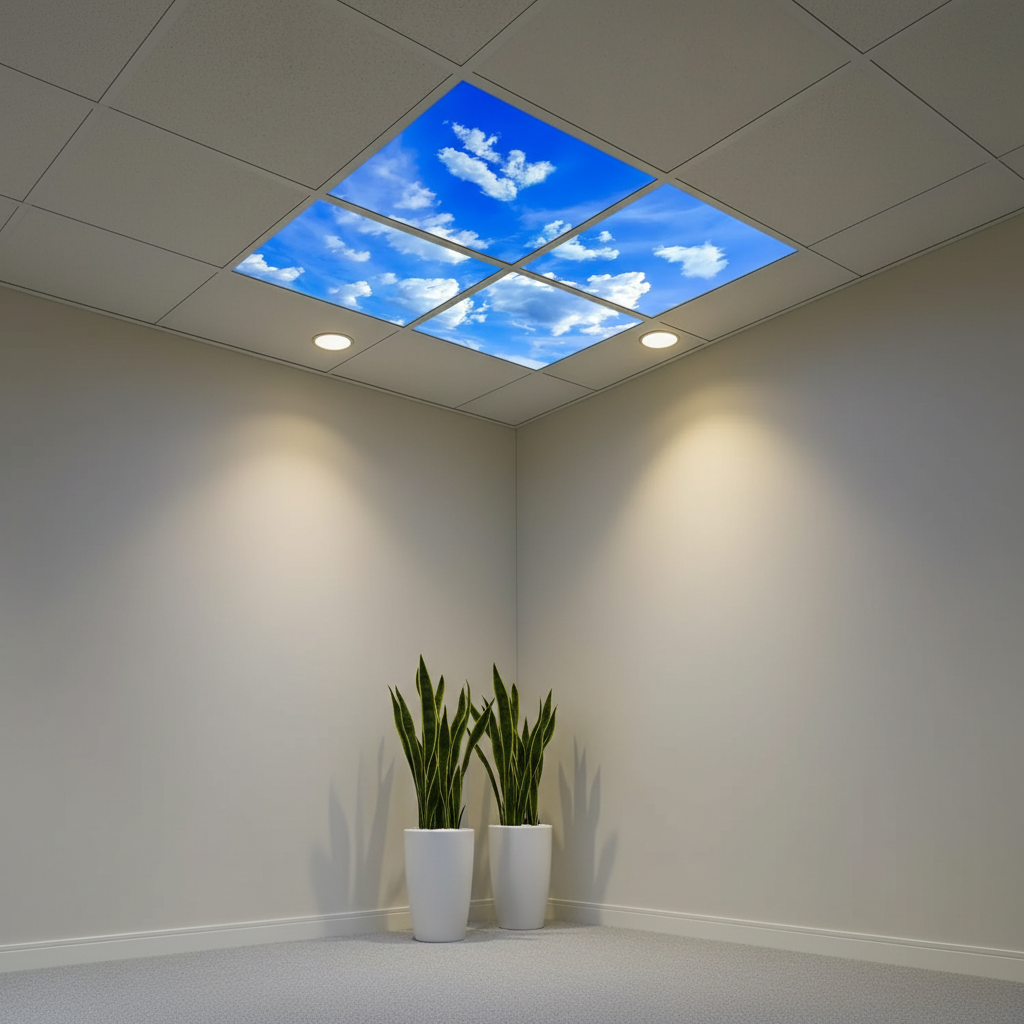
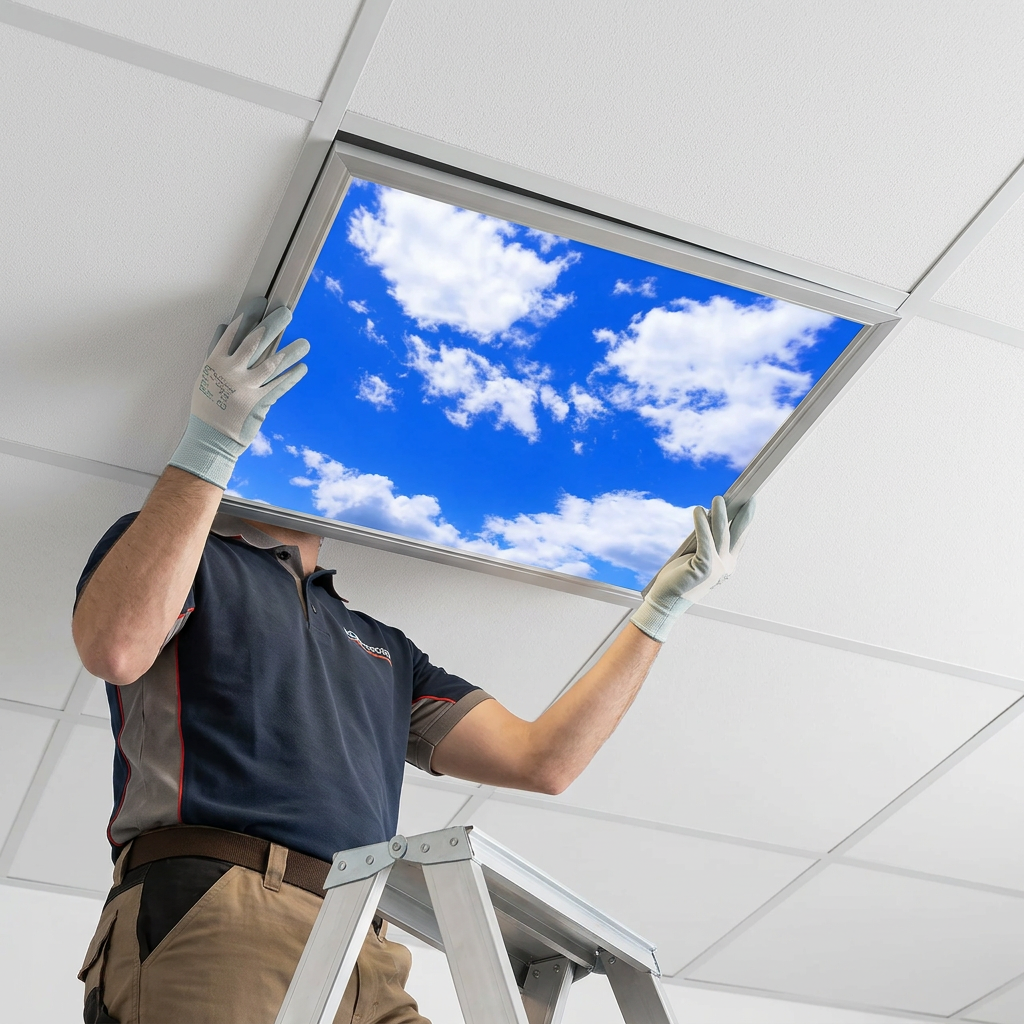
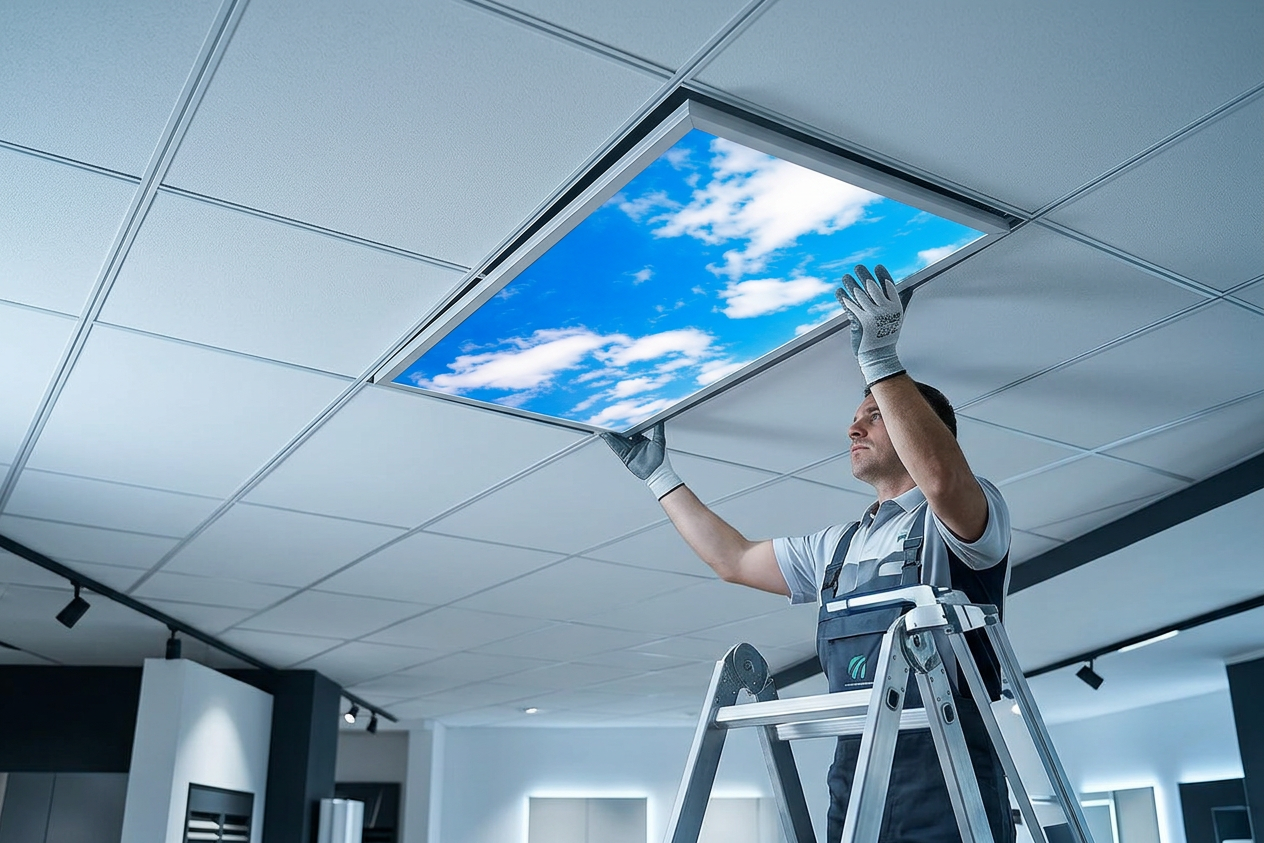
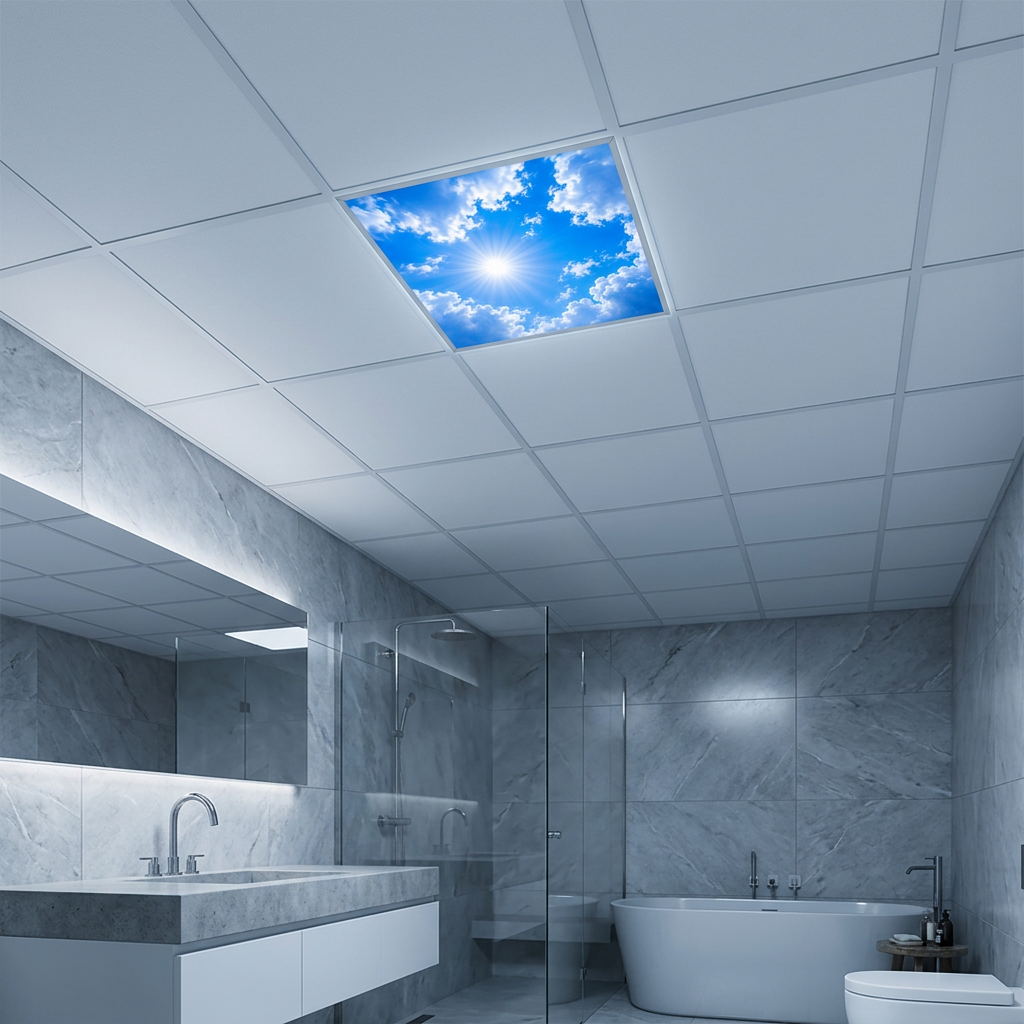
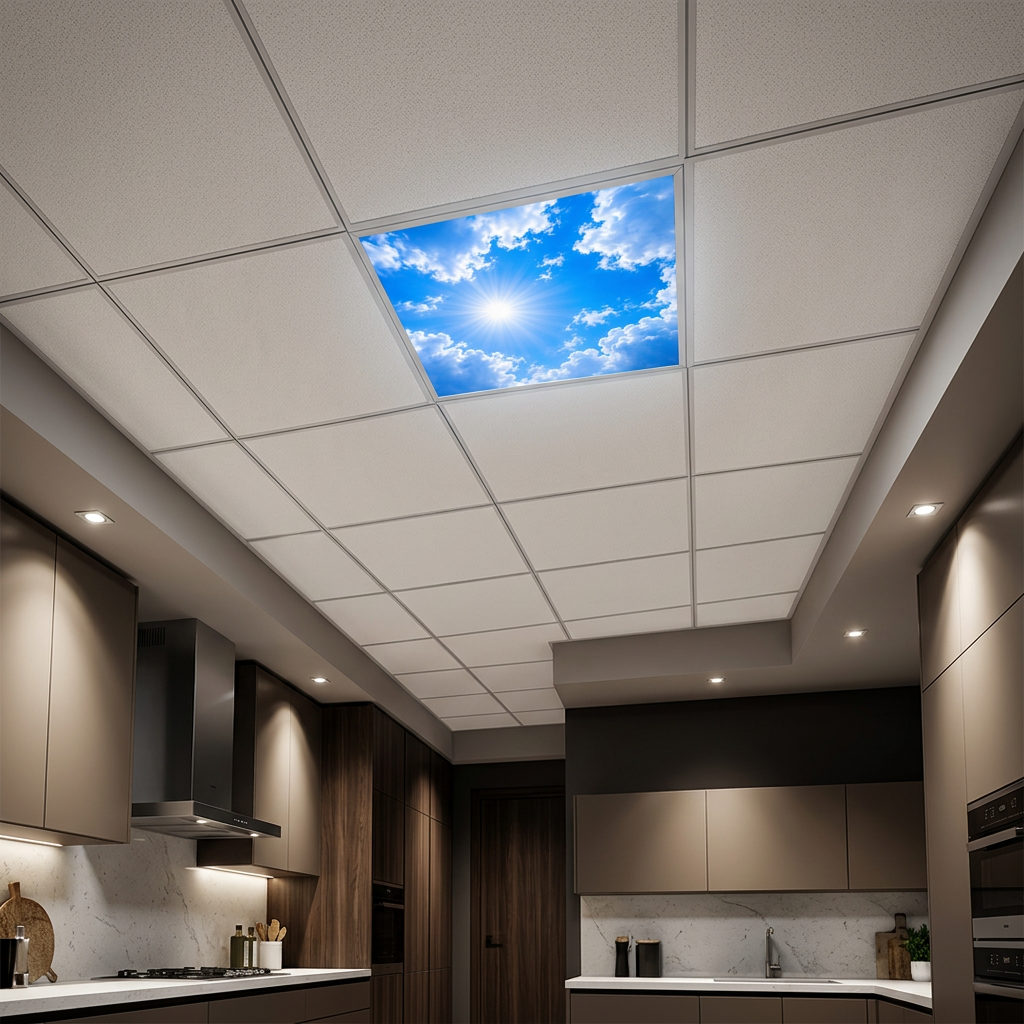
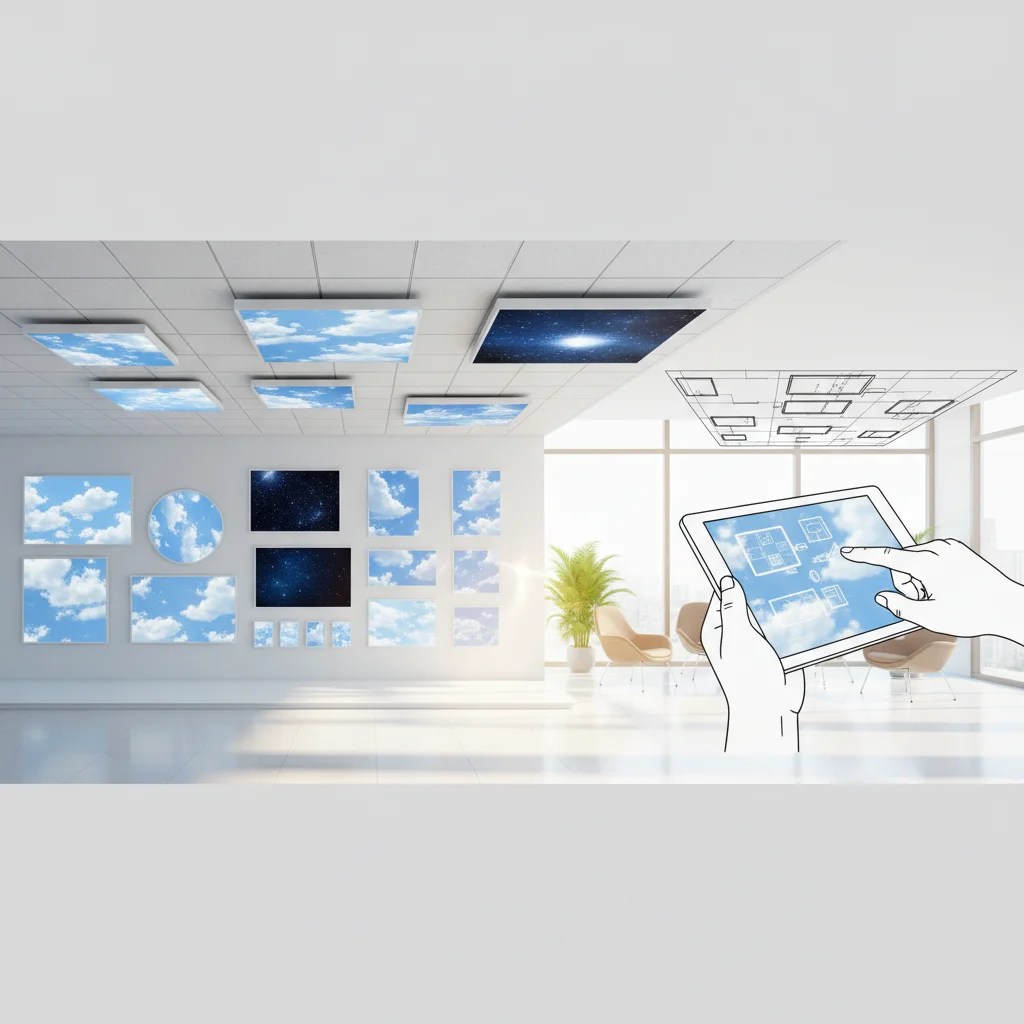
This is the most common type of sky ceiling panel. It is usually installed in place of standard suspended ceiling tiles or applied surface-mounted/recessed with special casings. It gives the sensation of natural light coming directly from above. In large areas, multiple panels can create the effect of a grand "sky window."
- Wall-Mounted Panels:
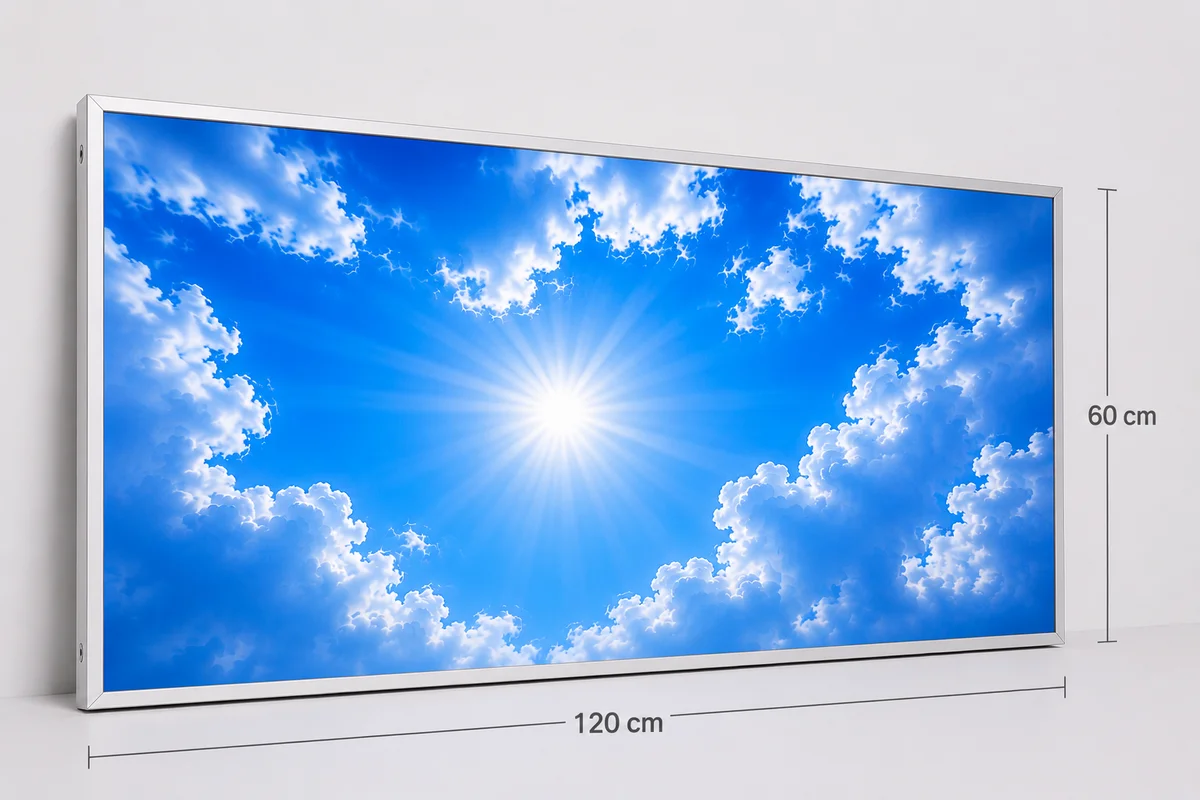
These panels function like a vertical "window" or wall art. They are ideal for windowless corridors, bathrooms, or small rooms. Wall-mounted panels add depth to a space while also providing a sense of landscape.
- Modular Systems:
These systems consist of multiple panels assembled to create a larger, seamless sky surface. They are preferred in areas such as large offices, hospital waiting rooms, or grand residential living rooms to create an impressive and comprehensive ambiance.
3. By Lighting Technologies (LED Variety)
At the heart of sky ceiling panels is LED technology. The type of LEDs used directly affects the light quality and functionality offered by the panel.
- Conventional LED Panels:
These are basic LEDs, typically offering a single color temperature (e.g., 6500K cool white) or limited color options. They are aesthetic-focused, budget-friendly solutions.
- Adjustable Color Temperature (Tunable White) LED Panels:
These panels offer the ability to adjust the light's color temperature (e.g., from 2700K warm white to 6500K cool white). This feature is critically important for more realistically mimicking natural light changes at different times of the day and supporting circadian rhythm. It can provide cooler, more energetic light in the mornings and warmer, more relaxing light in the evenings.
- RGB / RGBW LED Panels:
Thanks to Red, Green, Blue (RGB) or Red, Green, Blue, White (RGBW) LEDs, these panels offer a wide range of colors. Such panels can create not only natural sky simulations but also colorful lighting effects for a specific atmosphere or theme. They can be preferred especially in entertainment, retail, or special event areas.
- High CRI (Color Rendering Index) Panels:
CRI is a value (0-100) that measures how accurately a light source renders colors. Using high CRI (typically 90 and above) in sky ceiling panels ensures that the colors of the sky and cloud details appear more vibrant and realistic. They are preferred in places where color accuracy is important, such as art galleries, retail stores, or photography studios.
4. By Additional Features
- Dimming Feature: Offers flexibility for different environments and needs by adjusting light intensity.
- Smart Home Integration: Can be controlled via mobile apps over Wi-Fi or Bluetooth, with voice assistants (Google Assistant, Alexa), or smart home systems. Provides remote access and programming capabilities.
- Sensor Integration: May feature automatic operation with motion sensors or daylight sensors.
- Sound Integration (Rare): Some very special models can complement the visual experience with natural sounds such as bird calls, gentle wind, or rain.
- Image Quality and Resolution: The use of HD, Full HD, or 4K resolution for the images significantly enhances realism.
Guide to Choosing the Right Sky Ceiling Panel
When selecting the most suitable sky ceiling panel for your space, there are many factors to consider. Here is a step-by-step guide:
1. Conduct a Needs Analysis
- Application Area: Where will you use the panel?
- Offices: Dynamic panels with high CRI and adjustable color temperature can be preferred for productivity and concentration. Modular systems are ideal for large areas.
- Healthcare Facilities (Hospitals, Clinics): Dynamic panels that support circadian rhythm and offer natural, calming visuals are important for patient relaxation and supporting recovery processes. Hygienic and easy-to-clean surfaces should be preferred.
- Residences (Bedroom, Bathroom, Living Room): Fixed or dynamic panels can be chosen according to personal preferences. Dimming and warm color options are ideal for bedrooms, while refreshing, clean visuals are suitable for bathrooms.
- Retail and Stores: Panels with high CRI values are important for accurately displaying product colors. Dynamic or RGBW panels can be used to create an aesthetic and attractive atmosphere.
- Spa and Relaxation Areas: Panels offering peaceful, calming visuals and adjustable color temperature should be preferred. Sound integration might even be considered.
- Budget: The prices of sky ceiling panels vary widely depending on technological features, size, and brand. Determining your budget will help narrow down your options. Fixed-image and basic LED panels are more cost-effective, while dynamic, high-resolution, and smart-integrated panels are higher priced.
- Your Expectations: Do you want the panel to be merely an aesthetic element, or are you looking for a functional lighting solution that supports circadian rhythm and improves mood? This will determine whether you invest in dynamic features.
2. Compare Technical Specifications
- Size and Shape: Choose the panel size and shape that suits your space's dimensions. Standard suspended ceiling sizes (e.g., 60x60 cm, 30x120 cm) are common, but custom sizes or circular panels may also be available. For modular systems, check the visibility of connection points.
- Brightness (Lumen) and Color Temperature (Kelvin):
- Lumen: Indicates how much light the panel emits. You should choose a lumen value appropriate for your space's size and desired overall lighting level. Larger rooms may require panels with higher lumen values.
- Kelvin: Expresses the color temperature of the light.
- Warm White (2700K-3500K): A yellower, more relaxing light. Suitable for evening hours, relaxation areas.
- Natural White (4000K-5000K): Neutral, close to daylight. Ideal for general use, offices.
- Cool White (5500K-6500K): A bluer, more energetic light. Suitable for simulating the brightest hours of the day, areas requiring focus. Panels with adjustable color temperature can transition within this range.
- CRI Value: Important for color accuracy. While >80 is sufficient for general use, opt for panels with CRI >90 or higher for areas requiring high-quality visuals and color sensitivity.
- Energy Efficiency: LED technology is inherently energy-efficient. However, consumption values can vary between different panels. Choosing long-lasting and low-energy consumption products reduces operating costs.
- Ease and Type of Installation: Will the panel be integrated into a suspended ceiling, surface-mounted, or require a special structure? The complexity of installation and the labor costs involved affect the overall budget.
- Control Mechanisms: Choose the most suitable control option from various choices such as remote control, mobile app, wall switch, smart home integration (DALI, Zigbee, etc.). Smart control systems are generally more advantageous in terms of ease of use and flexibility.
- Image Quality and Realism: The resolution of the image, the vibrancy of colors, and the natural appearance of clouds determine the panel's level of realism. Quality diffusers ensure homogeneous light distribution and prevent pixelation. If possible, make your decision after seeing the panels in operation.
- Warranty and After-Sales Support: Product warranty is important for potential malfunctions or technical support needs. Choosing a reliable and experienced supplier will provide you with peace of mind in the long run.
3. Brand and Reliability
There are many sky ceiling panel manufacturers in the market. Choosing established brands with good references and positive customer reviews will be a safer choice in terms of product quality and after-sales services. It is also important to check product certifications (CE, RoHS, etc.).
Installation and Maintenance Tips
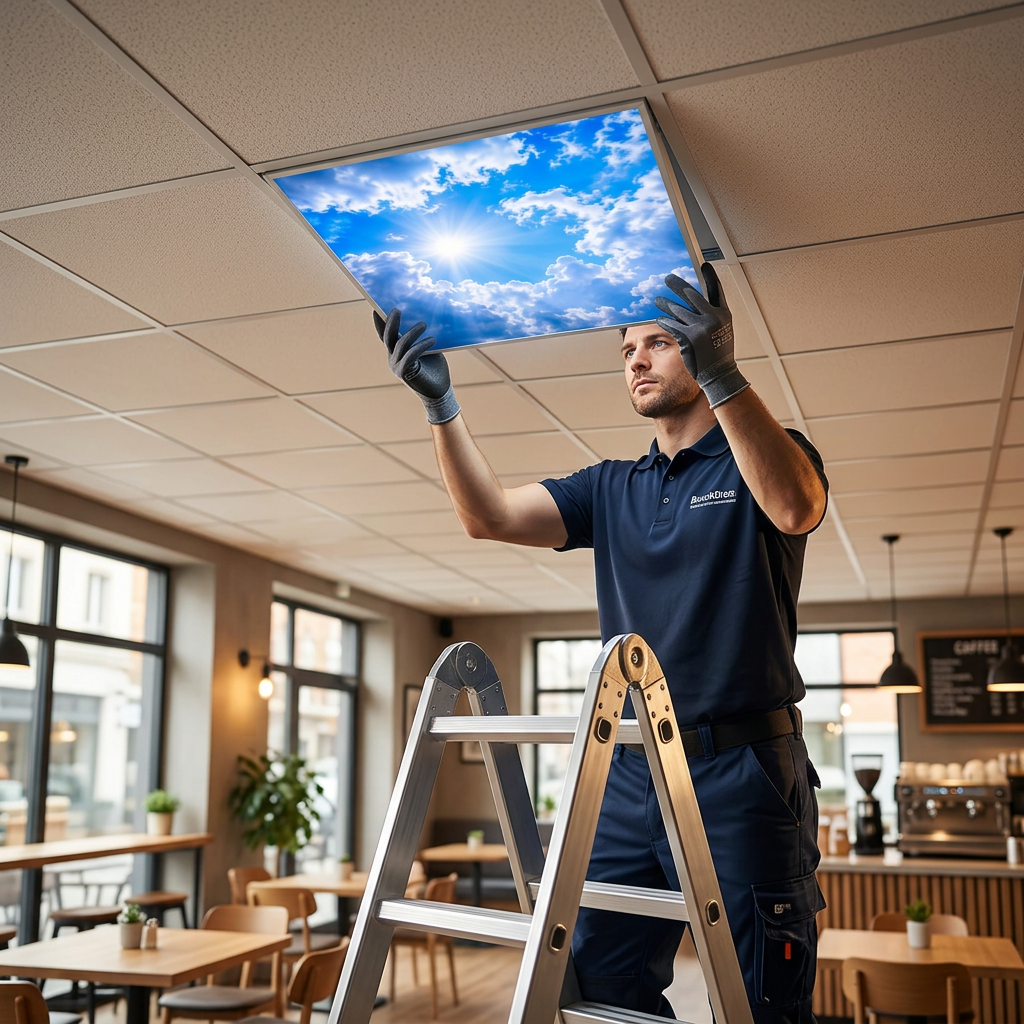
- Professional Installation: Electrical connections and ceiling/wall mounting typically require expertise. Professional assistance is recommended for safety and proper panel operation.
- Positioning: Place the panel in a location that supports the room's overall lighting and best enhances spatial perception. A more impressive look can be achieved with multiple panels on large ceilings.
- Cleaning: Regularly clean the panel surfaces with a soft, slightly damp cloth. Avoid using abrasive chemicals.
- Software Updates: Regularly updating the software of smart and dynamic panels can provide performance improvements and access to new features.
Related guides: What is a Sky Ceiling Panel? Types, Benefits, and Installation Guide, LED Sky Panels: What Are the Different Sizes and Mounting Options?, What Is a Clip-In Cloud Ceiling Panel? Difference from T24 (Lay-In) and Installation.
Conclusion
Sky ceiling panels not only bring light to indoor spaces but also add aesthetic and functional value that improves mood, productivity, and overall quality of life. Offered in a wide range, from fixed visuals to dynamic simulations mimicking different times of day or weather conditions, these panels provide solutions suitable for every need and budget.
Thoroughly analyzing your needs, budget, and technical expectations when choosing the right sky ceiling panel for your space will ensure your long-term satisfaction. Remember, a well-chosen sky ceiling panel not only illuminates your interiors but also opens a window to peace, freshness, and inspiration. By seeking professional advice and comparing different options, you can bring the most suitable "sky" into your space.