What is a Sky Ceiling Panel? Types, Benefits, and a Comprehensive Installation Guide
Today's modern architecture constantly offers innovations in an effort to combine aesthetics and functionality. Solutions that enhance quality of life are particularly important in enclosed indoor spaces lacking natural light. This is precisely where innovative lighting systems called Sky Ceiling Panels come into play. Many of us feel confined in windowless offices, busy hospital corridors, or enclosed sports halls. Sky ceiling panels promise to eliminate this feeling by adding spaciousness, vitality, and a natural "open-air" sensation to spaces.
In this comprehensive guide, we will delve into what sky ceiling panels are, their unique benefits, different types, and step-by-step installation processes. Our aim is not only to provide technical information but also to fully reveal how this special lighting solution can add value to your spaces and quality of life.
---
What is a Sky Ceiling Panel? LED Technology Bringing Freshness to Spaces
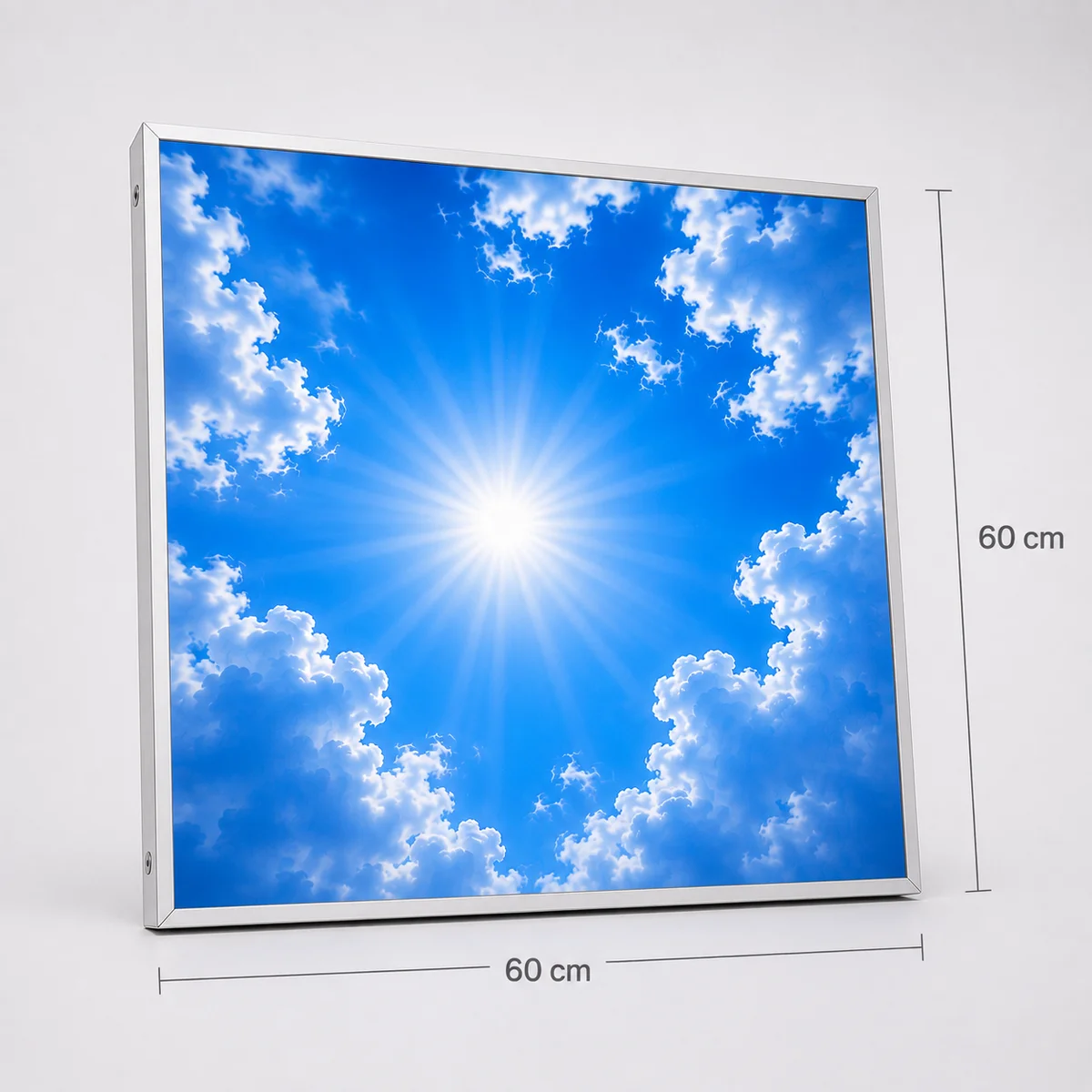
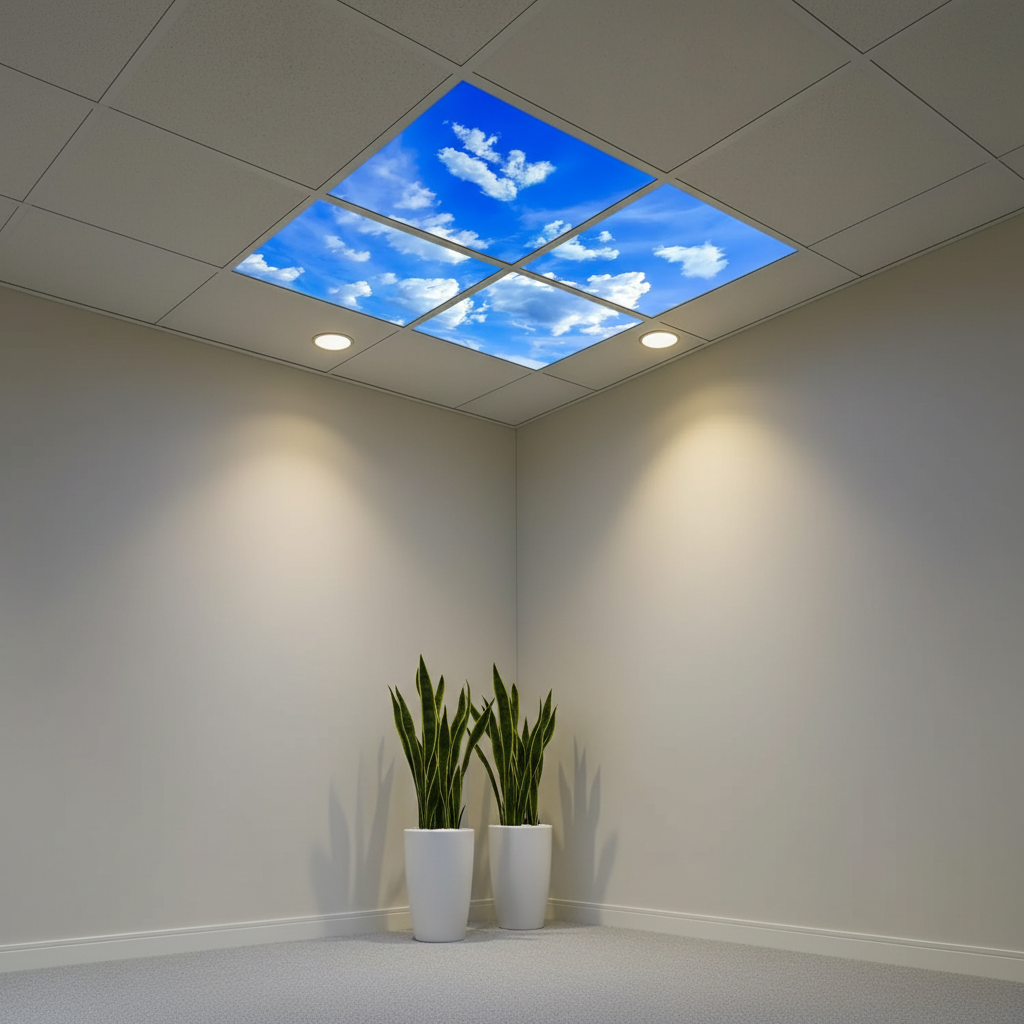
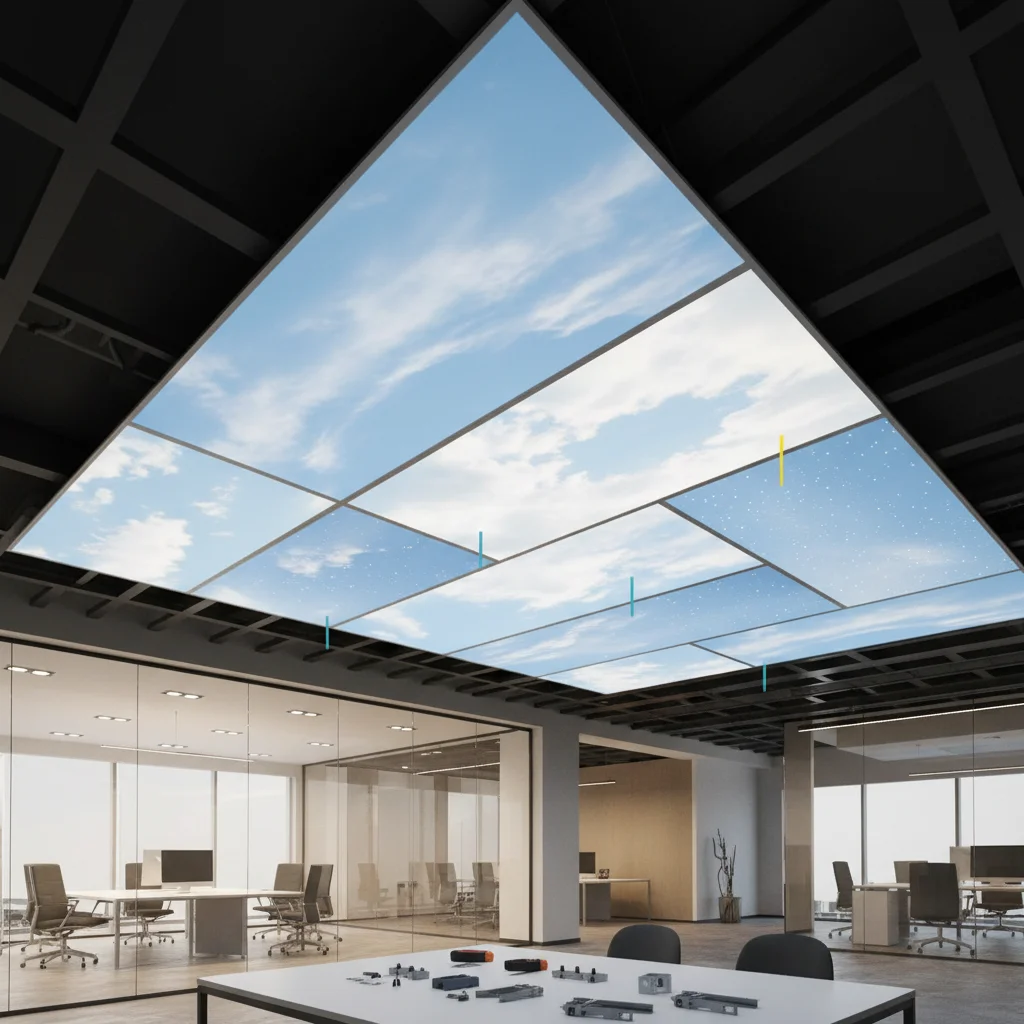
A sky ceiling panel is a special lighting system integrated into the ceiling surface, combining modern LED lighting technology with high-resolution visual prints. Its primary purpose is to create the illusion of a realistic sky, cloudy weather, treetops, or other natural landscapes indoors, providing a spacious and open atmosphere. They essentially act as virtual windows placed on the ceiling.
These panels typically offer homogeneous, glare-free, and natural-looking illumination using specially designed LED chips and light distribution systems. High-quality digital prints, combined with light, create a sense of depth and instantly transform the ambiance of a space. Unlike standard lighting fixtures, sky ceiling panels not only provide light but also function as an aesthetic element and a tool for psychological relaxation.
---
Benefits of Sky Ceiling Panels: More Than Just Lighting, An Experience
Beyond the visual aesthetics they offer, sky ceiling panels provide users with a range of significant benefits. These advantages support both psychological and physiological well-being, enhancing the quality of living and working spaces.
Psychological and Health Benefits: With Scientific Basis
One of the most striking benefits of sky ceiling panels is their positive impact on human psychology. These effects are closely related to the principles of "biophilic design." Biophilic design aims to enhance well-being by bringing natural elements into indoor spaces, focusing on the innate connection between humans and nature.
Biophilic Design and Natural Light Mimicry: Research indicates that contact with natural environments has positive effects on human mood, cognitive functions, and stress levels. Sky ceiling panels meet this "biophilic" need by mimicking natural light and the open air. Especially in windowless or dimly lit spaces, they create a false sense of a natural window, making users feel less confined and more spacious.
Stress Reduction and Mood Improvement: Enclosed and lifeless environments can increase feelings of stress and fatigue over time. The serene sky views offered by sky ceiling panels create a calming effect, helping to reduce stress. In high-anxiety environments like hospitals, they contribute to patients feeling more comfortable.
Effects on Circadian Rhythm and Sleep Patterns: Natural daylight plays a critical role in regulating the human body's circadian rhythm (sleep-wake cycle). Sky ceiling panels, by providing illumination close to the natural light spectrum, can prevent the disruption of circadian rhythm in areas lacking natural light, contributing to healthier sleep patterns.
Increased Productivity and Concentration: Exposure to natural light is known to boost the concentration and productivity of employees and students. Sky ceiling panels, by mimicking the sensation of natural light, can support cognitive performance and reduce mental fatigue, especially in office and educational settings.
Aesthetic and Architectural Value
Perception of Enlarged Interior Space: Thanks to the sense of depth and openness they create on ceilings, they make small or cramped spaces appear larger and more spacious.
Modern and Stylish Atmosphere: With their contemporary and minimalist designs, they easily adapt to any interior decor. They add a sophisticated and modern touch to the space.
Solution for Windowless Areas: They are an ideal solution for basements, internal corridors, or rooms where windows cannot be opened. By creating the illusion of a natural window, they increase the livability and usability of these areas.
Energy Efficiency and Environmentally Friendly Approach
High Energy Efficiency: LEDs consume significantly less energy and have a longer lifespan compared to traditional lighting sources. This reduces operating costs while lowering the carbon footprint.
Environmentally Friendly Materials: The recyclability of materials used in production and low energy consumption make sky ceiling panels a sustainable lighting solution. Furthermore, they do not contain harmful substances like mercury.
Homogeneous and High-Quality Illumination
Sky ceiling panels distribute light evenly and broadly, minimizing shadows. This reduces eye strain and provides a more comfortable visual experience within the space. Flicker-free illumination maintains eye comfort even during prolonged use.
---
Sky Ceiling Panel Types: Solutions for Every Space
Sky ceiling panels come in many varieties to suit different needs and space designs. This diversity covers a wide range, from visual content to mounting type, technological structure, and dimensions.
By Visual Options
Classic Cloudy Sky: The most popular and in-demand model. A clear blue sky and soft clouds create a calm and spacious atmosphere.
Treetops and Vegetation: Offers an immersive nature experience, giving the feeling of a forest. Especially preferred for hospitals and relaxation areas.
Sunset / Sunrise: Creates a peaceful and romantic ambiance with warm tones. Ideal for homes or relaxation rooms.
Starry Sky: Offers a fantastic option, especially for night lighting or children's rooms.
Custom Prints: Special visual prints are also possible according to brands or personal preferences. Corporate logos, cityscapes, or abstract patterns can also be used.
By Mounting Type (Comparative Analysis)
The mounting type determines how the panel integrates with the ceiling and directly affects the overall appearance of the space.
Recessed Mounting:
Advantages: Provides the most elegant and minimalist look. Since the panel is fully integrated into the ceiling, it creates a flush surface and is ideal for modern spaces.
Disadvantages: Requires a ceiling void (suspended/dropped ceiling). Installation can be slightly more complex than surface mounting.
Suitable Environments: Offices, contemporary residences, commercial areas.
Surface Mounting:
Advantages: Can be easily mounted on concrete ceilings without a suspended/dropped ceiling or with insufficient ceiling void. Installation is relatively simple.
Disadvantages: The panel protrudes slightly from the ceiling surface (usually within a casing). This offers a slightly less integrated look compared to recessed mounting.
Suitable Environments: Homes, stores, renovation projects.
Clip-in (Suspended Ceiling Compatible) Mounting:
Advantages: Specifically designed for 60x60 or 60x120 cm grid suspended/dropped ceiling systems. It can directly replace an existing ceiling tile, making installation extremely fast and easy. No additional frame or accessory is usually needed.
Disadvantages: Only compatible with grid suspended/dropped ceiling systems.
Suitable Environments: Office buildings, hospitals, schools, shopping centers.
Pendant (Suspended) Mounting:
Advantages: In high-ceilinged spaces, it lowers the panel to a more effective level for illumination and visual depth. It can also be used as a decorative element.
Disadvantages: Requires the ceiling to have a robust structure and appropriate attachment points for mounting. Cable management may require more care.
Suitable Environments: Foyers, restaurants, stores.
By Technological Structure (Comparative Analysis)
Sky ceiling panels primarily use two main LED lighting technologies:
Backlight (Directly Backlit) LED Panels:
How It Works: LED chips are placed directly behind the panel, immediately behind the light-diffusing material (diffuser). Light spreads directly through the diffuser.
Advantages: Generally offers a more homogeneous light distribution and can achieve higher lumen (light output) values. Can provide a deeper "sky" sensation optically.
Disadvantages: Has a thicker structure. Prices may be slightly higher than Edge-Lit panels.
Suitable Environments: Large areas requiring high illumination.
Edge-Lit (Ultra Slim / Edge-Lit) LED Panels:
How It Works: LED chips are placed along the edges of the panel, and light is diffused across the entire panel surface via a special light guide plate (LGP).
Advantages: Features an extremely thin and elegant design (Ultra Slim). This makes them preferred in spaces with limited ceiling voids or for those seeking a minimalist aesthetic. Models with lower energy consumption may be available.
Disadvantages: Light homogeneity may not be as perfect as Backlight panels in some cases (though this difference has been reduced with modern manufacturing techniques).
Suitable Environments: Low-ceilinged spaces, modern offices, homes.
By Dimensions
Sky ceiling panels can be produced in custom sizes as well as standard dimensions.
Standard Dimensions: 60x60 cm and 60x120 cm are the most suitable and common dimensions for grid suspended/dropped ceiling systems.
Custom Dimensions: Panels can be produced in different sizes specifically for projects.
Multi-Panel Combinations: For large areas, multiple panels can be combined to create a seamless and expansive sky view. This offers the possibility of completely covering the ceiling with a sky or landscape.
---
Applications for Sky Ceiling Panels: Unleash Your Imagination
The spaciousness, aesthetics, and psychological benefits offered by sky ceiling panels make them an ideal solution for a wide variety of indoor spaces.
Healthcare Facilities: Hospitals, dental clinics, doctor's offices, intensive care units. Used especially in waiting rooms, patient rooms, and corridors to reduce patient anxiety and provide a more comfortable environment. It is a common practice in dental clinics for patients to relax while looking at the ceiling.
Office and Workspaces: Meeting rooms, open-plan offices, individual workspaces, relaxation rooms. Increases employee productivity, morale, and concentration, while creating a natural light sensation in windowless offices.
Educational Institutions: Schools, nurseries, university libraries. Creates a more motivating and calm learning environment for students. Particularly visually appealing for young children.
Retail and Commercial Spaces: Stores, shopping malls, cafes, restaurants, hotels. Creates an attractive and inviting atmosphere for customers, strengthening brand image.
Residences: Living rooms, bedrooms, bathrooms, kitchens, basements. Adds spaciousness, serenity, and a touch of luxury to homes. Ideal for windowless bathrooms or dark corridors.
Sports and Recreation Areas: Gyms, yoga studios, spas, swimming pools. Helps users relax and find tranquility.
---
Sky Ceiling Panel Installation Guide: Step-by-Step Setup
While the installation of sky ceiling panels varies depending on the chosen panel and ceiling type, the general steps are similar. Since it involves electrical connections, it is strongly recommended to seek assistance from a qualified electrician if you lack experience.
General Preparations and Safety Precautions
Cut Off Electricity: Before starting installation, completely disconnect the electrical connection by turning off the fuse for the relevant circuit. This step is vital for your safety.
Prepare Necessary Tools: Drill, screwdriver set, tape measure, spirit level, wire stripper, terminal block, electrical tape (to secure cables), pencil, ladder.
Check the Panel: Open the box and ensure that the panel, driver (LED driver), and any mounting kit (frame, accessories) are intact and complete.
Phase 1: Location Determination and Measurement
Determine the ceiling area where you want to mount your panel.
If you will be using multiple panels, plan the distance between them and the overall arrangement in advance.
Check if there is a suitable space in the ceiling for mounting (especially a ceiling void for recessed models).
If necessary, mark the area where the panel will be placed with a pencil.
Phase 2: Installation of Mounting Hardware (According to Ceiling Type)
This phase will vary depending on your panel's mounting type:
For Recessed Mounting:
Ensure there is sufficient void within the suspended/dropped ceiling to accommodate the panel.
After placing the panel into the ceiling void, secure it to the ceiling using the spring-loaded or screw-in clips on its sides. These clips push the panel upwards, ensuring it sits flush with the ceiling.
For Surface Mounting:
Hold the surface mount frame (usually supplied with the panel) against the ceiling and mark the drill holes with a pencil.
Drill holes at the marked spots using a drill and insert the wall plugs.
Secure three sides of the frame to the ceiling with screws. Leave the fourth side open for now.
For Clip-in (Suspended Ceiling Compatible) Mounting:
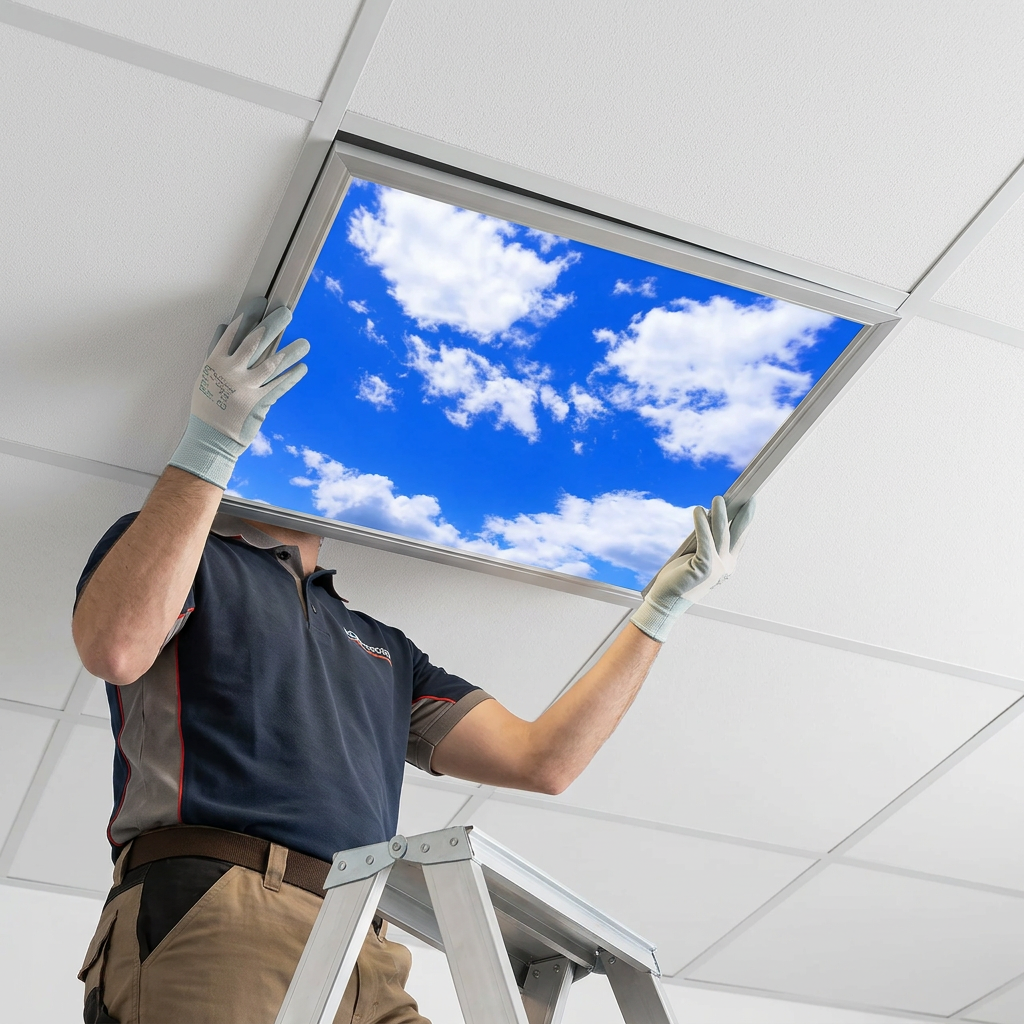
Remove the existing tile of the same size from the grid suspended/dropped ceiling.
Directly place the sky ceiling panel into the space where you removed the tile. The panel will rest on the ceiling's support grids. This method is the easiest mounting type.
For Pendant (Suspended) Mounting:
Identify robust attachment points on your ceiling that can support the panel.
Securely screw the pendant accessories (steel cables) into these points.
Adjust the length of the cables to bring the panel to your desired height.
Phase 3: Electrical Connections
This phase requires precision and must be performed by an electrician for those without electrical knowledge.
Driver Connection: Sky ceiling panels typically come with an LED driver. This driver converts mains electricity to the appropriate voltage and current for the panel.
Make the connection between the panel and the driver (usually easily done with male-female plugs).
Connect the electrical cables coming from your ceiling (live, neutral, and earth) to the "Input" section of the driver. Pay attention to color standards (brown/black: live, blue: neutral, yellow-green: earth).
Cable Management: After making the connections, secure the cables neatly and safely. For recessed mounting, conceal the cables in the ceiling void. For surface mounting, place the driver and cables inside the frame.
Phase 4: Panel Placement and Securing
Recessed Mounting: After making the electrical connections, carefully push the panel into the ceiling void, ensuring the clips are fully engaged.
Surface Mounting: After electrical connections are made and the driver is placed in the frame, secure the fourth side with screws to close the frame.
Clip-in Mounting: If the panel is already in place, no further action is required at this stage.
Pendant Mounting: After connecting the cable-suspended panel to electricity, make final adjustments for height and alignment.
Important Notes:
Expert Assistance: If you are unsure about electrical connections or if the installation is complex, always seek help from a professional electrician or installation team.
Cable Management: Ensure all cables are arranged safely, invisibly, and without damaging the ceiling structure.
- 60x60 LED Cloud Ceiling Panel — For T24 Suspended Ceilings, Recessed
---
Sky Ceiling Panel Cost and Factors Affecting Pricing
The cost of sky ceiling panels does not have a single, uniform pricing structure and varies depending on many factors. Considering these factors before investing will help you find the most suitable solution for your budget.
Panel Size and Quantity: This is the most fundamental factor. Larger panels or combinations using multiple panels will naturally be more costly.
2.
Related guides: Sky Ceiling Panel Types and the Right Model Selection Guide, LED Sky Panels: What Are the Different Sizes and Mounting Options?, Circadian Rhythm and Human-Centric Lighting: Effects on Our Health and the Role of Sky Panels.