Architectural necessities and space constraints brought about by modern urban living often result in many offices and workspaces being deprived of natural light. Particularly in metropolises, basement floors, interior rooms, or central sections of multi-story buildings frequently present as windowless offices that do not receive direct daylight. Such environments can have serious negative impacts on employees' mood, health, and overall productivity. However, today's technology offers both an aesthetic and functional solution to this problem: Sky Ceiling Panel.
In this comprehensive guide, starting from the disadvantages of windowless offices, we will delve into what sky ceiling panels are, how they work, and most importantly, the transformative benefits they offer from both a physiological and psychological perspective. We will explore this innovative lighting solution from every angle, from scientific backing to real-world applications, cost-benefit analyses to design tips, discovering ways to transform your enclosed office spaces into centers of freshness and productivity.
1. The Undeniable Impact of Natural Light on Human Health and Productivity
Human biology is structured to adapt to sunlight over millions of years. Natural light not only allows us to see our surroundings but is also the most crucial environmental cue regulating our internal biological clock, our circadian rhythm. This rhythm influences many physiological processes, from our sleep-wake cycle to hormone secretion, energy levels, and cognitive performance.
Importance of Circadian Rhythm: Exposure to sufficient natural light during the day regulates melatonin (sleep hormone) production, increasing alertness and energy throughout the day. As darkness begins in the evening, melatonin production is triggered, preparing the ground for quality sleep. In windowless offices, this natural cycle is disrupted, and employees may feel sleepy during the day and experience insomnia in the evenings.
Psychological Benefits: Natural light supports serotonin secretion, improving mood and reducing stress and anxiety. A lack of sunlight can trigger conditions like "seasonal affective disorder" (SAD) in some individuals. A fresh and bright environment increases employee motivation and overall satisfaction.
Cognitive Performance: Research indicates that concentration, problem-solving ability, and overall cognitive performance are higher in naturally lit work environments. Issues such as eye strain and headaches are also less common with natural light.
Problems Created by Windowless Environments: Windowless office workers constantly exposed to artificial light may experience a range of negative effects, also known as "cave syndrome." These include chronic fatigue, depressive mood, sleep disturbances, eye strain, and headaches. In the long term, this situation can lead to decreased productivity and increased absenteeism in the workplace.
In this context, solutions that mimic natural light in windowless offices are not just a luxury but have become a critical necessity for employee health and business productivity.
2. What is a Sky Ceiling Panel and How Does It Work?
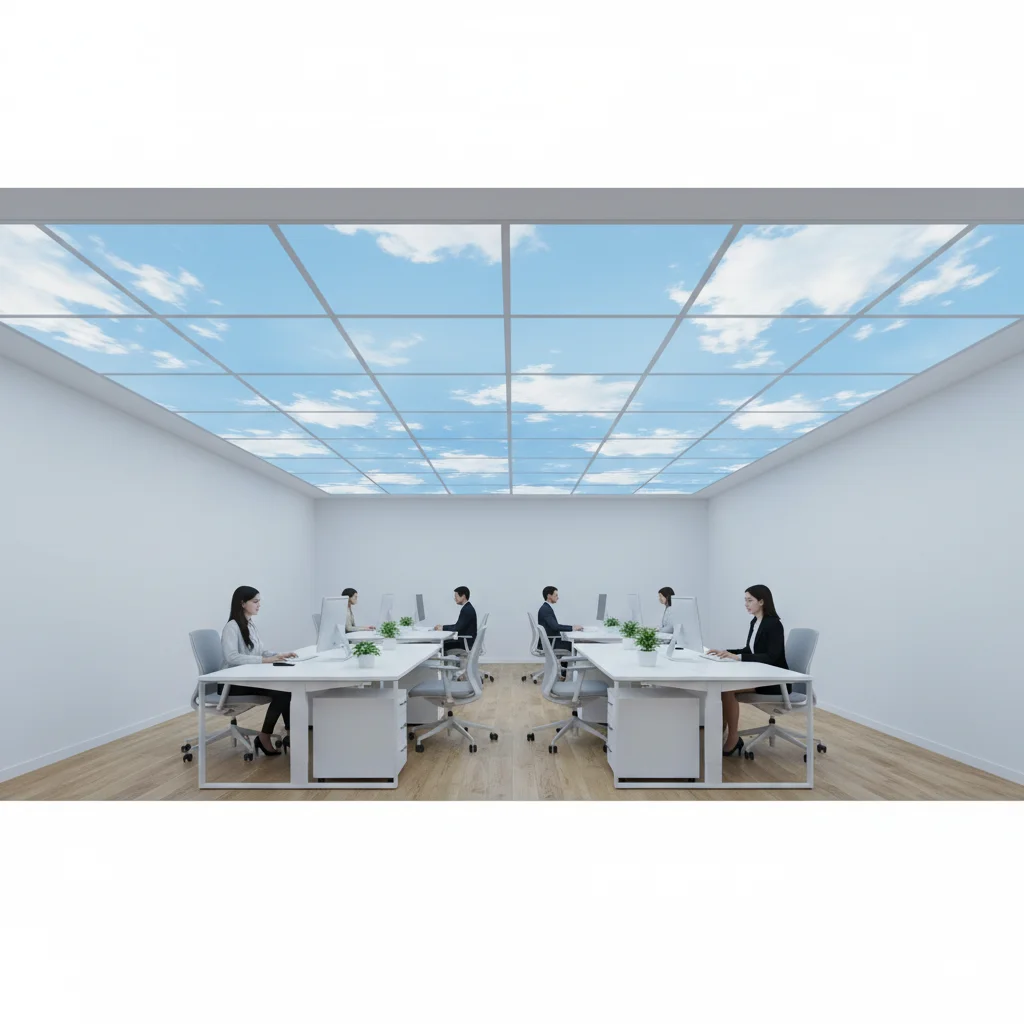
Sky ceiling panels are a high-tech lighting solution developed for windowless offices and other enclosed spaces deprived of natural light. Essentially, they are LED lighting systems that can be integrated into the ceiling, providing a realistic sky image and the feeling of natural daylight.
Definition: Typically consisting of modular LED panels, sky ceiling panels project ultra-realistic cloudy or clear sky images onto the ceiling, creating the sensation of looking out a window, through special printing technologies and diffusers. These panels not only provide a visual but also mimic the spectrum and brightness of natural sunlight, creating a fresh and bright atmosphere indoors.
Technology and Working Principle:
High-Resolution Visuals: The panels feature high-resolution, photorealistic images of a sunny day or a cloudy sky. These visuals are typically applied to a specially treated surface using printing technology.
LED Lighting: Energy-efficient and long-lasting LED light sources are located behind or on the sides of the panels. These LEDs can produce color temperatures close to daylight (e.g., 6000K-6500K) and may have dimmable features.
Special Diffusers: Special diffuser layers ensure the natural and homogeneous spread of light, adding depth and realism to the panels. This allows the panels to be perceived not just as a picture, but as light coming from a real window.
Perception of Depth: Advanced panels attempt to mimic the infinitude and depth of the sky using special optical systems or layered designs. This helps to eliminate the oppressive feeling of enclosed spaces.
Dynamic Light Effects (Optional): Some advanced systems can automatically change color temperature and brightness throughout the day. They can transition from warm tones mimicking the first light of morning to the bright white light of midday and the warm tones of sunset. This more effectively supports the circadian rhythm.
Overview of Technical Specifications:
Dimensions: The most common sizes are 60x60 cm and 60x120 cm, which can be easily integrated into suspended ceiling systems. For larger projects, they can also be produced in custom sizes or as combinable modules.
Light Intensity (Lumen): Options are offered with various lumen values to suit the lighting needs of different areas. Ensuring adequate lighting in an office environment is essential.
Color Temperature (Kelvin): "Cool white" or "daylight white" color temperatures, typically in the 6000K-6500K range, are preferred because these tones most closely resemble natural daylight. Some models also feature adjustable color temperature (tunable white).
Energy Efficiency: Thanks to LED technology, they are expected to have an A+ or higher energy classification.
Installation: They can be easily integrated into suspended ceilings. Recessed or surface-mounted installation options are also available.
3. Transformative Benefits of Sky Ceiling Panels in Windowless Offices
Sky ceiling panels, in windowless offices, not only offer a visual improvement but also create deeply positive effects on employees' physiological and psychological health, thereby increasing overall business productivity.
3.1. Physiological and Psychological Improvement
Supporting Circadian Rhythm: Sky ceiling panels help regulate the body's circadian rhythm by mimicking the spectral characteristics of natural light. Dynamic panels, in particular, can change light intensity and color temperature throughout the day, increasing alertness in the mornings and reducing fatigue in the late afternoon. This supports being more energetic during the day and achieving higher quality sleep at night.
Reducing Stress and Anxiety: Exposure to natural environments lowers cortisol levels, the stress hormone. Sky ceiling panels create an "outside feeling" even in enclosed and oppressive spaces, allowing employees to feel more relaxed and peaceful. This significantly contributes to reducing tension in the office environment.
Improving Mood: Research indicates that a lack of natural light is associated with depressive moods. The bright and fresh atmosphere provided by sky ceiling panels encourages positive emotions, alleviates the negative effects of "cave syndrome," and boosts overall motivation.
Reducing Eye Strain: Low-quality, flickering, or insufficient lighting is one of the primary causes of eye strain and headaches. Sky ceiling panels emit homogeneous and glare-free light (low UGR value), protecting eye health and offering a comfortable field of vision during long working hours.
3.2. Increased Productivity and Cognitive Performance
Concentration and Focus: Lighting similar to natural light enhances cognitive functions and alertness, helping employees focus better on their work. It reduces distractions and enables higher performance even on complex tasks.
Creativity and Motivation: A fresh, bright, and inspiring work environment encourages employees to think more creatively and develop their problem-solving skills. A positive atmosphere boosts motivation and strengthens commitment to work.
Employee Satisfaction and Workplace Loyalty: Employees feel more valued when they work in a comfortable and healthy environment. Offering innovative solutions like sky ceiling panels demonstrates a company's commitment to its employees, which increases satisfaction and loyalty to the organization. This helps reduce employee turnover and retain talented staff.
3.3. Spatial and Architectural Contributions
Sense of Freshness and Spaciousness: Windowless rooms often feel oppressive and cramped. Sky ceiling panels, with a realistic sky image integrated into the ceiling, break this perception of enclosed space, creating a surprising sense of freshness and spaciousness indoors.
Aesthetic Value and Contribution to Interior Architecture: Sky ceiling panels add a modern, unique, and sophisticated touch to office design. More than just a lighting element, they become a striking part of the interior architecture and significantly elevate the aesthetic value of the space.
Overcoming Architectural Limitations: They are an ideal solution for spaces deprived of natural light, such as basement floors, windowless internal offices, corridors, or reception areas. By turning existing architectural limitations into an advantage, they transform previously uninviting areas into attractive work environments.
4. Installation, Integration, and Compatibility with Smart Office Systems
The integration of sky ceiling panels into an an office environment is an important step for businesses seeking a modern and functional lighting solution.
4.1. Installation Process and Technical Requirements
The installation of sky ceiling panels is generally similar to standard LED panel installation but may include some specific details.
Mounting Types:
Suspended Ceiling Integration: This is the most common and practical method. Panels are easily placed in lieu of standard 60x60 or 60x120 cm suspended ceiling tiles. This ensures a quick and clean installation.
Recessed Mounting: By embedding the panels into the ceiling with a special casing, they become flush with the ceiling. This offers a more aesthetic and minimalist look.
Surface Mounting: The panel is placed within a frame and mounted directly onto the ceiling surface. This is preferred in situations where there is no suspended ceiling or when the existing ceiling structure is not to be altered.
Electrical Infrastructure: Like all LED lighting systems, sky ceiling panels require a stable electrical connection. They typically operate on 220V mains electricity. An appropriate power supply (driver) and cabling are required for each panel or group of panels.
Mounting Depth: For suspended ceiling or recessed installations, sufficient space above the ceiling is important. This depth varies depending on the panel's thickness and the size of the power supply.
Potential Challenges and Solutions:
Cabling: Additional cabling may be required in existing offices. A professional electrician is critical for a safe and aesthetic installation.
Ceiling Height: In very low ceilings, large panels can create an oppressive feeling. Selecting panels appropriate for the space's dimensions is important.
Visual Selection: The quality of the visual and its harmony with the overall decor of the space are vital for end-user satisfaction.
Dynamic Systems: The installation of panels offering additional features like color temperature adjustment can be slightly more complex in terms of control units and software integration.
4.2. Integration with Smart Office Systems
Sky ceiling panels unleash their full potential when integrated with modern smart office systems.
Automatic Dimming and Lighting Programs: Thanks to smart systems, panels can automatically adjust their brightness according to the time of day or the level of natural light in the external environment. Scenarios such as brighter mornings and gradual dimming in the afternoon can be created.
Color Temperature Adjustment (Tunable White): Dynamic sky ceiling panels support the circadian rhythm more actively by changing color temperature throughout the day. Invigorating cool white (6000K) in the mornings, more relaxing neutral white (4000K) in the afternoon, and warmer tones (3000K) in the late afternoon can be simulated.
IoT (Internet of Things) and Building Automation: Sky ceiling panels can be integrated into general building automation systems (BMS). This allows them to work synchronously with other smart lighting, HVAC, and security systems, increasing energy efficiency and providing central control.
Integration with Motion and Occupancy Sensors: Dimming or completely turning off panels when no one is in the office saves energy and extends the lifespan of the panels.
These integrations not only provide energy savings but also offer employees a more personalized, comfortable, and optimized work environment.
5. Cost-Benefit Analysis: Return on Investment for Sky Ceiling Panels
The investment in sky ceiling panels may initially appear higher than traditional lighting solutions. However, the long-term benefits they provide make the return on investment (ROI) quite attractive.
Initial Cost: This varies based on panel size, technological features (such as dynamic light, dynamic visuals), brand, and installation costs. Solutions suitable for different budgets can be found depending on the project's scale and the quality of the chosen product. Fluctuations in exchange rates in Turkey or local production advantages may affect these costs.
Energy Efficiency and Long-Term Savings:
LED Technology: Because sky ceiling panels operate with low-energy-consumption LED technology, they consume significantly less electricity compared to traditional fluorescent or halogen lighting. This translates to a substantial reduction in electricity bills in the long run.
Long Lifespan: LEDs have a much longer lifespan than traditional lamps (typically over 50,000 hours). This reduces costs associated with bulb replacement, maintenance, and troubleshooting.
Smart Control: When integrated with smart systems, the light levels and operating times of the panels can be optimized, preventing unnecessary energy consumption.
Increased Productivity and Reduced Absenteeism:
Employee Productivity: As mentioned earlier, an environment similar to natural light increases employees' concentration, motivation, and cognitive performance. This means higher quality and faster work output.
Healthcare Costs and Absenteeism: Better lighting conditions reduce eye strain, headaches, and general stress. Improving employee health lowers absenteeism rates due to illness and can reduce healthcare service costs.
Employer Brand and Talent Attraction:
Providing a modern and employee-friendly office environment strengthens a company's "employer brand." This is a significant competitive advantage for attracting new talent and retaining existing talent.
Especially younger generations of professionals place greater importance on the quality of their work environments.
Spatial Value and Amortization: Transforming a windowless, gloomy room into a fresh, productive workspace can increase that space's utility value and, indirectly, its real estate value.
Conclusion: Investing in sky ceiling panels should be viewed not merely as a lighting expense, but as a strategic step that provides a long-term, positive financial return on employee health, productivity gains, energy savings, and employer brand. With advanced technology and increasing demand, costs are expected to become more accessible.
6. Sky Ceiling Panels vs. Other Alternatives: A Comparative Look
Sky ceiling panels are not the only solution for windowless offices, but they stand out with their unique advantages. A comparative look at other common alternatives will aid in the decision-making process.
Full-Spectrum Lamps:
Advantages: They produce a light spectrum closest to natural daylight. Beneficial for supporting circadian rhythm and improving mood. Generally cost-effective.
Disadvantages: They do not offer a visual window experience. They do not create a sense of spatial freshness and are aesthetically no different from traditional lamps. They do not add architectural value.
Virtual Windows (Dynamic Display Screens):
Advantages: They can offer outdoor views or dynamic images via high-resolution LED screens. The level of realism can be high, and thanks to dynamic content, a constantly changing
Related guides: Five Ways to Light Windowless Offices and Rooms: A Biophilic Design Guide, Reviving Dark Offices: How Sky Panels Affect Staff Motivation, The New Formula for Productivity in Modern Offices: Biophilic Lighting and LED Sky Panels.