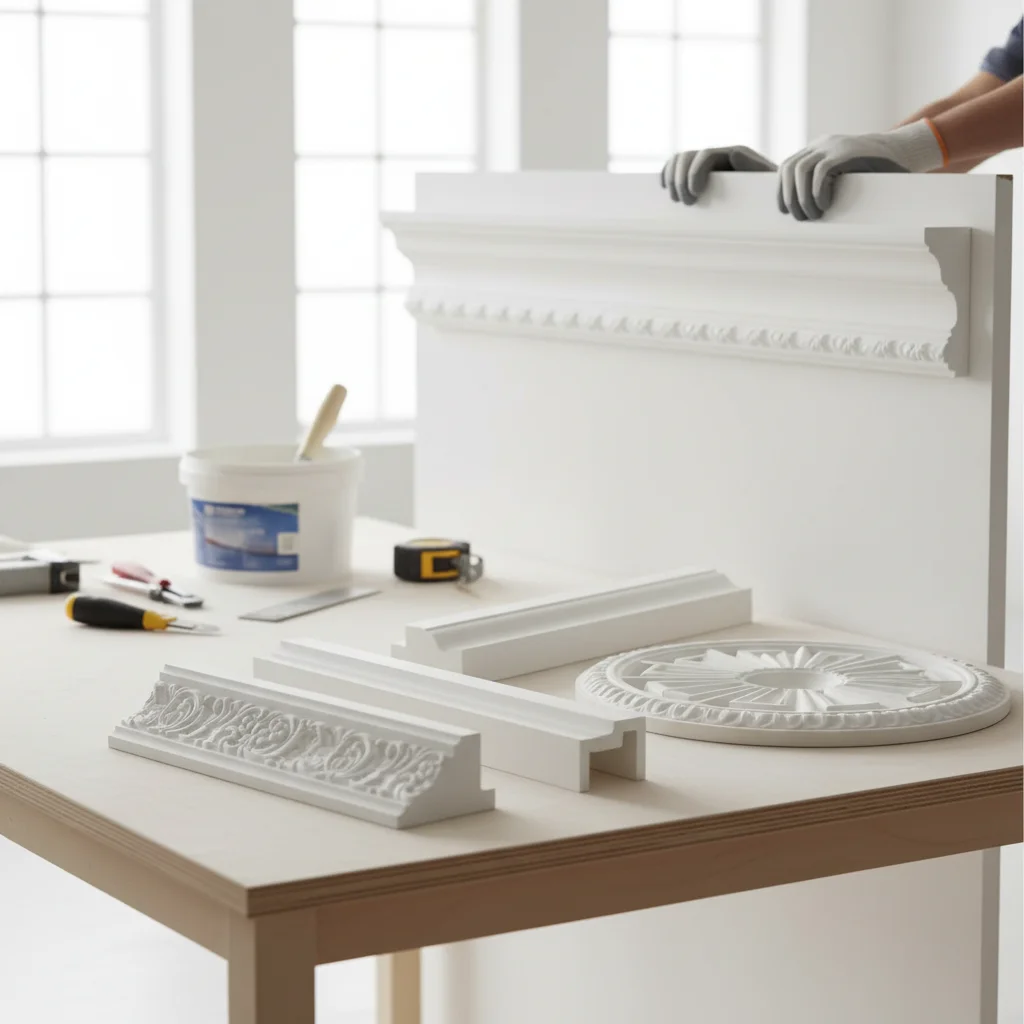
Cornice/coving is a decorative architectural element that aesthetically unifies ceiling and wall junctions, adding an elegant touch to spaces. It not only conceals visual imperfections but also enriches the interior atmosphere with modern or classic designs. Furthermore, it serves as an ideal channel for cove lighting systems, creating a warm and inviting ambiance through indirect illumination.
What Exactly is Cornice/Coving and What Benefits Does It Offer to Spaces?
Cornice/coving is a decorative border typically applied to the corners where the ceiling and wall meet, manufactured from materials such as gypsum, polyurethane, or styrofoam. Its primary function is to conceal potential cracks, paint imperfections, or unsightly transitions at these junction points, giving the space a smoother and more finished appearance. Simultaneously, it creates a visual focal point with various profile and pattern options that complement the room's overall decoration.
In addition to their aesthetic contributions, cornices/covings also offer functional advantages. Specifically, cove lighting cornices/covings feature special channels for the placement of LED strips. This allows for homogeneous and soft indirect lighting (cove lighting) that is not harsh on the eyes. This type of lighting adds depth to spaces while helping to create a modern and sophisticated atmosphere.
What Types of Cornice/Coving Are Available and What Are Their Features?
Cornices/covings are primarily divided into three main categories based on their material: gypsum, polyurethane (PU), and styrofoam (EPS/XPS). Each material has its unique advantages and application areas. Making the right choice depends on the space's needs, budget, and desired aesthetic.
Gypsum cornices/covings are the traditional and oldest type of cornice/coving. They are produced from gypsum, a natural material, and can generally be heavier, more durable, and feature more detailed patterns. Polyurethane cornices/covings stand out for their lightness and resistance to water and moisture. Their higher impact resistance and ease of processing make them a frequent choice in modern applications. Styrofoam cornices/covings, on the other hand, are the most economical and lightweight option. They can be easily cut and installed but may be more susceptible to impact.
How Does Cove Lighting Cornice/Coving Enhance Spaces?
Cove lighting cornices/covings offer a revolutionary approach to interior lighting. These specially designed elements provide soft, indirect light that reflects onto ceilings or walls via LED strips integrated within the cornice/coving. This 'cove lighting' technique contributes to the room's overall illumination while simultaneously creating a warm and inviting ambiance.
Cove lighting applications add depth and dimension to spaces. By eliminating glare caused by direct light sources, they reduce eye strain and offer a more comfortable viewing experience. Especially in areas like living rooms, bedrooms, or hallways, they are preferred as both a functional lighting solution and a powerful decorative element. Dynamic atmospheres can also be created with color-changing LED strips.
What Factors Should Be Considered When Choosing Cornice/Coving?
When selecting cornice/coving, you need to consider several important factors based on the characteristics of the space and your expectations. Firstly, the humidity level of the area where the cornice/coving will be applied plays a critical role. Water-resistant polyurethane cornices/covings are ideal for humid environments like bathrooms or kitchens. For dry areas such as living rooms or bedrooms, gypsum or styrofoam options can be considered.
The weight of the material and the load-bearing capacity of the ceiling are also important considerations. Since gypsum cornices/covings are heavier, their installation may require more labor and attention. Polyurethane and styrofoam, being lightweight, are easier and quicker to install. Furthermore, the profile and pattern selection of the cornice/coving should be consistent with the overall decoration style of the space. For a modern, minimalist room, plain and simple profiles are suitable, while more ornate and elaborate models can be chosen for a classic decoration. Paintability after application and durability are also features to consider for long-term satisfaction.
How to Install Cornice/Coving Step-by-Step?
Cornice/coving installation can be successfully completed when the correct steps are followed and appropriate materials are used. The first step is to accurately measure the area where the application will take place. Subsequently, ceiling and wall surfaces should be cleaned, smoothed, and primed if necessary. This ensures better adhesion of the adhesive.
Cornice/coving pieces are precisely cut using a miter cutting technique at corners and joints. Typically, cuts are made at 45-degree angles to achieve seamless corner connections. The cut pieces are fixed to the wall and ceiling with an adhesive suitable for the chosen cornice/coving type (polyurethane-based adhesive, plaster of Paris, or special cornice/coving adhesive). After the adhesive dries, gaps and cutting imperfections at the joints are filled with joint compound or plaster of Paris, excess material is cleaned, and the surface is sanded smooth. Finally, the cornices/covings are painted with a color that matches the space's overall color scheme, completing the application.
The correct and careful application of these steps ensures both the aesthetic appearance and longevity of the cornice/coving. For a professional result, especially in large or complex projects, seeking expert assistance can be beneficial.
What Are the Tips for Post-Installation Care and Longevity of Cornice/Coving?
Regular maintenance is crucial to preserve the initial aesthetics and durability of your cornices/covings. Generally, cornices/covings can be easily cleaned by wiping them with a damp cloth. Avoiding chemical-based, abrasive cleaners prevents damage to the painted surface. Especially for gypsum cornices/covings, small cracks that may appear over time can be repaired with appropriate filler compounds, followed by touch-up paint.
For long-lasting use, maintaining the humidity balance of the space is important. Excessive moisture can lead to deformation, especially in gypsum and styrofoam cornices/covings. Periodically inspecting your cornices/covings and promptly addressing any signs of loosening or damage prevents larger issues. Choosing quality materials and employing correct installation techniques will ensure your cornices/covings add value to your space for years. You can explore our wide range of products for all your cornice/coving needs in our store.
Comparison of Cornice/Coving Types
| Criteria | Gypsum Cornice/Coving | Polyurethane Cornice/Coving | Styrofoam Cornice/Coving |
|---|---|---|---|
| Material | Natural gypsum | High-density polyurethane | Expanded polystyrene (EPS/XPS) |
| Weight | Heavy | Very lightweight | Very lightweight |
| Durability | High (sensitive to impact) | High (resistant to impact) | Medium (sensitive to impact) |
| Moisture Resistance | Low (sensitive to moisture) | High (water-resistant) | Medium |
| Workability | Difficult (requires special tools) | Easy (with standard tools) | Very easy (with a utility knife) |
| Detail Level | Very high (sharp details) | High (clear details) | Medium (rounded lines) |
| Price Range | Medium - High | High | Low - Medium |
| Ease of Installation | Medium - Difficult | Easy | Very easy |
| Application Area | Dry interiors, classic decoration | All interiors, humid areas, modern decoration | Dry interiors, economic solutions |
Related guides: What is Stretch Ceiling, How is it Made? Advantages, How to Maintain and Clean Stretch Ceilings?, What is Mirror Ceiling, Where is it Used?. For turnkey application for your project, you can review our decoration services page.