Reverberation and hum in spaces are common problems that negatively affect both comfort and productivity. Acoustic suspended ceilings offer effective solutions that significantly improve indoor sound quality by addressing these sound issues. These ceiling systems, thanks to their special materials, absorb sound, reduce reverberation, and create a calmer, more intelligible environment.
How Do Acoustic Suspended Ceilings Solve Sound Problems in Spaces?
Hard surfaces commonly found in today's modern buildings (concrete, glass, metal) provide a breeding ground for sound waves to reflect, causing reverberation and hum. This often leads to communication difficulties and general noise pollution, especially in crowded spaces like offices, restaurants, or educational institutions. Acoustic suspended ceilings are designed to minimize these reflections.
These ceiling systems are made from special materials that absorb sound waves. Sound energy striking the ceiling surface is converted into thermal energy by these materials and dissipated. This prevents sound from reverberating repeatedly in the space, lowers the ambient noise level, and significantly increases speech intelligibility. As a result, a more peaceful and productive working or living environment is achieved.
What is the Difference Between Sound Absorption and Sound Insulation?
The primary function of acoustic suspended ceilings is sound absorption. Sound absorption refers to how much of the sound energy striking a material is absorbed and how much is not reflected. This property is measured by the Noise Reduction Coefficient (NRC) value, which ranges from 0.0 (no sound absorbed) to 1.0 (all sound absorbed). An acoustic ceiling with a high NRC value reduces reverberation and hum within a room, thereby increasing speech intelligibility.
Sound insulation, on the other hand, is the ability to prevent sound from passing from one space to another. This is typically expressed by Sound Transmission Loss (STL) or Weighted Sound Reduction Index (Rw) values. Sound insulation is directly related to structural properties such as the density, number of layers, and air gaps of walls, floors, and ceilings. While acoustic suspended ceilings are generally used for sound absorption, some specialized products and systems can also contribute to sound insulation by slightly reducing sound transmission to upper floors or adjacent rooms. However, their primary focus remains indoor acoustics.
What Materials Are Acoustic Suspended Ceilings Made From?
Acoustic suspended ceiling panels are produced from various materials that meet different aesthetic and performance needs. Among the most commonly used materials are rock wool and glass wool tiles. These fibrous structures, derived from natural minerals, offer excellent sound absorption properties due to their high density and porous composition. Furthermore, they typically exhibit high fire resistance and can provide additional benefits such as moisture resistance.
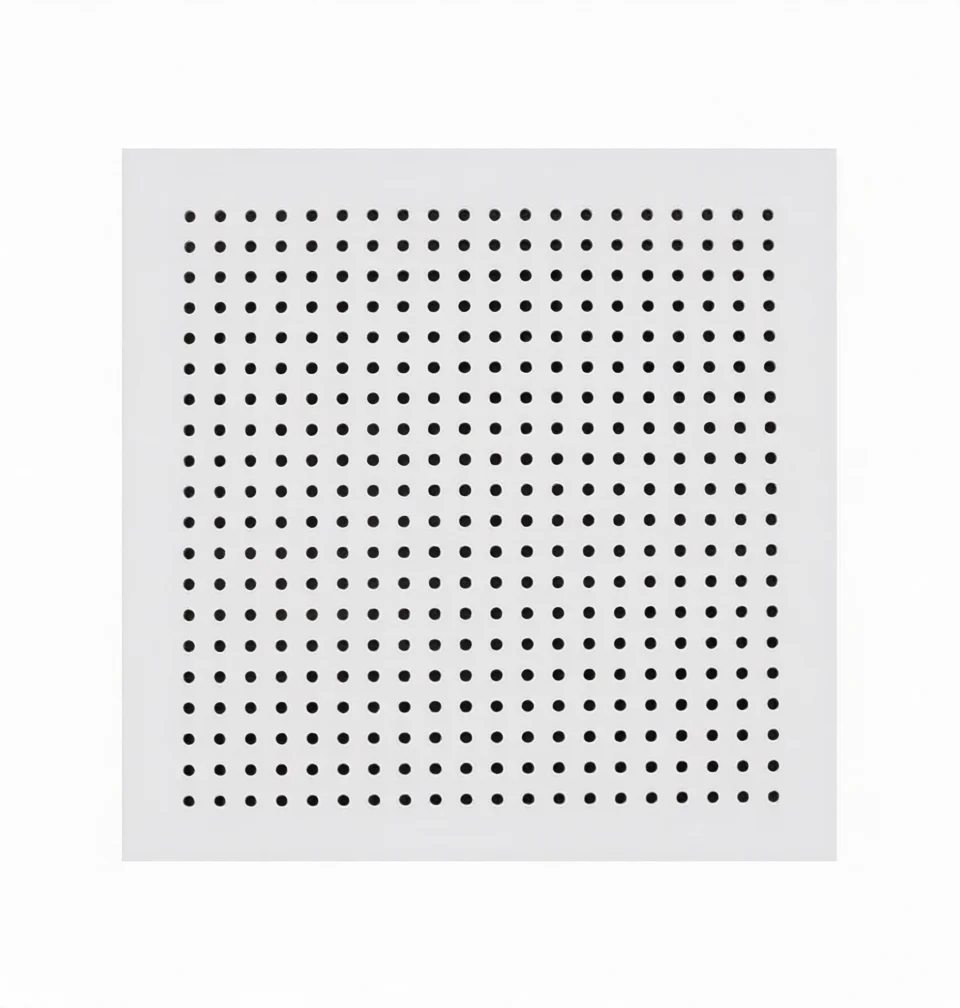
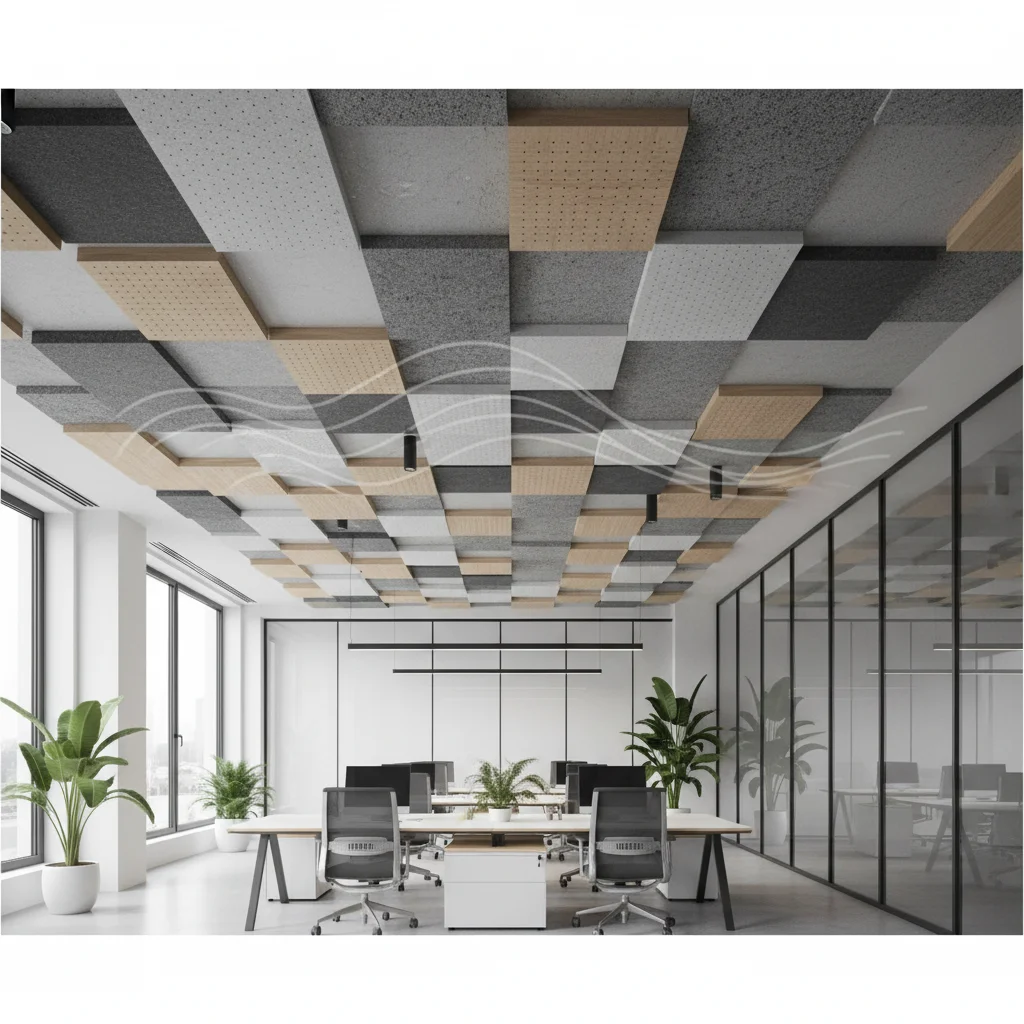
Perforated metal panels are ideal for those who prefer modern and industrial designs. An acoustic backing (typically glass wool or rock wool batt) placed behind these panels allows sound to pass through the metal surface and be absorbed. PET felt baffles and cloud panels, on the other hand, are an eco-friendly option made from recycled plastic bottles. Their lightweight nature and ability to be produced in various colors and forms offer design freedom, and they are particularly effective in controlling reverberation in spaces with high ceilings.
What is the NRC Value and How Does It Affect Room Acoustics?
The Noise Reduction Coefficient (NRC) is a standard measurement that numerically expresses a material's sound absorption performance. Ranging from 0.0 to 1.0, this value indicates what percentage of incident sound energy a material absorbs. For example, a panel with an NRC value of 0.70 absorbs 70% of the sound energy striking it, while reflecting 30%. Panels with a high NRC value are more effective at reducing reverberation and hum.
The infill materials within acoustic suspended ceiling panels are the most important factor directly influencing the NRC value. Fillings typically composed of fibrous materials like rock wool or glass wool cause sound waves to become trapped among these fibers, leading to energy loss. The density, thickness, and fiber structure of the infill material determine the panel's sound absorption capacity. Selecting products with an appropriate NRC value based on the space's intended use and desired acoustic performance is critically important. For instance, while very high NRC values are sought for a recording studio, a more balanced NRC might suffice for an office environment.
In Which Areas Should Acoustic Suspended Ceilings Be Used?
Acoustic suspended ceilings offer ideal solutions in many different spaces where sound comfort and intelligibility are critical. They are indispensable, especially in open-plan office layouts, to reduce employee distraction and enhance speech privacy. In meeting rooms and call centers, they are preferred to ensure clear communication and control external noise.
In social areas such as restaurants, cafes, and hotel lobbies, acoustic comfort is of great importance for guests to converse in a pleasant environment. Acoustic ceilings reduce the hum in these spaces, creating a more inviting atmosphere. In educational and presentation venues like schools, universities, and conference halls, they directly contribute to learning and comprehension processes by ensuring that teachers' and speakers' voices are heard clearly. They are also effectively used in spaces with special requirements such as hospitals, libraries, and studios.
What Should Be Considered for the Right Acoustic Solution?
Accurately determining the acoustic needs of a space is the first step in choosing the most suitable suspended ceiling solution. Factors such as the size of the space, ceiling height, materials of other surfaces like walls and floors, existing noise sources, and intended use must be evaluated. For example, the acoustic requirements of a high-ceiling sports hall will be very different from those of a small office room.
Aesthetic expectations are just as important as functionality. Today, acoustic suspended ceilings offer a wide range of colors, textures, and patterns. It is essential to select products that harmonize with the overall design of the space and do not disrupt its visual integrity. For the most accurate and efficient acoustic solution, a detailed analysis of the space and professional acoustic design services are critically important. Our experts in-store will be pleased to evaluate your specific needs and offer you the most suitable acoustic suspended ceiling solutions.
Related guides: Cafe and Restaurant Ceiling Design: 8 Inspiring Ideas, What is a Suspended Ceiling? Types, Materials, and Areas of Use, 7 Factors Affecting Suspended Ceiling m² Price (2026 Guide). For turnkey application for your project, you can review our acoustic services page.